A row of dark gray gabled houses behind a trimmed hedge and mowed lawn, framed by large leafy trees under an overcast sky.

Heat Pump Repair in Richmond, KY

Tell us about the job

Takes about a minute. No obligation.

RepairHeat PumpMadison County, KY
Step 1 of 2

What ZIP code is the job in?

Zone 4A asks for real heating and real cooling

Madison County sits in zone 4A, a mixed climate that works both sides of a heat pump. Winters push the system to make heat, summers push it to pull heat out. Neither side dominates, and neither one is pushed to an extreme.

A heat pump here isn't fighting for its life

Overnight lows average 27°F in December, January and February, not far below freezing. A heat pump built for this climate can cover that without leaning on backup heat every night. That's a lighter load than a lot of systems carry, and it means a repair now is more likely to hold.

7 months
October through April, your system heats
5 months
May through September, it cools
27°F
the average winter night it heats against
85°F
the average summer afternoon it cools against
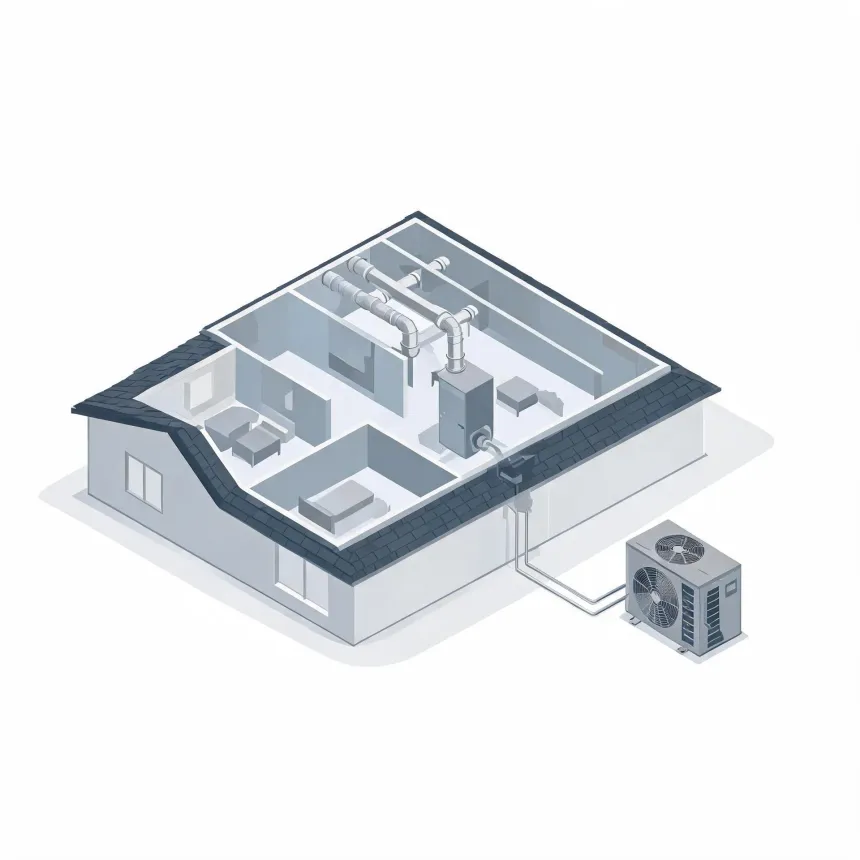
Isometric cutaway illustration of a single-story house showing interior rooms with ductwork, a furnace or air handler, and refrigerant lines running outside to a condenser unit on a pad.
Your system heats October through April and cools May through September.

NOAA nClimDiv, 1991–2020 normals

Half the homes in Madison County were built in 1993 or later.

A heat pump that came with a newer house still has years of work left in it, so fixing what's wrong usually makes more sense than replacing it.

May and October are when a weak heat pump shows it

Cooling runs May through September
Heat runs October through April
87 damaging wind events from 2015 to 2024

Get it repaired, not replaced

If your heat pump came with the house, get the repair looked at before you weigh it against replacement. A system that age usually still has the years left to make fixing it worthwhile.

Find a contractor
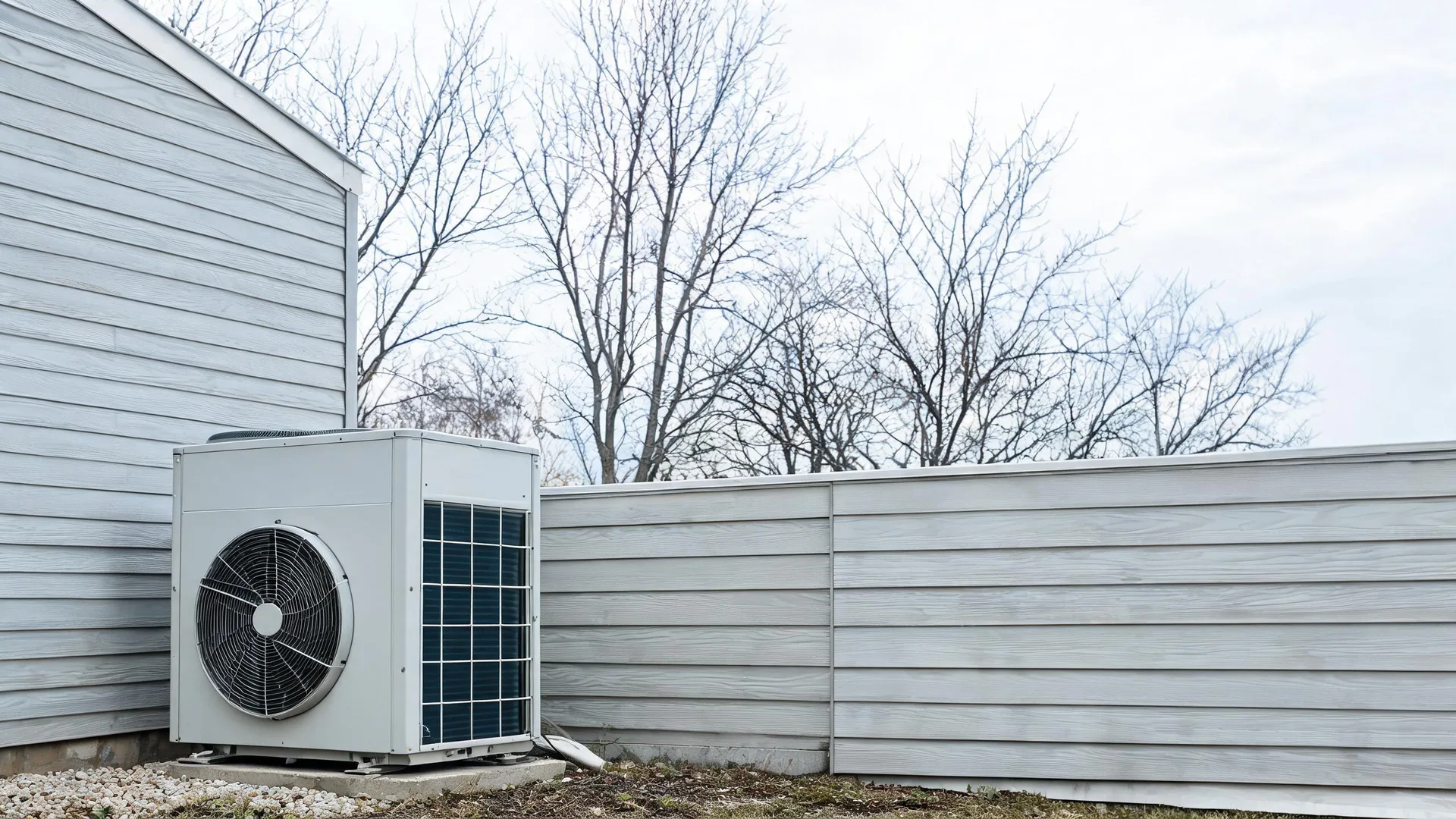
A gray outdoor HVAC unit mounted on a concrete pad beside a house with gray lap siding and a stone foundation.

What a struggling heat pump sounds and feels like

A heat pump that needs attention usually shows it through the air at the vents, not through a noise. Air that feels cool when it should feel warm, or warm when it should feel cool, is often the first thing anyone notices. From there it's worth watching how long the system runs. A heat pump that cycles on and off every few minutes is fighting something, and so is one that runs without the house ever catching up. Either way points to low refrigerant, a failing compressor, or a reversing valve stuck between modes. Ice on the outdoor unit for a few minutes during defrost is normal. Ice that stays, or builds up across the coil, means the defrost cycle isn't doing its job. The outdoor fan should run whenever the compressor does. A compressor running with a dead fan overheats fast. A heat pump that's struggling now is still carrying every hour it already worked, and that catches up with whatever is already failing.

A stuck reversing valve wears the compressor

When the reversing valve won't fully shift, the compressor ends up working against itself, trying to heat and cool at the same time. The compressor is built to move refrigerant one way at a time, not to fight itself every cycle.

Low refrigerant drags down everything it touches

A slow leak starves the compressor of the oil carried along with the refrigerant, so it runs drier than it should. The longer that goes on, the more wear the compressor takes, and a leak that was simple to patch early can end with the compressor itself worn out.

Before calling anyone, check the thermostat first. Make sure it's set to heat or cool as needed and the temperature is actually set past the room's current reading. Next, look at the air filter. A filter clogged with dust chokes off airflow, and a heat pump starved for airflow will struggle no matter what else is right with it. Walk outside and look at the outdoor unit. Clear away leaves, mulch or anything stacked against it, since the unit needs open air on all sides to move heat. Check the circuit breaker for the system too, since a tripped breaker will shut the whole thing down with no other warning. If the outdoor coil is caked in ice beyond what a normal defrost cycle clears, that's worth noting but not something to chip away at yourself. None of this fixes a bad compressor or a stuck reversing valve, but it rules out the simple stuff first.

A repair is worth doing when the part that failed is one part, a capacitor, a contactor, a fan motor, something with a clear job that either works or doesn't. Replacing that part brings the whole system back to where it was. The harder case is the compressor. It's the one part that's expensive to replace on its own, and a failing compressor usually means the system has already been under strain for a while before it quit. If a contractor traces the problem back to the compressor, it's worth asking what wore it down in the first place, since a new compressor dropped into a system with the same unresolved leak or airflow problem will wear down the same way. A heat pump that's otherwise sound, with ductwork, electrical and refrigerant lines all in good shape, is usually worth repairing even for a bigger failure. The decision gets harder when more than one major part is failing at the same time, since that usually points to age catching up with the whole system rather than one bad component.