A row of dark-sided single-story houses with gray shingled roofs behind a trimmed hedge, with mown lawn and large deciduous trees under an overcast sky.

Heat Pump Repair in Prestonsburg, KY

Tell us about the job

Takes about a minute. No obligation.

RepairHeat PumpFloyd County, KY
Step 1 of 2

What ZIP code is the job in?

Floyd County sees its share of rough weather

Floyd County logged 133 severe weather events between 2015 and 2024. Damaging wind and hail make up most of that count, with winter storms adding more on top. The outdoor unit sits outside through all of it.


A unit that still runs isn't the same as one that's fine

Hail can dent the fins on a condenser and wind can drive debris into the cabinet without stopping it from turning on. If your heat pump has been through a storm, have someone check the coil and the fan before you assume it's fine.

7 months
October through April, your system heats
4 months
June through September, it cools
28°F
the average winter night it heats against
86°F
the average summer afternoon it cools against
Isometric grayscale illustration of a cutaway house showing interior rooms, ductwork and an indoor air handler connected by lines to an outdoor condenser unit on the ground outside.
Your system heats October through April and cools June through September.

NOAA nClimDiv, 1991–2020 normals

Winters here average 28°F overnight, not deep cold, and the heat pump isn't working against extreme heat in summer either.

A heat pump that's been handled right usually still has some life in it, so a repair call can make more sense than a swap.

An older house doesn't change what's wrong with your heat pump

Half the homes here were built by 1982
98 damaging wind events from 2015 to 2024
16 hail events from 2015 to 2024
Heat pumps here fail first in OctoberHeat runs October through April. September is the month to catch a weak one.

A bent fin or a cracked fan blade is not always obvious from the kitchen window. After wind or hail moves through, it is worth a look at the coil and the housing before you write off a strange noise or a short cycle as nothing. Close to a quarter of Kentucky households lost power for a day or more in 2024. A heat pump should come back on by itself once power is restored. If yours did not, that is worth a call on its own, storm or no storm.

Get it looked at before you replace it

Get a repair call out before deciding this one is done.

Find a contractor
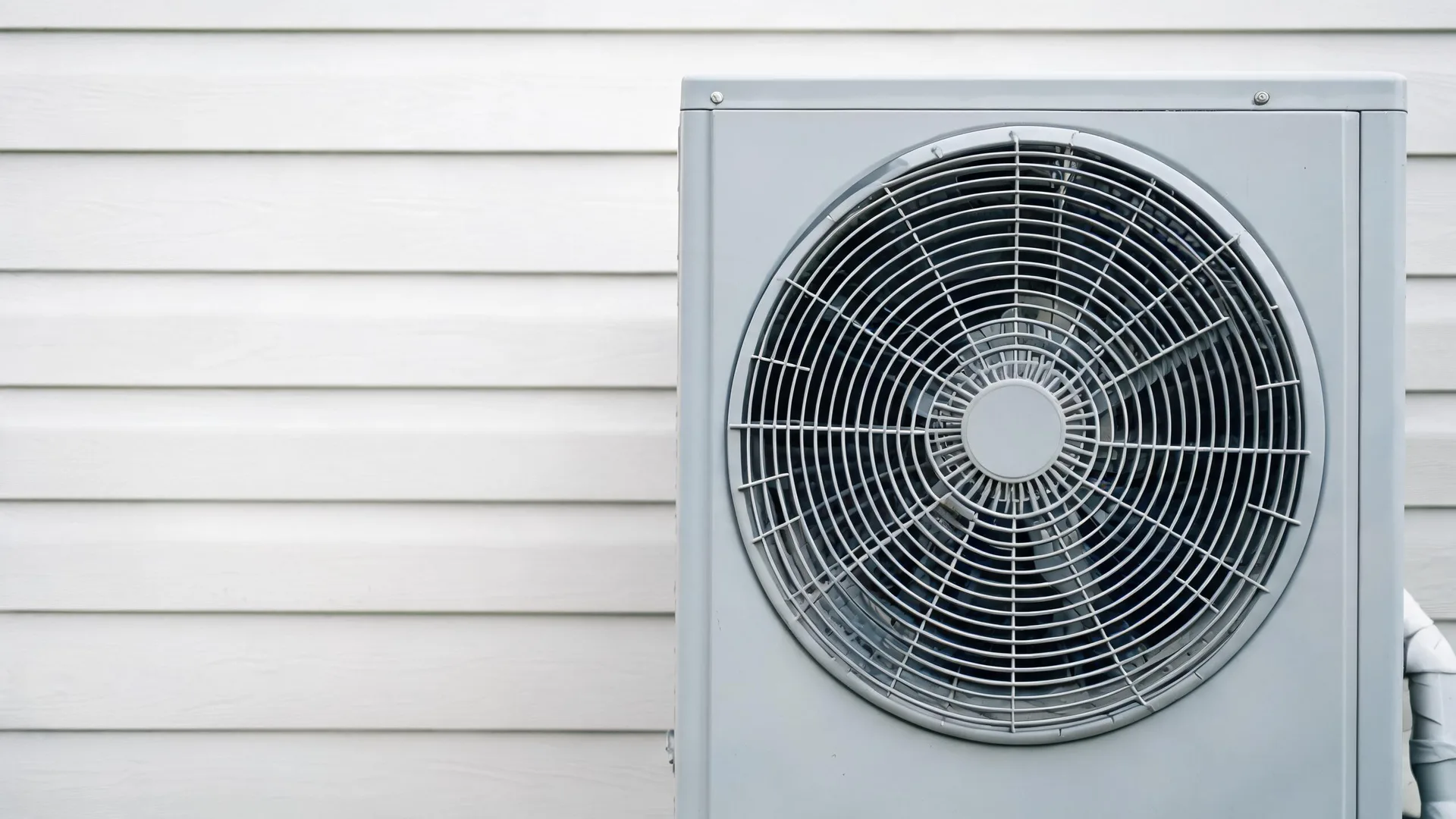
A residential heat pump outdoor unit mounted on a concrete pad next to a house with gray vinyl siding.

What you can check before anyone gets there

Walk around the outdoor unit first. Look at the fan blades. A cracked or bent blade throws the whole thing off balance and you'll hear it running rough. Check that nothing is pressed against the cabinet. Leaves packed into the fins or a branch leaning on the housing will block airflow. Pull the air filter and hold it up to a light. If you can't see through it, the system isn't getting the air it needs. Check the thermostat is actually set to heat. If the outdoor unit isn't running at all, check the breaker before calling anyone. Flip it off and back on once. If it trips again right away, stop there and let a tech find out why. Ice on the outdoor unit during defrost is normal. Ice that sits there for hours and never clears is not. That's a sign something's stuck.

The reversing valve is the part that's unique to this job

A heat pump has a valve that switches it between heating and cooling, and that part alone doesn't exist on a furnace or an AC-only system. When it sticks, the unit can blow cold air when you've got it set to heat, or it won't switch over at all. Stuck contacts, a weak solenoid, refrigerant leaking past the valve itself all cause this, and it usually shows up as the system running but not doing what the thermostat is asking for.

Most other failures are the same ones any outdoor compressor has

A capacitor weakens and the compressor or fan struggles to start. A contactor pits and starts sticking. Refrigerant leaks slowly, and once the charge drops too low the compressor runs but can't move enough heat either direction. These parts wear with age and run time, not with how hard the weather's been, so a unit that's had easy winters can still lose a capacitor the same as one that hasn't.

A heat pump that's icing over or short cycling will keep trying to do its job, and that's the problem. A compressor pulling hard to start on a weak capacitor builds up heat in the windings every time it tries. Do that enough times and the windings fail for good instead of just struggling. Low refrigerant works the same way. The compressor still runs, still pulls power, but it's working harder to move less heat, and that extra strain is what burns it out early. A reversing valve stuck halfway can let the compressor fight against itself, pumping against pressure it shouldn't have to. None of these get better by waiting. Shutting the system off and calling someone before it runs like that for days is usually what keeps a repair a repair.

A diagnostic starts outside, not at the thermostat. A tech checks pressures and temperatures first, before taking anything apart. That tells them whether the charge is right and whether the compressor and reversing valve are doing what they should. From there it's a process of ruling things out. Electrical readings on the capacitor and contactor, a look at the coil for anything blocking airflow, a check of the defrost cycle if ice has been a problem. Most of the time the cause isn't a mystery once the numbers are in front of them. The visit ends with a straight answer. What's worn out, what it takes to fix it, and whether it's worth doing.