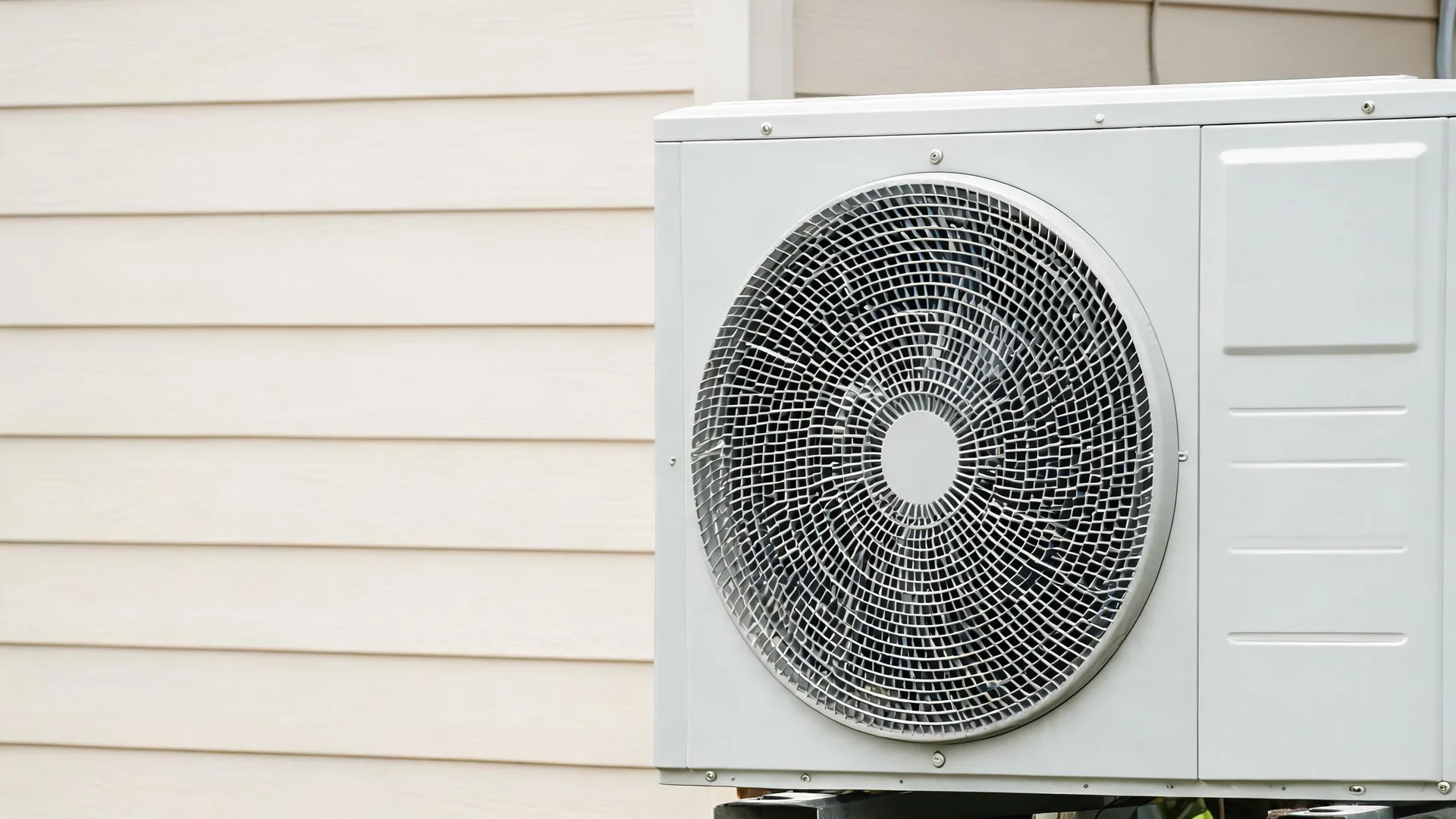
A grey air-source heat pump outdoor unit mounted on a concrete pad next to a modern white-rendered residential house.

Heat Pump Repair in Owensboro, KY

Tell us about the job

Takes about a minute. No obligation.

RepairHeat PumpDaviess County, KY
Step 1 of 2

What ZIP code is the job in?

The compressor is what decides it

A heat pump with a failing compressor is usually not worth repairing. The compressor is the most expensive part in the system, and it's sealed, so a tech can't just replace a worn part inside it. Most other failures, a bad capacitor, a stuck reversing valve, a failed defrost board, are normal wear and tear and get fixed without much debate.


Age changes what a repair is worth

An older heat pump nearing the end of its working life can still run fine for a while after a repair, but the next failure comes sooner rather than later. If yours is getting up there in years and the repair bill is climbing toward what a new system costs, that's the point to ask your contractor directly whether to keep patching it or replace it.

7 months
October through April, your system heats
5 months
May through September, it cools
28°F
the average winter night it heats against
87°F
the average summer afternoon it cools against
Isometric cutaway illustration of a single-story house showing interior rooms, attic ductwork and an air handler, with an outdoor condenser unit connected by lines along the exterior wall.
Your system heats October through April and cools May through September.

NOAA nClimDiv, 1991–2020 normals

Heat pumps in Owensboro switch over to heating in October.

A weak part that made it through summer often fails in the first cold snap.

Half these homes were built by 1977, but that's not what breaks a heat pump

Half the homes here were built by 1977
95 damaging wind events from 2015 to 2024
27 hail events from 2015 to 2024

Get it looked at early

Problems tend to show up in the first weeks of the season, when the load hits a part that was already weak.

Find a contractor
A man in a cap, dark shirt and tan work pants walks up porch steps toward a green front door, carrying a worn canvas tool bag, with a potted shrub beside the entry.
A gray outdoor HVAC unit mounted on a concrete pad beside a house with gray lap siding and a stone foundation.

What to check yourself first

Before calling anyone, go look at the outdoor unit. If the fan isn't spinning but the unit is humming, shut it off. That's usually a failing capacitor or fan motor, and running it that way can take the compressor down with it. Check the thermostat is set to heat, not just on. Go to the breaker panel and look for anything tripped, outdoor unit and air handler both. Inside, pull the air filter and hold it to the light. A filter packed with dust chokes off airflow, and that can ice the coil or trip the system's own safety switch. Back outside, look at the coil. Some frost in cold weather is normal since the unit defrosts itself on a cycle, but a thick coating of ice or a coil packed with leaves and debris means it can't move heat the way it should. Clear away anything piled against the unit. If the system runs but the air feels cool rather than warm, give it a few minutes before judging it. Heat pump air runs cooler than a furnace's and that by itself isn't a sign anything's wrong. If you've checked all this and it's still not heating, that's the point to stop guessing and get a tech on it.

A weak part strains the ones around it

A failing capacitor makes the compressor pull harder to start. A low charge makes the compressor run hotter than it should. The system doesn't shut itself down to protect that part, it just keeps working through the strain, and the part that was already going bad takes the compressor down with it.

Ice and frost don't fix themselves

A coil that's icing up because of a stuck reversing valve or a low charge won't clear on its own by running longer. The ice builds, airflow drops further, and the system works harder to move less heat. Left alone, that cycle ends with a compressor that's seized rather than a part that's worn.

Most heat pump failures trace back to a handful of parts, and none of them are the compressor itself. Capacitors weaken over time and eventually can't give the compressor or fan motor the kick they need to start. Reversing valves stick, usually from debris or just age, and that can leave the system blowing cold when it should be heating or stuck heating when it should defrost. Defrost boards and sensors fail, and when they do the outdoor coil ices over because the system never gets the signal to clear itself. Run capacitors and contactors wear out from the sheer number of start cycles a heat pump goes through, more than a furnace ever sees. None of these parts owe their failure to one bad day. They wear down a little at a time until the one cold morning they can't keep up.

A diagnostic starts outside at the unit, not at the thermostat. A tech checks the capacitor's output against what it's rated for, since a weak one still reads voltage but can't deliver the start it needs to. They'll check refrigerant pressures on both sides, because a low charge shows up as a specific pattern, not just a low number. The reversing valve gets tested by running the system in both modes and checking that it actually switches. Defrost boards get checked with the sensor, since a board can be fine and still get bad information from a failing sensor. Most of this takes longer to explain than to do. A tech who's seen the pattern before usually knows what they're looking for within a few minutes of watching the system run.