





A quiet residential street at dusk lined with illuminated two-story brick houses and mature trees.

Heat Pump Repair in Mount Washington, KY

Tell us about the job

Takes about a minute. No obligation.

RepairHeat PumpBullitt County, KY
Step 1 of 2

What ZIP code is the job in?

Bullitt County sits in a mixed climate, zone 4A, which asks real work of both heating and cooling through the year. That's different from asking extreme work. Winter lows here average 28°F, not the deep negative numbers that force a heat pump into constant backup heat. That matters because the harder a compressor has to work to hold a temperature, the faster its parts wear. A heat pump here isn't fighting that kind of strain season after season. So when one starts acting up, the cause is more often a part that failed or wore out than a system that's been run into the ground. That's usually worth fixing.

7 months
October through April, your system heats
5 months
May through September, it cools
28°F
the average winter night it heats against
86°F
the average summer afternoon it cools against
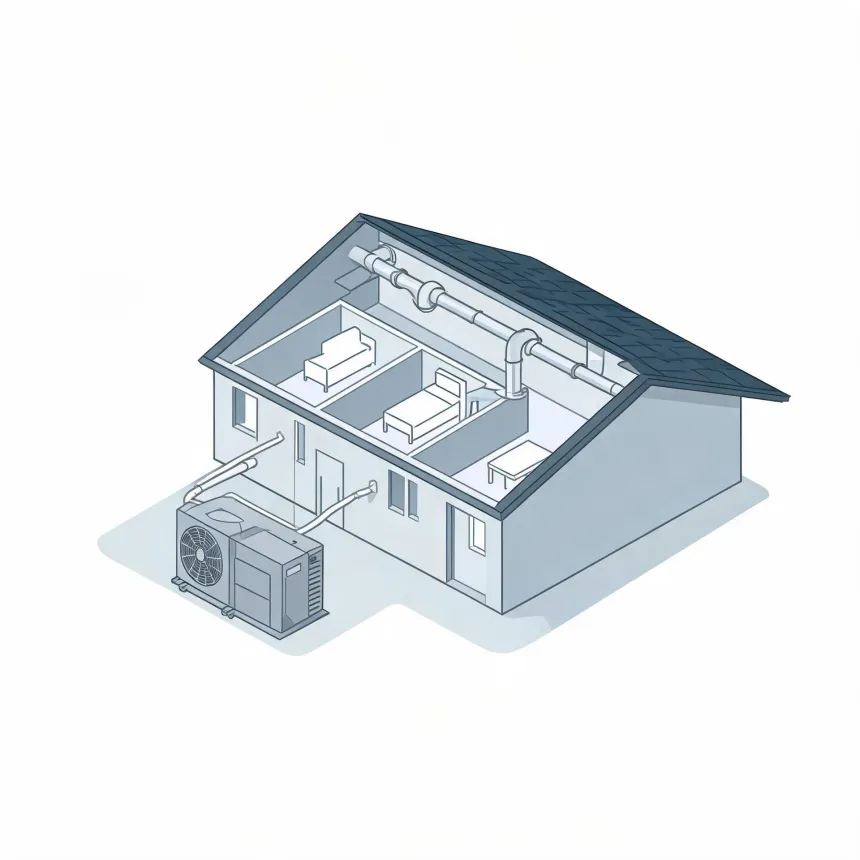
Isometric line illustration of a cutaway single-story house showing interior rooms with furniture and attic ductwork connected to an outdoor condenser unit beside the building.
Your system heats October through April and cools May through September.

NOAA nClimDiv, 1991–2020 normals

Half the homes in Bullitt County were built in 1993 or later.

A heat pump that came with a newer house still has a lot of working life in it, and that's worth knowing before you decide whether to fix it.

Bullitt County weather doesn't run a heat pump any harder

84 severe weather events from 2015 to 2024
24% of homes statewide lost power a day or more in 2024
58 damaging wind events from 2015 to 2024

A heat pump works hardest right when it switches jobs. October is the first month of heat here, and that first cold stretch is what finds a part that was already weak all summer. Same with May. April is quiet, then the first hot week hits and a capacitor or contactor that was barely hanging on gives out. If your heat pump is acting up right at the start of one of these runs, that timing is not a coincidence. It is usually not a sign the system is worn out. It is one part that could not take the jump in load.

A newer system is worth repairing

If your heat pump came with a newer house, repair is the call worth making first. Get the issue looked at and fixed rather than planning around a replacement.

Find a contractor
A man in a worn dark jacket and tan pants, seen from behind, climbs porch steps toward a dark green paneled front door while carrying a canvas tool bag holding a hammer and other tools, with a potted conifer shrub to the right.
A gray heat pump outdoor unit mounted on a concrete pad next to a residential house with lap siding and stone accents.

The hours add up, the strain doesn't

Running year round, heating in the colder months and cooling the rest, a heat pump logs more hours than a furnace or an AC alone. That adds up over a year. But here it's not fighting ice storms or long stretches below zero, so those hours don't wear it down the way they would somewhere harsher. If yours is running fine right now, staying on top of it, a filter change, a clear outdoor unit, a yearly check, is what keeps it that way. If it's acting up, that's more likely one part giving out than the whole system reaching the end of its run.

It won't switch between heating and cooling

A heat pump that runs but won't change modes often has a stuck reversing valve. The system may blow cold air when it should heat, or run nonstop without reaching the temperature you set. This is a repair, not something to wait out.
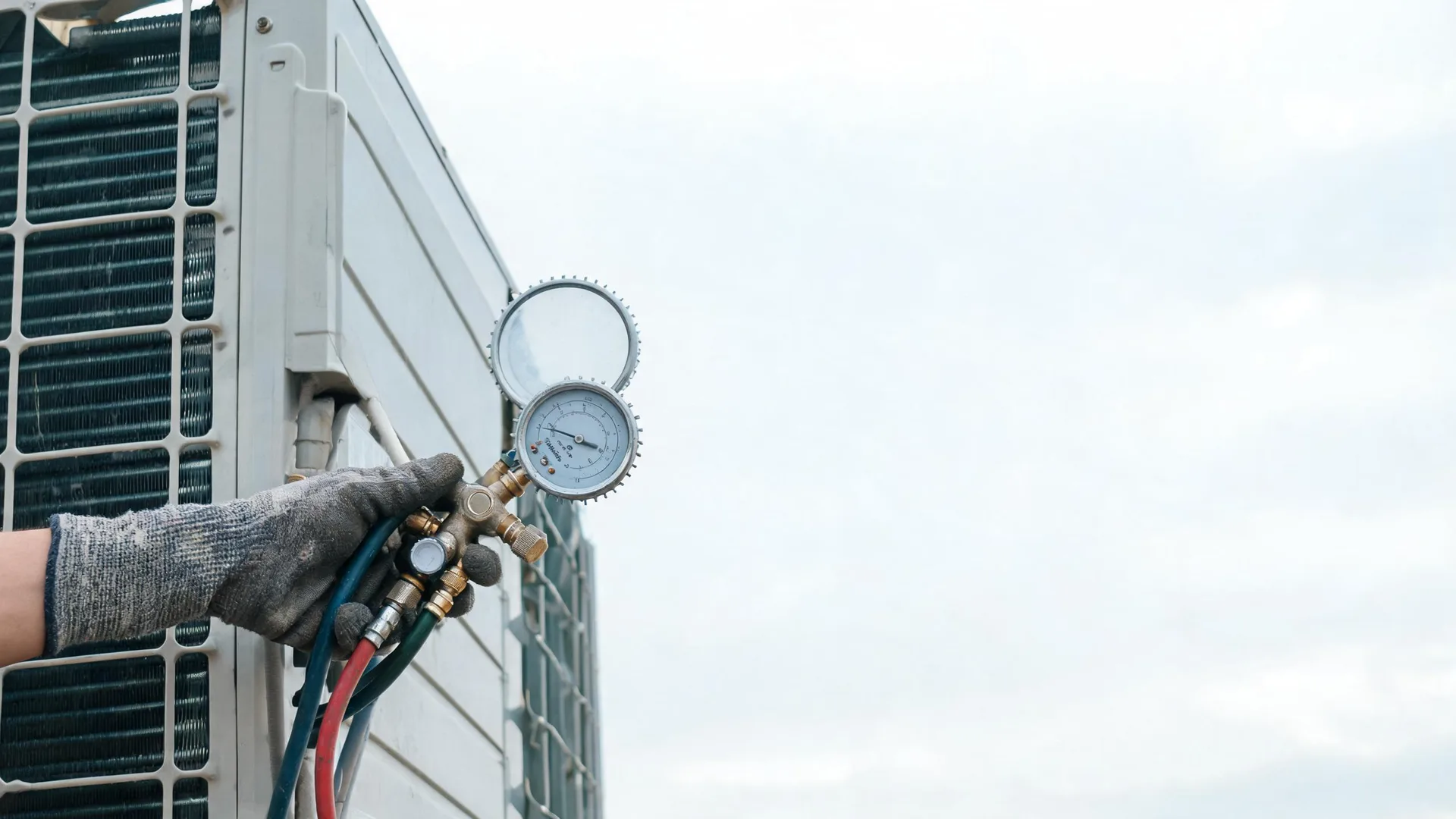
Ice building up on the outdoor unit

Some frost in cold weather is normal and the system clears it on its own. Ice that keeps building, especially on the coil or lines, points to a defrost control that isn't cycling or a refrigerant charge that's low. Left alone, it makes the unit work harder to move any heat at all.

Most heat pump failures trace back to a handful of parts, and they tend to go the same way every time. The capacitor weakens slowly, then fails all at once, usually right when the compressor or fan motor asks for a hard start. A contactor's contacts pit and burn from years of opening and closing, until one day they don't close at all. The reversing valve can stick from a coil that's gone bad or debris caught in the valve body, and that's what leaves a system blowing the wrong temperature air. Refrigerant doesn't get used up, so a low charge almost always means a leak somewhere in the lines or coil, not normal wear. Outside of those, a dirty outdoor coil or a clogged filter forces every other part to work harder than it should, and that shortens the life of whatever gives out next.

Once the actual part is identified, the decision gets simpler. A failed capacitor, a burnt contactor or a bad fan motor are straightforward swaps, and fixing one brings the system back to where it was before it failed. None of that damages the compressor or the coils, so there's no reason a repair like that should lead to another one soon after. The harder call comes with the compressor itself. It's the most expensive part to replace and often the oldest, so a failed compressor is the point where a tech will talk through whether to repair or replace rather than just fixing it and moving on. Everything else on a heatpump is a part failing on its own schedule, not a sign the system around it is failing too.