





A row of dark-painted single-story cottages with gabled shingle roofs behind a mowed lawn, a trimmed hedge in the left foreground and large leafy trees overhead under an overcast sky.

Heat Pump Repair in Mount Sterling, KY

Tell us about the job

Takes about a minute. No obligation.

RepairHeat PumpMontgomery County, KY
Step 1 of 2

What ZIP code is the job in?

Montgomery County has logged 112 severe weather events between 2015 and 2024, and most of that was damaging wind. Wind throws branches and debris into the outdoor unit, and hail has hit here too, enough to bend the fins on the coil. A bent fin or a cracked blade does not always stop the heat pump from running. It can keep cycling for weeks while it loses efficiency or strains the fan motor. If yours took a hit from a storm and seems fine, that is not the same as being fine.

7 months
October through April, your system heats
4 months
June through September, it cools
27°F
the average winter night it heats against
85°F
the average summer afternoon it cools against
Isometric grayscale illustration of a cutaway house showing interior rooms, ceiling ductwork and an air handler, connected by lines to an outdoor condenser unit on a pad outside.
Your system heats October through April and cools June through September.

NOAA nClimDiv, 1991–2020 normals

Zone 4A asks a heat pump to heat and cool through every season, but winter nights here average 27°F, not far below zero.

A heat pump that never has to fight extreme cold is usually a heat pump worth repairing, not replacing.

September and May are when a weak heat pump finally gives out

Cooling runs June through September
Heat runs October through April
91 damaging wind events from 2015 to 2024

A heat pump that hasn't had to fight the cold is worth fixing

Mild winters mean less wear on the compressor over the years. If your heat pump is otherwise sound, a repair now is likely to hold.

Find a contractor
A white mini-split heat pump outdoor unit mounted on a concrete pad beside a gray-sided house, surrounded by gravel and green shrubs.

A newer house usually means a system with years left in it

Half the houses in Montgomery County were built in 1987 or later. If yours is one of them, the heat pump is probably newer too, especially if it came with the house. A system within its working life is almost always worth repairing over replacing, and that's true whether the problem is a storm-bent fin or something wearing out on its own.

A refrigerant leak gets worse while the heat pump keeps running

A low charge makes the compressor work harder to move heat, and it runs hotter doing it. Left alone, that heat can break down the oil that lubricates the compressor, and a compressor that fails from that is a much bigger job than sealing the leak would have been.
A struggling heat pump is doing damage you can't see

A weak capacitor or a failing contactor still lets the system start most of the time, so it seems to be working. Each hard start wears the compressor a little more. By the time it won't start at all, the compressor may have taken the kind of wear that was preventable.

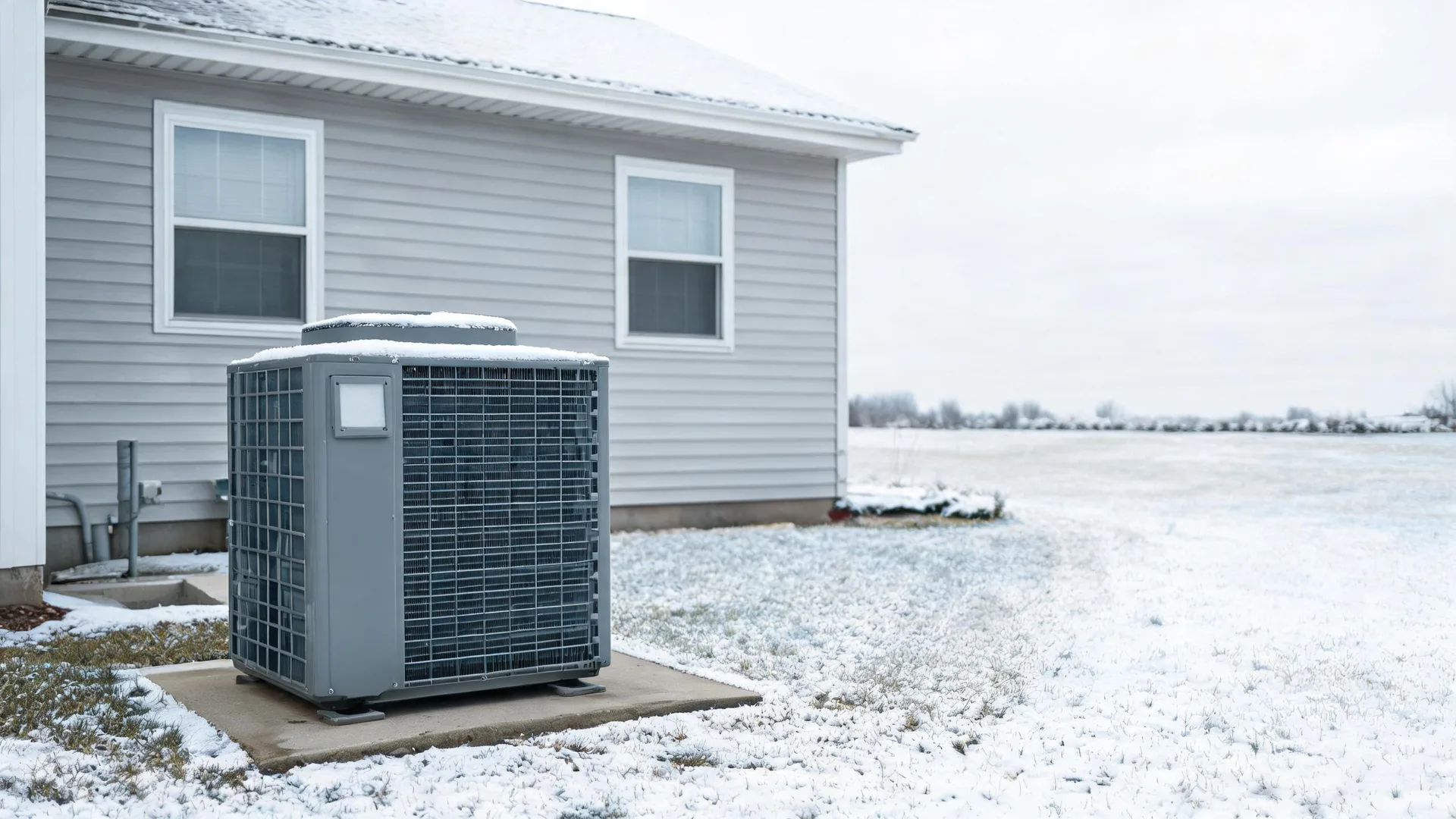
Short cycles of air that isn't warm or cool enough, or air that stops matching the thermostat setting, usually mean the system is working harder to do less. Listen for it too. A heat pump that clicks, hums, or buzzes before it starts is often struggling with a failing capacitor or contactor, the parts that get it running in the first place. Ice on the outdoor unit in the dead of winter is normal for short stretches, but ice that won't clear during the defrost cycle points to a stuck reversing valve or a fan that isn't moving air across the coil. If the system runs constantly without reaching the set temperature, or shuts off and on in quick bursts, it's losing the fight against whatever's wrong with it. None of these mean the heat pump is done. They mean it's telling you something before it quits for good.

A diagnostic visit starts outside, at the unit itself. A tech checks refrigerant pressure, amp draw on the compressor and fan motor, and the condition of the coil and fins before anything gets taken apart. Inside, the thermostat gets tested along with the reversing valve, since a valve stuck in one position can look like several other problems at once. Electrical parts get checked under load, not just by eye, because a capacitor or contactor can look fine sitting still and still be failing under the strain of starting. The goal is to find which part is actually causing what you're seeing, not just the first thing that looks worn. A heat pump has parts that can mimic each other's symptoms, so ruling things out matters as much as finding what's wrong.