





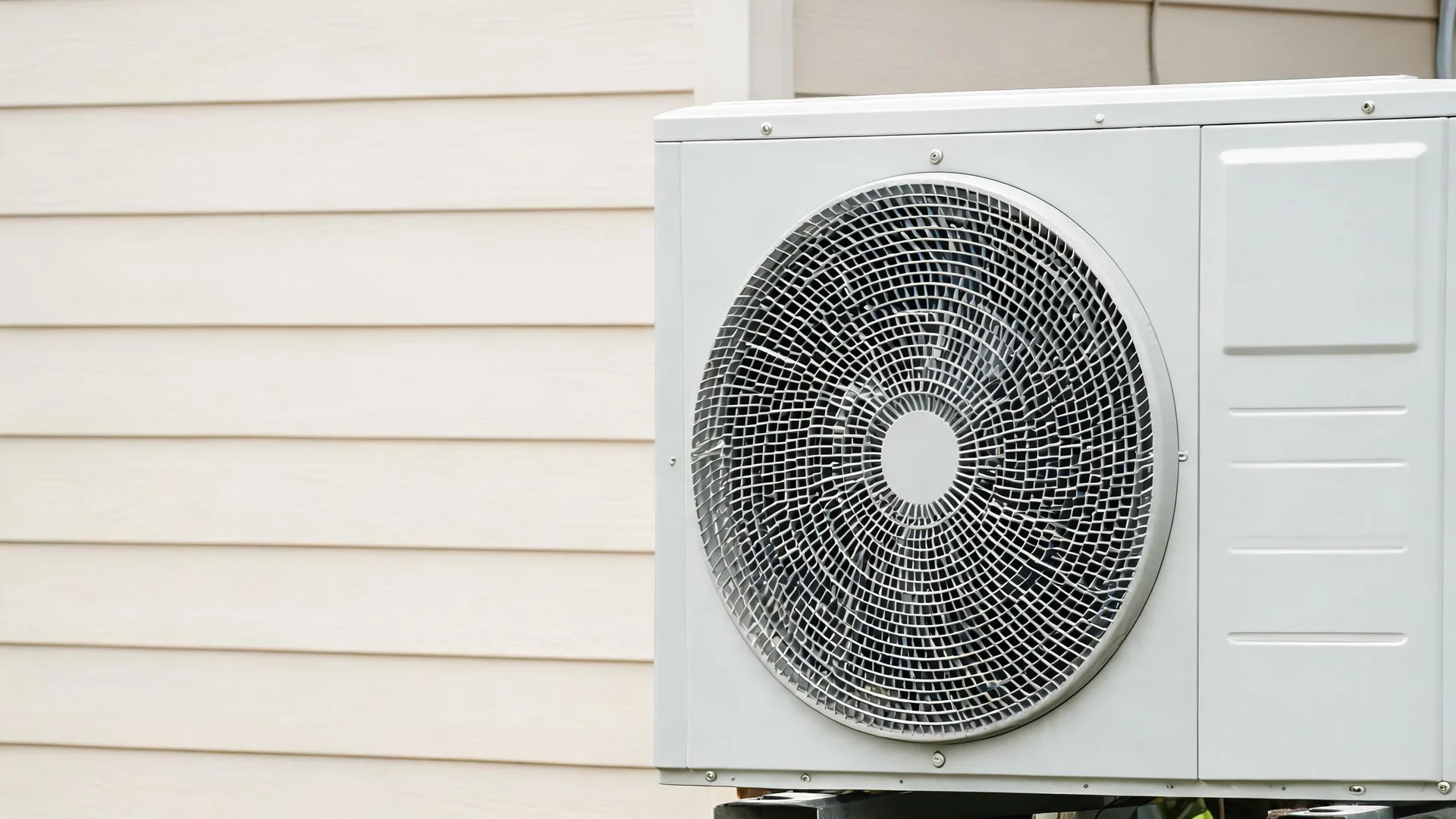
A grey air-source heat pump outdoor unit mounted on a concrete pad next to a modern white-rendered residential house.

Heat Pump Repair in Middlesborough, KY

Tell us about the job

Takes about a minute. No obligation.

RepairHeat PumpBell County, KY
Step 1 of 2

What ZIP code is the job in?

Bell County asks real work of a heat pump both ways, warm months and cold, but it does not pile on the kind of strain that wears a system out early. Winters here average 27°F overnight across December through February, which is cold enough to run the heat pump hard but not the kind of deep freeze that pushes a system past its limits night after night. Most of the wear on a heat pump here comes down to age and upkeep rather than the climate beating on it. So if yours is acting up, the damage is usually something a repair can reach and fix, not something that means starting over.

7 months
October through April, your system heats
4 months
June through September, it cools
27°F
the average winter night it heats against
83°F
the average summer afternoon it cools against
Isometric cutaway illustration of a single-story house showing interior rooms, attic ductwork and an air handler, with an outdoor condenser unit connected by lines along the exterior wall.
Your system heats October through April and cools June through September.

NOAA nClimDiv, 1991–2020 normals

Heat pumps running in October tend to show whatever gave out over the summer.

September is the month to get yours checked before that first cold morning finds it.

88 events in 10 years, still just a repair

88 severe weather events from 2015 to 2024
24% of homes statewide lost power a day or more in 2024
69 damaging wind events from 2015 to 2024

It's usually worth repairing

It has an easier job here than in most places, so your heat pump is often in decent shape. Repair is usually worth it.

Find a contractor
A gray outdoor HVAC unit mounted on a concrete pad beside a house with gray lap siding and a stone foundation.

Letting it run while it struggles makes the failure worse

A heat pump that's struggling doesn't fix itself by staying on. If the reversing valve is sticking, every cycle it runs adds wear to a part already failing. If the refrigerant charge is low, the compressor keeps working to move heat it can't move, and that's how a bad compressor happens. A weak capacitor puts the motor it starts under more load each time it tries and fails to start clean. None of this gets better with more runtime. Shutting it off and getting someone to look at it beats letting it run on a part that's already going.

What a tech checks first

A diagnostic starts with what the system is actually doing. Blowing cold air in heating mode, short cycling, running nonstop without reaching temperature, making noise it didn't used to make. The tech reads pressures off the gauges, checks the charge, tests the capacitor, and watches whether the reversing valve is actually shifting when it's told to. Each of those rules things in or out. It's not guesswork, it's narrowing down.
Why the visit matters more than the part

The same symptom can come from different causes, and the wrong fix doesn't help. A heat pump short cycling could be a failing capacitor or a thermostat telling it to stop too soon. One visit sorts out which, instead of replacing a part that was never the problem. That's the value of having someone look at it directly instead of guessing from the symptom alone.

Before anyone comes out, there are a few things worth looking at. Check the thermostat is set to heat and the temperature is actually above room temperature, since a setting bumped by accident looks exactly like a system that won't respond. Look at the outdoor unit and clear away anything piled against it, leaves, snow, a cover left on, anything blocking airflow around the coil. Check the air filter. A filter clogged with dust chokes the airflow a heat pump needs to move heat, and that alone can cause weak output or a system that runs without catching up. Check the circuit breaker didn't trip. If the outdoor unit is caked in ice beyond what a normal defrost cycle clears, that's worth noting for the tech but not something to chip at yourself. None of this fixes a bad capacitor or a stuck reversing valve, but it rules out the simple stuff before anyone opens the cabinet.

Most heat pump failures trace back to a handful of parts, and they fail for ordinary reasons. The capacitor that kicks the compressor or fan motor into motion weakens with age and heat cycling until it can't deliver that initial jolt, and the motor strains trying to start without it. The reversing valve, the part that switches the system between heating and cooling, can stick in one position after years of shifting back and forth, especially if it sits unused in one mode for a long stretch. Refrigerant doesn't get used up, so a low charge almost always means a leak somewhere in the line set or coil, and it's the kind of problem that gets worse quietly until the compressor is working too hard for too long. The outdoor coil collects dirt and debris over time, and a dirty coil can't shed or absorb heat the way it needs to, which shows up as weak performance long before anything breaks outright. A dirty filter does similar damage from the other end, starving the system of airflow it needs on both the heating and cooling side. None of these show up overnight. They build for months, sometimes years, before the system finally can't compensate anymore.