





A lit residential street at dusk featuring large two-story brick houses with glowing windows, mature trees, and a street lamp.

Heat Pump Repair in Hopkinsville, KY

Tell us about the job

Takes about a minute. No obligation.

RepairHeat PumpChristian County, KY
Step 1 of 2

What ZIP code is the job in?

Christian County saw 169 severe weather events between 2015 and 2024, and most of that was damaging wind. Hail showed up too. A heat pump's outdoor unit sits right where that wind and hail land. The coil fins are thin, and the fan blades can take a hit even when the unit keeps running afterward. If a storm has come through and the unit looks dented or the fins are bent flat, that is worth a look before the next cold snap.

7 months
October through April, your system heats
5 months
May through September, it cools
29°F
the average winter night it heats against
87°F
the average summer afternoon it cools against
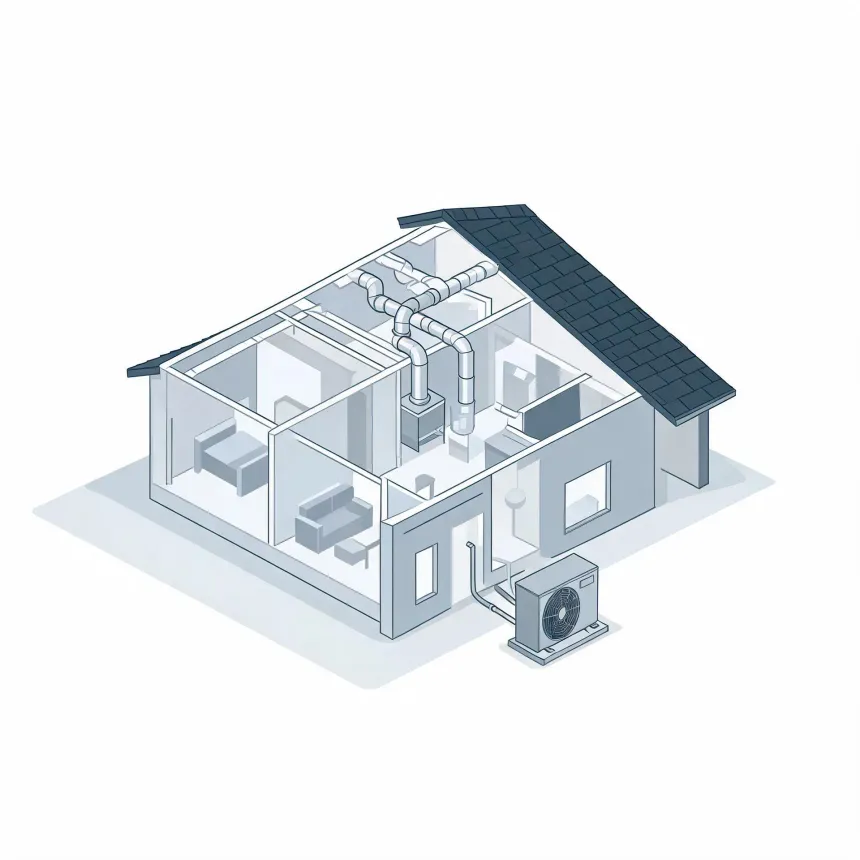
Isometric line illustration of a cutaway house showing interior rooms with furniture, ceiling ductwork connected to an indoor air handler, and an outdoor condenser unit linked by refrigerant lines.
Your system heats October through April and cools May through September.

NOAA nClimDiv, 1991–2020 normals

Check the thermostat batteries and the breaker before anything else. A dead thermostat display looks exactly like a dead system from where you're standing.

Walk outside and look at the unit itself. If the outdoor fan isn't spinning at all, or the whole cabinet is caked in ice, that's worth noting for whoever comes out to look at it.

A heat pump that took a hit in storm season often fails the first week it has to work hard

Cooling runs May through September
Heat runs October through April
106 damaging wind events from 2015 to 2024

Half the homes in Christian County were built in 1983 or later. If your house falls on that side, the heat pump question is usually different than it is in an older place. A unit that came with a newer build hasn't necessarily been running as long as the house has, but it's not starting from a worn-out position either. Something acting up on a system like that is more often one part failing than the whole unit giving out. That's usually a repair, not a replacement.

After a storm, get the outdoor unit checked even if it still runs

A dented cabinet or flattened fins do not always stop a heat pump from running. If a storm has come through recently, get the outdoor unit looked at before you need it for heat.

Find a contractor
A man in a dark long-sleeved shirt, tan work pants and boots, seen from behind, carries a worn canvas tool bag as he steps up onto a porch toward a green paneled door, with a small potted evergreen beside him.
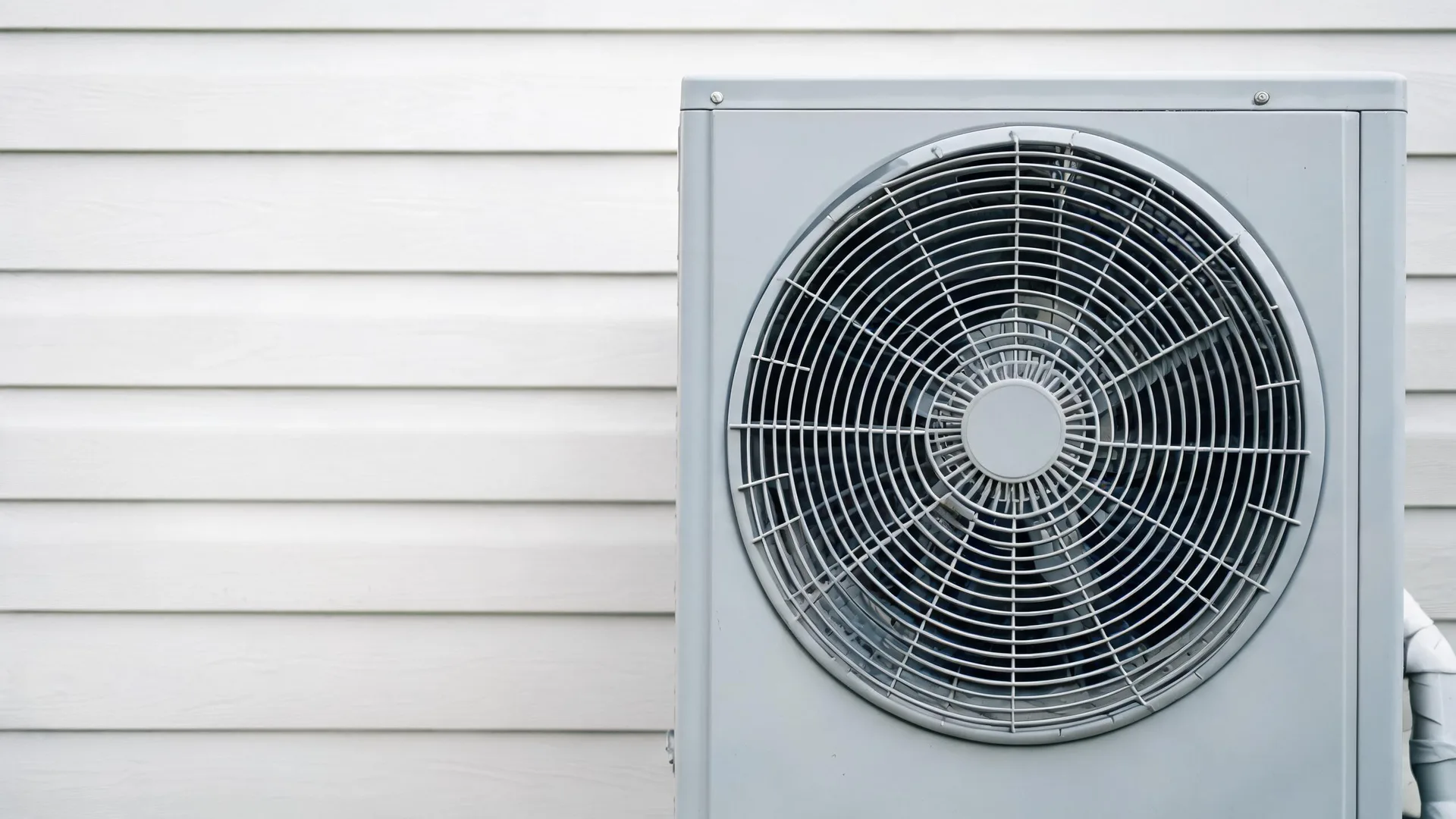
A residential heat pump outdoor unit mounted on a concrete pad next to a house with gray vinyl siding.

A newer system is worth fixing first

If your house was built in the last few decades, don't let one bad part talk you into a new system. Get the specific problem diagnosed first. A failed capacitor or a bad sensor is a common finding on a unit that age, and fixing that one part is usually all it takes to get it running right again.

It's running, just not doing the job

A heat pump that keeps running but stops keeping the house comfortable is further along than it looks. Warm air blowing in winter, weak airflow, a unit that cycles on and off more than it used to. The compressor or the reversing valve can fail halfway before they fail all the way, and the system keeps limping along while it does.
The sounds and smells mean something specific

A hard clank at startup usually points to a fan blade or a loose part inside the cabinet. A burning smell means a wire or motor is overheating and that unit should get shut off until someone looks at it. Ice building up on the outdoor coil outside of a defrost cycle means the system isn't defrosting right, and running it anyway just adds strain.

Most heat pump failures come down to a handful of parts, and the reversing valve is the one that's unique to this machine. It's what switches the system between heating and cooling, and when it sticks, the unit runs but delivers the wrong temperature air or gets stuck in one mode. The defrost control board is another common one. It's supposed to melt frost off the outdoor coil on a schedule, and when it fails, ice builds up and chokes off airflow over the coil. Capacitors wear out on a predictable timeline in both the indoor and outdoor units, and a weak one shows up as a hard start or a motor that hums without turning. Refrigerant leaks are different from the rest, since they're not wear and tear so much as a line or joint failing, and a system low on charge will run constantly without catching up.

A diagnostic starts outside at the unit. The tech checks refrigerant pressure, checks the electrical connections, and watches how the compressor and fan draw power while running. Inside, the tech checks the air handler or furnace coil, the thermostat signal, and whether the system actually switches between heating and cooling when it's told to. Gauges and a multimeter tell most of the story. Low pressure points to a leak. A bad amp draw points to a failing motor or capacitor. A reversing valve that won't switch modes on command shows up the same way, by not doing what the controls are telling it to do. None of this is a guess. The readings either match what a healthy system should show or they don't, and that difference is what points to the actual part at fault. A good diagnosis ends with one part named, not a list of maybes.