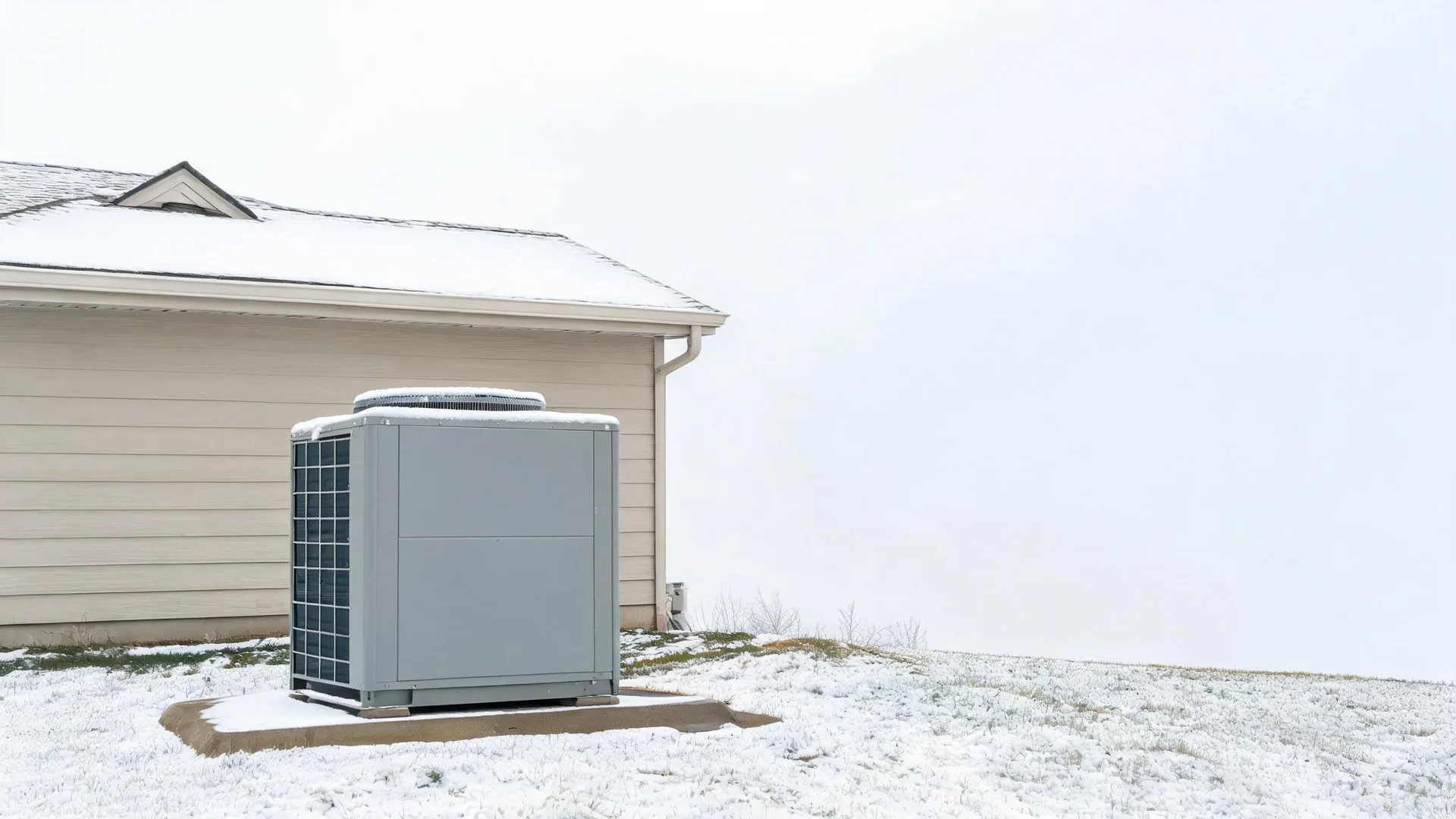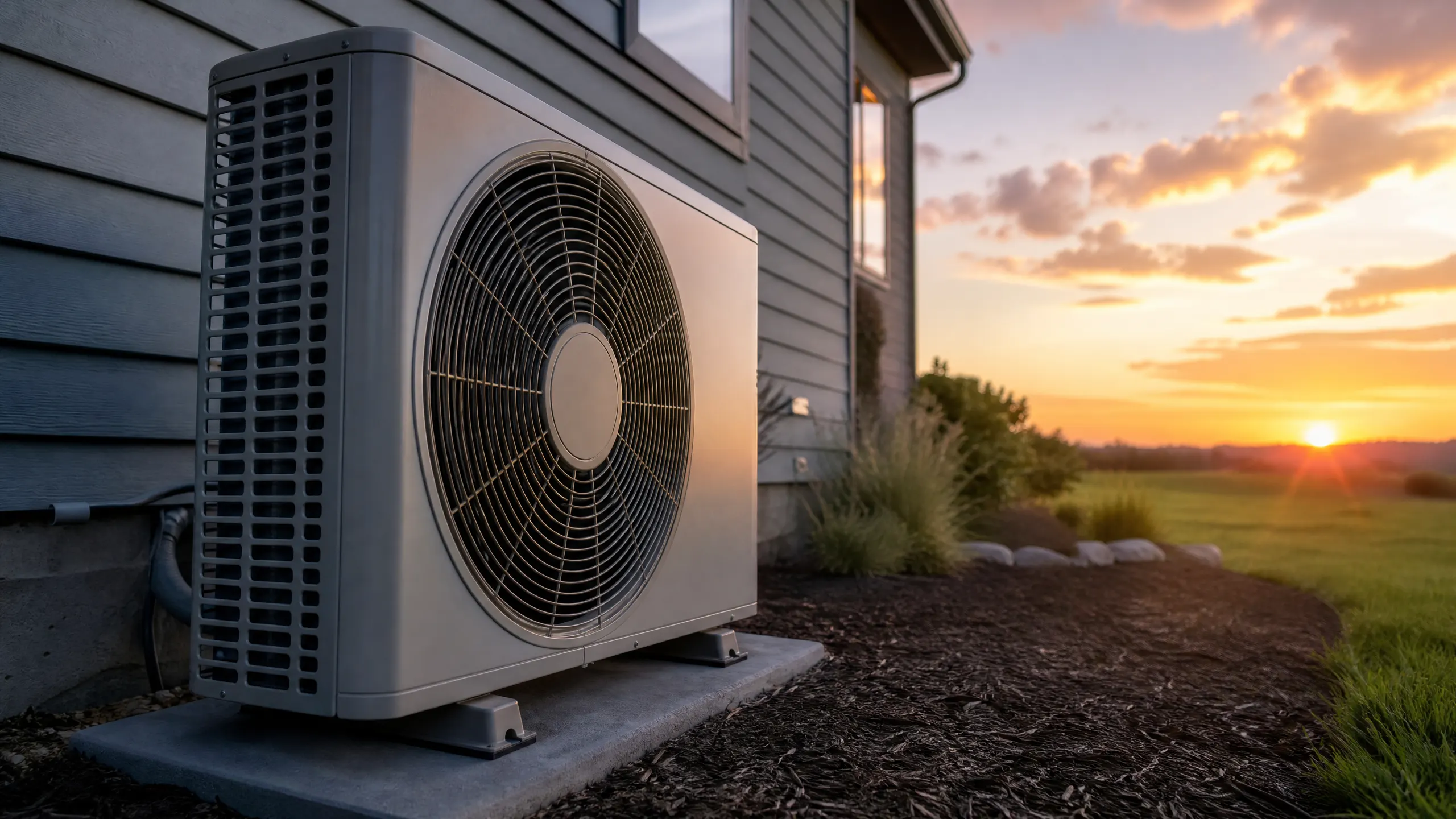
A grey residential air-conditioning condenser unit mounted on a concrete pad beside a house, photographed at sunset.

Heat Pump Repair in Hazard, KY

Tell us about the job

Takes about a minute. No obligation.

RepairHeat PumpPerry County, KY
Step 1 of 2

What ZIP code is the job in?

September is when a weak heat pump gets found out

Heat in Hazard runs October through April, about seven months. When the system switches over in September and starts working harder, a part that was already marginal tends to quit right then, not before.


Get it looked at before the first cold snap

A heat pump struggling in September will struggle more once temperatures drop for good. Having it checked before the season sets in means the fix happens on your schedule, not during the week you need the heat most.

7 months
October through April, your system heats
4 months
June through September, it cools
28°F
the average winter night it heats against
84°F
the average summer afternoon it cools against
Isometric grayscale illustration of a cutaway house showing interior rooms, ceiling ductwork and an air handler, connected by lines to an outdoor condenser unit on a pad outside.
Your system heats October through April and cools June through September.

NOAA nClimDiv, 1991–2020 normals

Check the outdoor unit before anything else. If the fan isn't turning or it's coated in ice with the system in heating mode, that's worth a call.

A thermostat set to heat but blowing cool air doesn't always mean the heat pump is broken. Check the batteries and the breaker first.

Half these homes are older, and that doesn't change what's wrong with your heat pump

Half the homes here were built by 1985
56 damaging wind events from 2015 to 2024
12 hail events from 2015 to 2024
Perry County weather isn't what breaks heat pumps82 severe weather events hit here between 2015 and 2024, but most heat pump trouble comes from a worn part, not the storm.

Winter here isn't extreme. The overnight low averages 28°F across December, January and February, not the single-digit nights that push a heat pump to run flat out for hours at a stretch. That matters because the harder a system runs, the faster its parts wear. A heat pump in Perry County isn't working as hard as one further north, so when it's acting up, the cause is more often a part that's reached the end of its life than a system that's been run into the ground. That's the kind of problem worth fixing rather than replacing.

Get it looked at early

Problems tend to show up in the first weeks of the season, when the load hits a part that was already weak.

Find a contractor
A gray heat pump condenser unit mounted on a concrete pad against the gray lap-siding exterior wall of a house.

Running it through the problem rarely fixes the problem

A heat pump that's struggling doesn't take a break between cycles the way it looks like it does. The compressor still has to push harder every time it kicks on, and a few more degrees of lift each cycle adds up fast. A refrigerant leak gets worse under load, not better, because the system keeps trying to hit the same temperature with less to work with. Low charge makes the compressor run hotter than it should, and heat is what kills a compressor. Ice on the outdoor coil during heating mode is the same story. A little frost is normal and the defrost cycle handles it. A system that can't keep up starts carrying more ice each round, the coil can't pull heat from the air anymore, and the unit runs constantly without putting out much warmth at all. None of this fixes itself by giving it time. The part that's marginal now is doing more work with every hour the system runs, and it's the kind of wear that shows up as a bigger repair than it would have been at the start.

Short cycling means something's cutting the run short

A heat pump that shuts off a few minutes after starting, then starts again soon after, isn't resting. Something is tripping it off early, often a refrigerant problem or a sensor reading wrong. The system can't warm the house properly when it never finishes a full cycle.

Strange sounds point to specific parts

A clicking at startup that doesn't lead to the unit running is usually the relay or the capacitor. A grinding or squealing from the outdoor unit points to the fan motor or its bearings. A hissing sound can mean refrigerant escaping somewhere in the line. Each sound is worth naming to whoever comes out, because it narrows down the job before they even open the panel.

Most heat pump failures trace back to a handful of parts, and age catches up with them whether a season was mild or not. The reversing valve is a common one. It's what switches the system between heating and cooling, and if it sticks from years of use, the unit gets stuck blowing the wrong temperature or stops switching modes at all. The contactor and capacitor wear out just from the repeated starting of the compressor and fan motors over the years, and when they finally give out, the outdoor unit may not start even though the thermostat calls for heat. Refrigerant leaks develop at joints and fittings slowly, often over several seasons, until the system is running constantly and still not keeping up. The defrost control board is another one, since it tells the system when to melt frost off the outdoor coil, and if it fails the coil can ice over solid. Each of these is a part reaching the end of what it can do, not damage from a hard week of weather.

So when is it worth fixing versus replacing. A single part failing, like a capacitor or a defrost control board, is almost always worth repairing no matter the age of the system, because the rest of the unit is still sound. What changes the math is a compressor failure. The compressor is the most expensive part in the system, and if it fails outright, you're weighing that cost against a full replacement rather than against nothing. Frequency matters too. A system that's needed a few different repairs over a couple of years is telling you it's running out of good parts, not just unlucky ones. None of that is a verdict on its own. A tech who's opened the panel and seen what's actually failing can tell you whether this is a part wearing out or a system wearing out, and that's a different conversation each time.