A large outdoor air-conditioning unit mounted beside a vinyl-sided house, surrounded by mulched garden beds and green shrubs.

Heat Pump Repair in Glasgow, KY

Tell us about the job

Takes about a minute. No obligation.

RepairHeat PumpBarren County, KY
Step 1 of 2

What ZIP code is the job in?

Check the thermostat and the breaker first

Make sure the thermostat is set to heat or cool and the setpoint is past room temperature. Check the breaker panel for a tripped switch on the heat pump and the air handler. Outdoor units often sit on their own disconnect box mounted on the wall nearby, and that switch can get bumped or shut off without anyone noticing.

A look outside tells you a lot

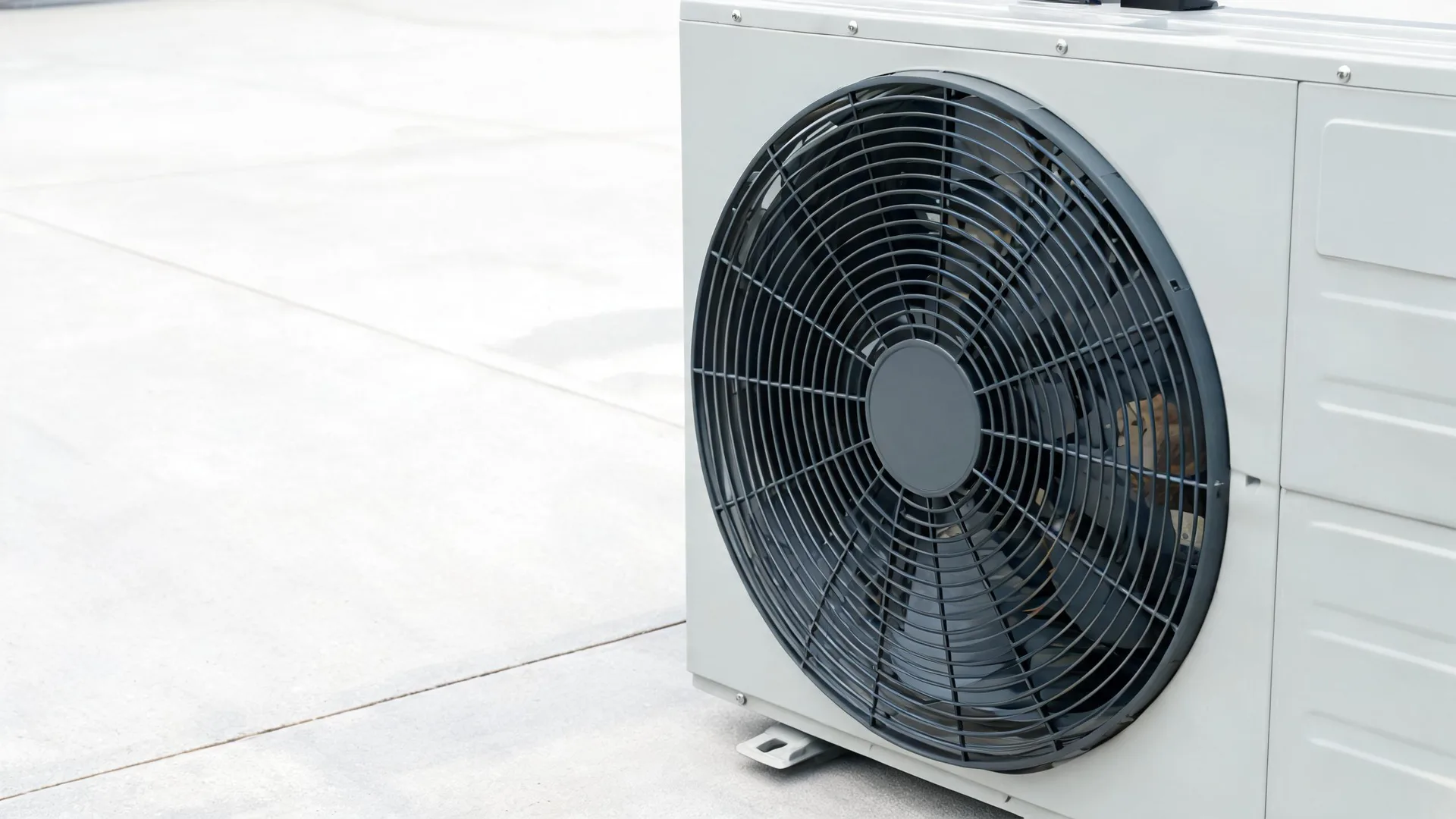
Walk out to the outdoor unit and see if the fan is spinning and air is moving through it. Check that nothing is stacked against it or blocking the sides. If the coil is caked in ice outside of a normal defrost cycle, or the unit is dead quiet when it should be running, that points to a problem a thermostat reset won't fix.

7 months
October through April, your system heats
5 months
May through September, it cools
29°F
the average winter night it heats against
88°F
the average summer afternoon it cools against
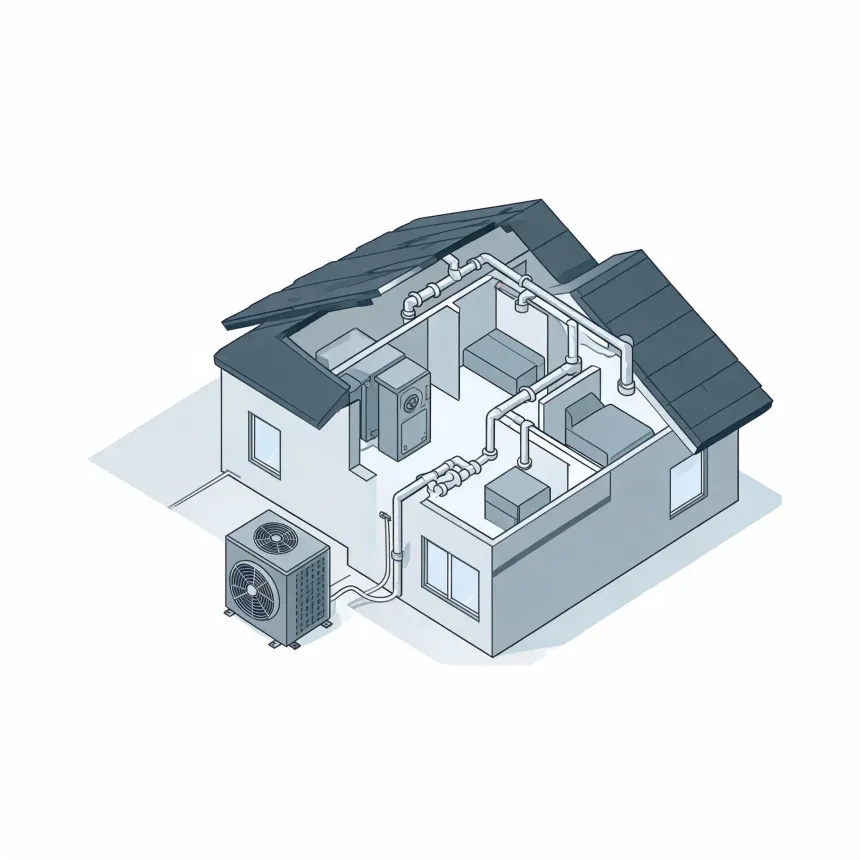
Isometric grayscale illustration of a cutaway two-story house showing interior ductwork, an indoor air handler unit, and an outdoor condenser unit on a pad beside the building.
Your system heats October through April and cools May through September.

NOAA nClimDiv, 1991–2020 normals

Barren County asks real work of a heat pump, heating and cooling both, but it's not extreme in either direction.

A heat pump here isn't fighting the kind of strain that wears a system out early, so a repair usually still makes sense.

September turns the heat on, and that's when a weak unit shows itself

Cooling runs May through September
Heat runs October through April
60 damaging wind events from 2015 to 2024

A technician starts outside at the unit itself, checking refrigerant pressures with gauges and looking at how the compressor is running under load. Inside, they check the air handler, the air filter, and the temperature of the air coming out of the vents compared to what's going back in. A heat pump that's low on refrigerant will often still run, just weaker, so pressures tell a different story than what the thermostat shows. They'll also check the reversing valve, since a heat pump that heats fine but won't cool, or the other way around, usually points right at that part. If the outdoor coil was icing over, they'll look at the defrost board and the sensors that tell the system when to kick into a defrost cycle. Most of this comes down to finding the one part that's actually failing, rather than guessing from the symptoms alone.

A newer system is worth fixing, not replacing

Half the homes in Barren County were built in 1985 or later. If your house falls on that side, your heat pump likely isn't old enough to be near the end of its working life, and a repair should bring it back to normal.

Find a contractor
A dark gray heat pump unit mounted on a concrete pad next to a house with gray siding and a stone veneer wall.

Running through a problem doesn't solve it

A system that's struggling doesn't fix itself by staying on. If refrigerant is low, the compressor keeps trying to pump a full cycle with less to work with, and it runs hotter than it should doing it. Ice on the outdoor coil blocks airflow, so the system pulls in less heat each time it runs, and the ice tends to build further the longer it's left. A restricted filter or a dirty coil makes the compressor work against resistance it shouldn't have to fight, cycle after cycle. None of that announces itself the way a dead unit does. The system keeps running, just worse, and whatever's forcing it to work harder doesn't ease up on its own. Left alone long enough, these are the problems that end up taking the compressor down with them.

Short cycling wears on the compressor

A heat pump that shuts off a couple minutes after starting, then kicks back on soon after, isn't finishing a full cycle. That's hard on the compressor and it usually means a refrigerant problem, a bad sensor, or an airflow restriction forcing the system to protect itself.

Warm air in heat mode isn't always a failure

Heat pumps put out air that feels cooler than a furnace would, even when they're working right. What tells you something's actually wrong is air that's barely warmer than what's in the room, or air that's blowing cold. Either one means the system isn't moving heat the way it should.

Most heat pump failures trace back to a handful of parts, and they fail for ordinary reasons. The compressor is the one that ends up replacing the whole unit, and it usually gets damaged by something else going wrong first, like refrigerant flooding back to it as a liquid instead of a gas. The reversing valve sticks sometimes, especially in a unit that's gone a while without switching between heating and cooling, and when it does the system gets stuck in one mode. Capacitors wear out and weaken over years of starting the compressor and fan motors, until one day they can't deliver the jolt needed to start. Low refrigerant almost always means a leak somewhere in the lines or the coil, not normal use, since the system is sealed and isn't supposed to lose charge over time. Outdoor coils get dirty or physically blocked, and that alone can push a system to work harder than it should and shorten the life of the compressor it's protecting.

Once a technician finds the failed part, the repair versus replace decision usually comes down to the compressor. Almost everything else on a heat pump, the capacitor, the reversing valve, the defrost board, a sensor, gets replaced on its own without much debate. The compressor is different because it sits at the center of the sealed system, and swapping it is a bigger job than swapping a part bolted on the outside of it. If the compressor itself has failed, that's the point where most people start asking whether the rest of the unit is worth carrying forward. If it hasn't, fixing whatever did fail is usually the straightforward answer.