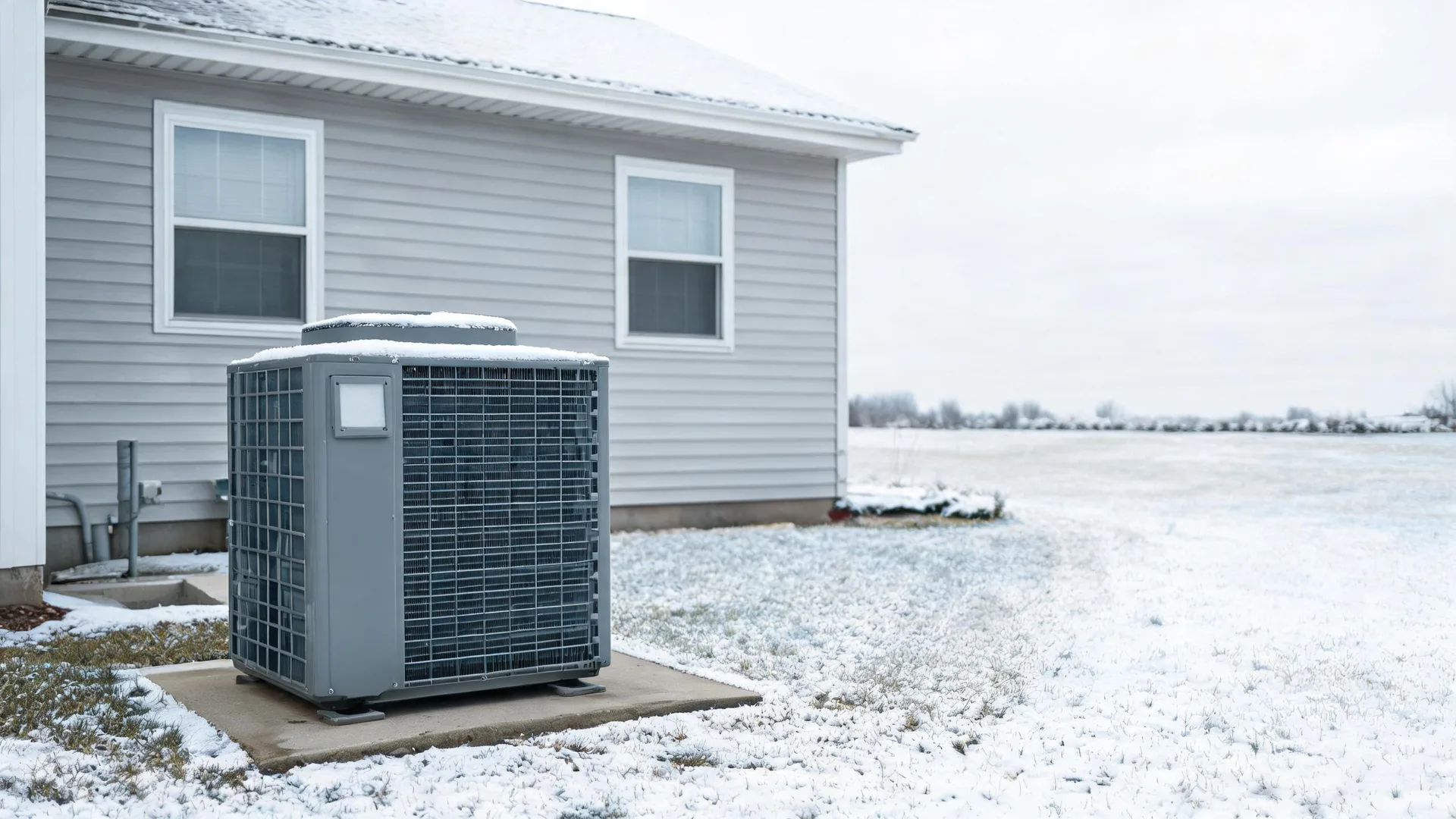
October is when it shows up
Heat pumps in Campbell County sit idle most of the year and start running heat in October. A part that was already weak gets asked to work hard right away, with no warm-up period, and that is when it tends to fail.
Takes about a minute. No obligation.
Heat pumps in Campbell County sit idle most of the year and start running heat in October. A part that was already weak gets asked to work hard right away, with no warm-up period, and that is when it tends to fail.
A heat pump struggling as the weather turns in Fort Thomas is showing a problem it had before the cold set in. Getting it looked at in September, before heat starts running, is easier than waiting for it to quit in the middle of a cold stretch.

NOAA nClimDiv, 1991–2020 normals
Zone 4A means winter and summer both put in work here, but nothing about Campbell County pushes a heat pump harder than that.
A heat pump acting up here is more likely worn or neglected than beaten down by the climate, and a worn or neglected part is usually worth fixing.




A heat pump acting up here is usually telling you about one part, not the whole system. Short cycling often points to a failing capacitor. Warm air that never gets quite warm enough often points to a low charge. A sensor out of calibration can make the thermostat call for more than the house needs. A tech can trace it to the actual part. Most of the time, in a climate like this one, that part is worth fixing rather than replacing the whole unit.
Problems tend to show up in the first weeks of the season, when the load hits a part that was already weak.
Find a contractor
A heat pump that's struggling doesn't fix itself by staying on. A compressor working against a low charge draws more current than it should, and it runs hotter than it was built to run. Keep that up and a repair turns into a compressor replacement, a different job entirely. A failing capacitor causes the unit to short cycle, and every one of those start-stop cycles puts a jolt through the motor windings. A motor can take some of that. It can't take months of it. Letting a small electrical fault ride usually means it takes something bigger down with it on its way out.
Look at the outdoor unit and clear away leaves, mulch or anything blocking the sides. Check the air filter and swap it if it's gray or clogged. Walk through the house and make sure no vents are closed or blocked by furniture. Check the thermostat is set to heat and the temperature is actually set above room temperature. These take a few minutes and rule out the simplest causes.
Ice on the outdoor coil, a unit that won't start at all, or a breaker that trips when it kicks on all point to something electrical or refrigerant-related, and opening the cabinet to look closer risks a shock or a burn. A gas smell or burning smell means shutting the system off at the thermostat and calling, not inspecting further. These need the right gauges and meters to find the actual fault.
Most calls start with something the homeowner heard, not saw. A heat pump banging or clanking on startup usually means a part has come loose inside the cabinet, often a fan blade hitting its housing. A hissing sound points to refrigerant escaping somewhere it shouldn't. Air coming out cold during heat mode, even for a few minutes at a time, is often just the defrost cycle, but if it stays cold the reversing valve may be stuck in the wrong position. A unit that runs constantly without ever satisfying the thermostat is losing the battle somewhere, whether that's a charge issue or a failing component working too hard to compensate. None of these fix themselves, and most get worse if the system keeps running while they sit there.
A diagnostic visit starts with questions, not tools. What's it doing, when did it start, does it happen in heat mode or when the system defrosts. Then the tech checks pressures with gauges on the refrigerant lines, checks the electrical readings on the compressor and fan motor, and checks the temperature split between the air going into the system and the air coming out. Each reading rules something out. A normal pressure with a bad temperature split points at airflow or the reversing valve, not the charge. A good temperature split with high current draw points at the compressor itself. The outdoor unit gets opened up too, since a failing capacitor or a seized fan motor shows itself the moment you look at it. By the end the tech can usually point to one part and tell you what it's doing wrong, not just that something is wrong.