Dark-sided single-story buildings with gray shingled roofs behind trimmed hedges, a mown lawn, and large leafy trees overhead.

Heat Pump Repair in Florence, KY

Tell us about the job

Takes about a minute. No obligation.

RepairHeat PumpBoone County, KY
Step 1 of 2

What ZIP code is the job in?

Boone County asks real work of a heat pump, both ways

Zone 4A means summers humid enough to push the compressor and winters cold enough to run the heat side hard, with overnight lows averaging 26°F across December, January and February. A heat pump here works in both directions through the year, not just one season.

Still, that load isn't extreme

A mixed climate isn't the heavy strain a heat pump sees in a place with harsher summers or colder winters. Wear on the compressor and coils tends to track what the machine actually works through, so a unit here is more likely to have aged on its own terms than been run into the ground. That's worth knowing before writing one off as worn out.

7 months
October through April, your system heats
4 months
June through September, it cools
26°F
the average winter night it heats against
85°F
the average summer afternoon it cools against
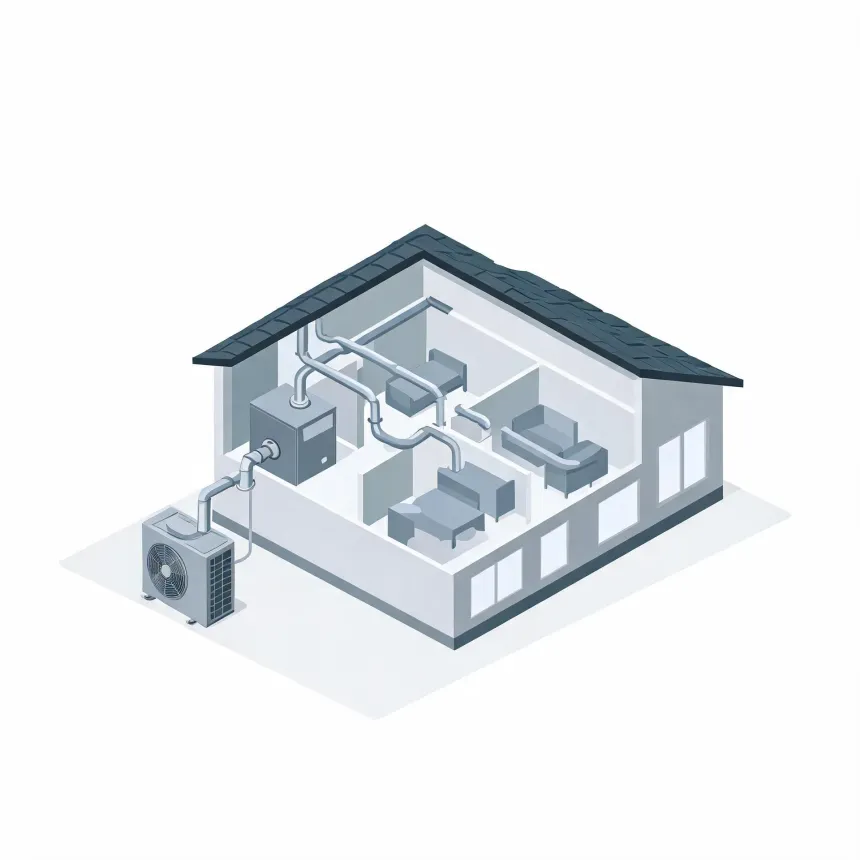
Isometric cutaway illustration of a single-story house showing an indoor air handler, branching ductwork through rooms with furniture, and an outdoor condenser unit connected by a line outside the wall.
Your system heats October through April and cools June through September.

NOAA nClimDiv, 1991–2020 normals

Half the homes in Boone County were built in 1996 or later.

A heat pump that came with a newer house still has working life ahead of it, and that's the case for repair.

Boone County sees its share of storms, so a unit that still runs might still need a look

121 severe weather events from 2015 to 2024
24% of homes statewide lost power a day or more in 2024
86 damaging wind events from 2015 to 2024
September is when a weak heat pump shows itHomes in Boone County switch over to heat in October, and the strain of that first cold month is when a borderline unit fails.

If your heat pump came with the house and the house is newer, check the paperwork before you assume the worst. A unit installed in 1996 or later still has room to run, and a repair call makes more sense than a replacement quote. Ask whoever comes out what's actually failed before you talk about swapping the whole system. A bad capacitor or a stuck reversing valve doesn't mean the compressor is done.

Get a diagnosis before you get a replacement quote

A heat pump that hasn't been run into the ground is usually a heat pump worth fixing. Before you assume yours is done, get someone out to look at what actually failed.

Find a contractor
A man in a cap, dark shirt and tan work pants walks up porch steps toward a green front door, carrying a worn canvas tool bag, with a potted shrub beside the entry.
A gray outdoor HVAC unit mounted on a concrete pad beside a house with gray lap siding and a stone foundation.

A small problem left running becomes a big one

A heat pump that's struggling doesn't fail all at once. Low refrigerant charge makes the compressor work harder to move the same amount of heat, and that extra strain shows up as heat in the motor windings that has nowhere to go. A reversing valve that's starting to stick will keep drawing current even when it isn't doing its job right, and the compressor behind it still has to try to make up the difference. Ice on the outdoor coil blocks airflow, so the system pulls in less heat than it needs and runs longer to get there, which only builds more ice. None of that fixes itself by waiting. A unit left running on a problem like this is usually asking the compressor to cover for whatever part actually failed, and the compressor is the part a heat pump can't run without.

Check the thermostat settings first

Make sure it's set to heat, not auto, and that the set point is actually above room temperature. A schedule or hold set by someone else in the house causes more service calls than people expect.

Look at the outdoor unit

Walk outside and see if the outdoor coil is caked in ice or buried in leaves and debris. Clear airflow around the unit is something you can fix yourself. Ice that doesn't melt off during a defrost cycle is not.

A heat pump that needs a look tells you in a few ways. Warm air out of the vents in heating mode, cool air in summer, the system running but not actually changing the room temperature. Short cycling is another one, where it turns on, runs a couple minutes, shuts off, and starts again soon after. That's hard on the compressor and it usually means something electrical or a sensor is telling the unit to stop before it should. Listen for sounds that weren't there before too. A clicking at startup that doesn't resolve into a run, a buzzing from the outdoor unit, a hissing that could be refrigerant escaping somewhere it shouldn't. Ice on the outdoor coil that doesn't clear during the defrost cycle is a sign on its own, not just a cosmetic one. Any of these is worth a call before the unit tries to make up for the problem on its own.

Age and symptoms only tell you so much. What matters most is which part failed and what it would take to fix it. A failed run capacitor or a bad defrost control board is a straightforward repair, parts a tech carries on the truck. A compressor that's grounded out or a coil leaking refrigerant is a different conversation, because the compressor is the most expensive part in the system and the labor to replace one runs close to what a new unit costs. Ask what actually broke before you decide anything. The answer changes the math more than the age of the equipment does.