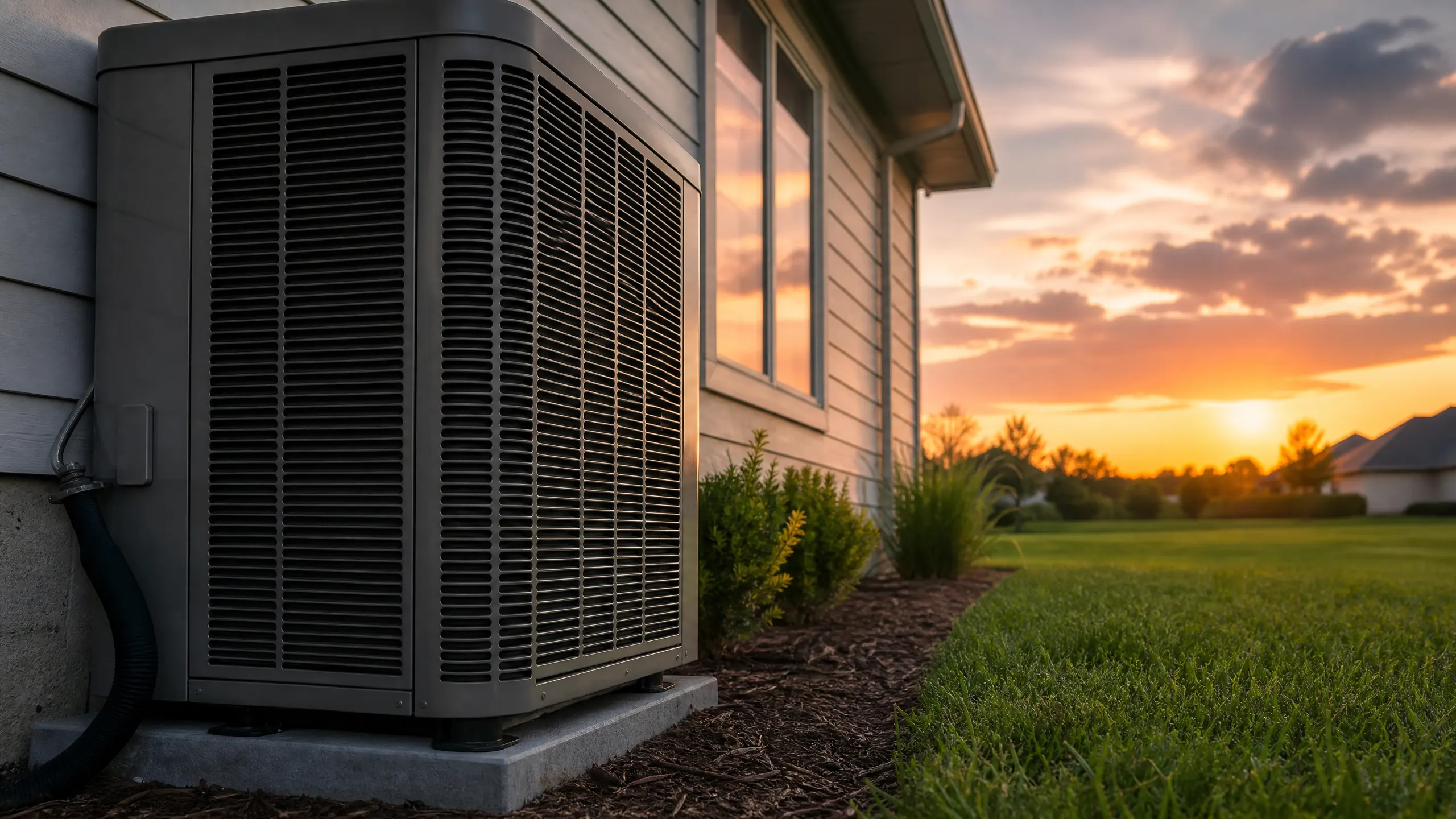







An outdoor air conditioning condenser unit mounted on a concrete pad beside a house at sunset.

Heat Pump Repair in Elizabethtown, KY

Tell us about the job

Takes about a minute. No obligation.

RepairHeat PumpHardin County, KY
Step 1 of 2

What ZIP code is the job in?

Hardin County saw 129 severe weather events between 2015 and 2024, including hail and damaging wind. A heat pump's outdoor unit sits right out in that weather. The coil and fan can take a hit from hail or flying debris and keep running for a while before the damage shows up as a refrigerant leak or a fan that struggles under load. Power cuts are part of the same picture. Nearly a quarter of Kentucky households went at least a day without power in 2024, and a heat pump coming back on after an outage can struggle if something was already wearing down before the power went out.

7 months
October through April, your system heats
5 months
May through September, it cools
27°F
the average winter night it heats against
86°F
the average summer afternoon it cools against
Isometric line illustration of a cutaway single-story house showing interior rooms, ceiling ductwork, an indoor air handler unit, and an outdoor condenser connected by a line set.
Your system heats October through April and cools May through September.

NOAA nClimDiv, 1991–2020 normals

September is the month before heat runs here.

A heat pump with hail damage or a worn part from summer will show it once the load shifts to heat in October.

Nothing unusual in Hardin County's weather, just the wear it leaves behind

74 damaging wind events from 2015 to 2024
32 hail events from 2015 to 2024
17 winter storms from 2015 to 2024
Built newer, worth fixingHalf the homes in Hardin County were built in 1988 or later.

If the outdoor unit took a hit from hail or wind this year, a look at the coil and fan now is worth it, even if the system is still running. Damaged fins restrict airflow, and a fan that's working harder than it should will keep wearing until it fails outright. That's a different question from an outage. If the system cut off during a power cut and came back on, listen for anything off in how it starts, a hum that lasts too long or a fan that hesitates. Either one is a reason to have someone look before the system is leaned on for heat.

A newer system is worth repairing

Half the homes in Hardin County were built in 1988 or later. A heat pump that came with a house that age still has working life in it, hail damage, worn fan, or a rough restart after an outage included. Get it looked at before the system is leaned on for heat.

Find a contractor
A man in a cap, dusty work shirt and tan trousers walks up front steps toward a dark green panelled door, carrying a canvas tool bag with hand tools, beside a potted shrub.
A gray heat pump condenser unit mounted on a concrete pad against the gray lap-siding exterior wall of a house.

What to check yourself first

Before anyone comes out, walk outside and look at the unit itself. Check that nothing is blocking the coil, no leaves packed against the fins, no debris sitting on top. Look at the fan blades for any that are bent or cracked. Inside, check the thermostat is set to heat and the temperature is actually above room temperature, and change the air filter if it's dirty, a clogged filter chokes airflow and makes the whole system work harder than it should. Check the breaker for the outdoor unit hasn't tripped. If the system is running but blowing air that doesn't feel warm, that can be normal for a heat pump on a cold day, but if it's blowing cold air outright or not running at all, that's worth noting before the call. Listen for anything unusual, a hum that doesn't turn into the fan starting, or clicking that repeats without the system catching. None of this fixes a refrigerant leak or a failing part, but it rules out the simple stuff first and gives whoever comes out a clearer picture of what's actually wrong.

Short cycling wears it out faster

A heat pump that shuts off a few minutes after starting, then starts again, is not resting between cycles the way it should. It could be a refrigerant charge that's off, a dirty coil, or a failing sensor telling the system something that isn't true. Every short cycle stresses the compressor, and the compressor is the part you don't want to replace.
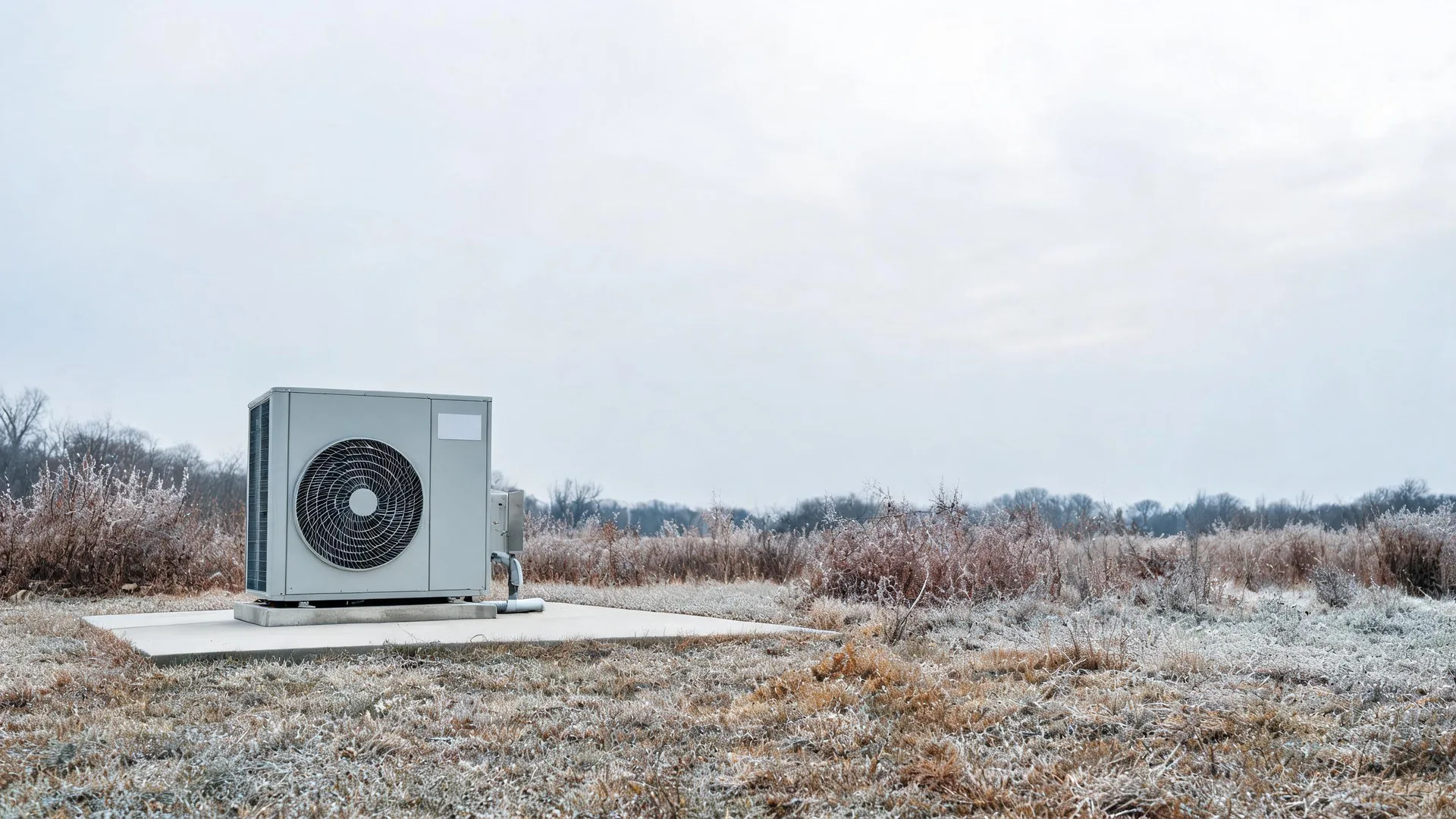
Ice that doesn't go away on its own

A heat pump's outdoor coil frosts over in cold weather and clears itself through a defrost cycle, the fan stopping and the unit briefly reversing to melt it off. That's normal. Ice that builds up and stays, or a coil that's solid white instead of lightly frosted, means the defrost cycle isn't doing its job or something is restricting airflow across that coil.

A refrigerant leak doesn't hold steady. The charge keeps dropping, and a compressor running low on refrigerant builds heat it isn't designed to shed. Run it long enough in that state and the compressor itself is what gives out, not the leak. A failing capacitor follows the same pattern. The fan or compressor pulls harder to start each cycle, and that extra draw is what finally burns through a motor that was still getting by. Grinding or squealing from the outdoor unit means metal wearing on metal, and every hour it keeps spinning is an hour closer to the part seizing outright. None of these announce themselves. The system keeps heating, a little worse each week, until the part that was failing quietly fails all at once.

A diagnostic visit starts outside at the unit itself. Whoever comes out will pull the panel and check the refrigerant charge, since a system low on charge behaves differently than one with a failing part even though both can leave the house without enough heat. They'll test the capacitor rather than just listen for it to hum, because a capacitor can be on its way out well before it fails completely. The coil gets a real look for bent fins or a buildup that's choking airflow, not just a glance. They'll run the defrost cycle and watch whether it actually clears the coil or just goes through the motion. Electrical connections get checked too, since a loose wire can cause the same symptoms as a bad part. The goal is to find which one thing is actually failing, not to swap parts until something works.