






A row of dark gray gabled houses behind a trimmed hedge and mowed lawn, framed by large leafy trees under an overcast sky.

Heat Pump Repair in Covington, KY

Tell us about the job

Takes about a minute. No obligation.

RepairHeat PumpKenton County, KY
Step 1 of 2

What ZIP code is the job in?

Most heat pump failures trace back to a handful of parts. The reversing valve is a common one. It's what switches the system between heating and cooling, and when it sticks, you get heat when you want cool or no switch at all. The defrost board is another. It tells the unit when to melt off the ice that builds up on the outdoor coil during cold weather, and if it fails, that coil can freeze solid and choke off airflow. Low refrigerant from a slow leak will also wear down a system over time, making it run longer to do the same job until it can't keep up. And like any outdoor unit, the outdoor coil gets coated in dirt, leaves and debris, which makes the whole system work harder than it should.

7 months
October through April, your system heats
4 months
June through September, it cools
26°F
the average winter night it heats against
85°F
the average summer afternoon it cools against
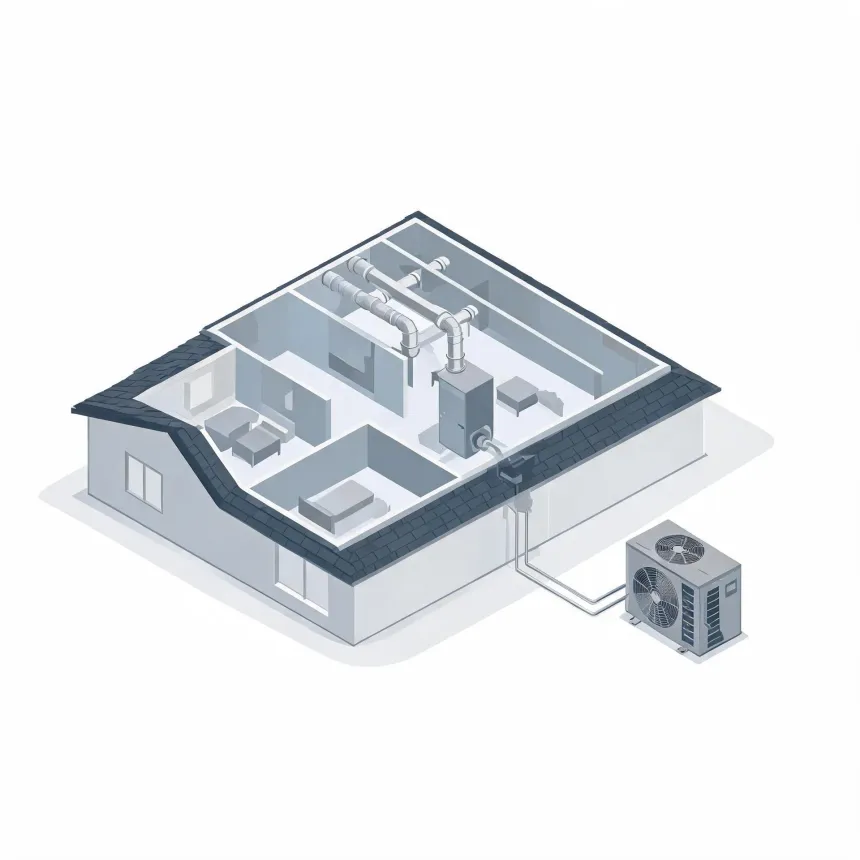
Isometric cutaway illustration of a single-story house showing interior rooms with ductwork, a furnace or air handler, and refrigerant lines running outside to a condenser unit on a pad.
Your system heats October through April and cools June through September.

NOAA nClimDiv, 1991–2020 normals

Covington winters average 26°F, cold enough that a heat pump earns its keep but not brutal cold it has to fight all day.

A heat pump that's been through a few Kenton County winters is usually still in good shape underneath, so chasing down the actual problem is worth doing.

Kenton County sees its share of storms, but none of it wears out a heat pump faster than normal

93 severe weather events from 2015 to 2024
24% of homes statewide lost power a day or more in 2024
67 damaging wind events from 2015 to 2024
Covington heat pump repairHeat here runs October through April, so September is when a weak part tends to show itself.

Half the houses in Kenton County were built in 1974 or earlier, half in 1974 or later. The heat pump outside doesn't know which kind of house it's hooked to. It's an outdoor unit wired to a thermostat, and it wears the same way whether the home around it is old or new. What matters more is whether it's been serviced on schedule and whether the outdoor coil has been kept clean. A newer house won't prevent a bad capacitor, and an older one won't cause one. The fix comes from what's actually wrong with the unit, not from the age of the place it sits beside.

It's usually worth repairing

It has an easier job here than in most places, so your heat pump is often in decent shape. Repair is usually worth it.

Find a contractor
A man in a cap, dark t-shirt and tan work pants walks up concrete steps toward a dark green front door, carrying a waxed canvas tool bag, with a potted shrub beside the entry.
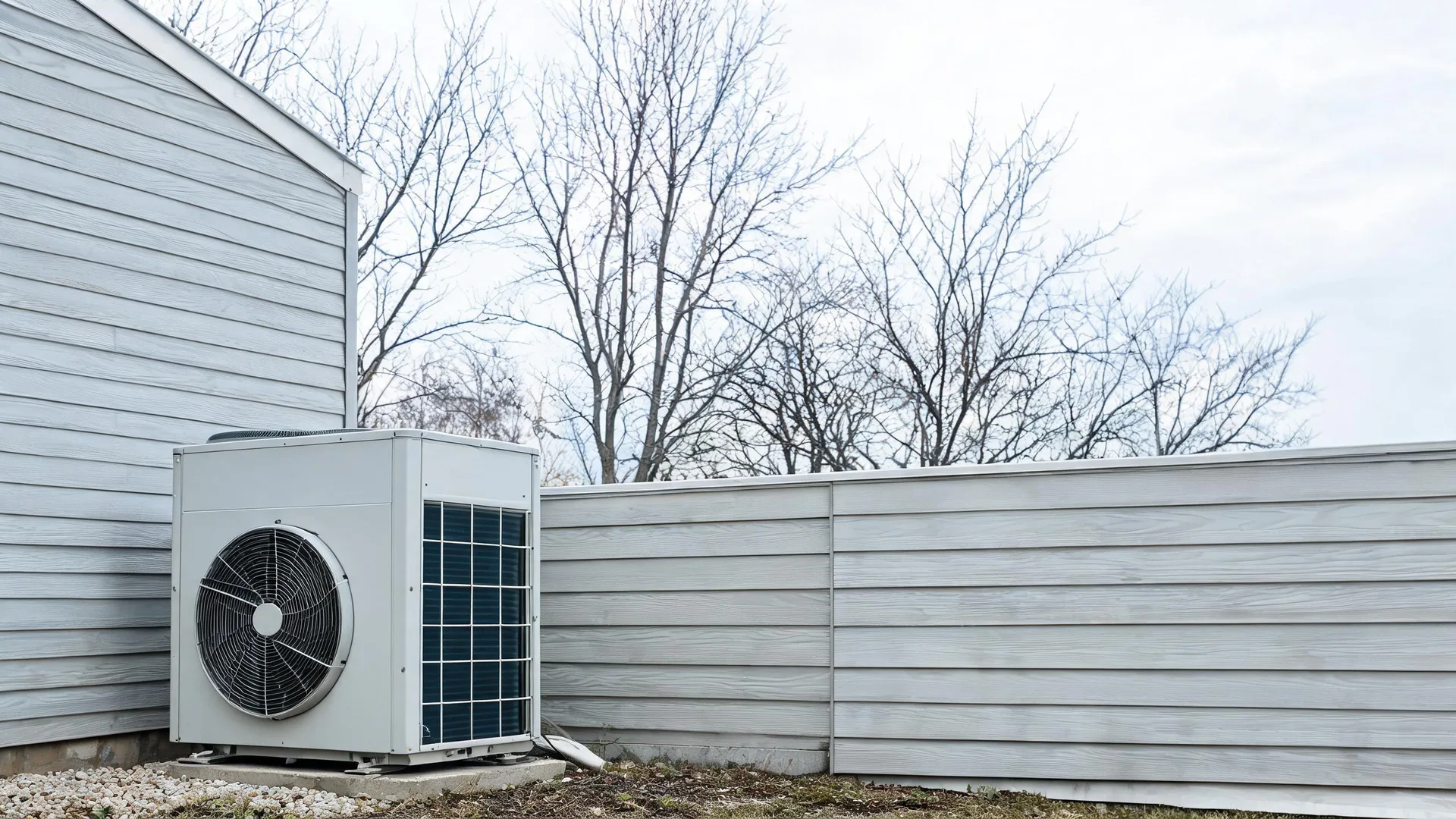
A gray outdoor HVAC unit mounted on a concrete pad beside a house with gray lap siding and a stone foundation.

What to check before you call

Before anyone comes out, there are a few things worth checking yourself. Look at the thermostat first. Make sure it's set to heat, not cool or off, and that the set temperature is actually above room temperature. Next, check your breaker panel for a tripped breaker. Heat pumps run on a dedicated circuit, and a tripped one will shut the whole system down with no other warning. Walk outside and look at the outdoor unit. If the coil is buried in ice, that's worth noting but not worth chipping at yourself. Check whether the outdoor fan is spinning. If the unit is running but the fan isn't turning, that's a sign for the tech, not a fix for you. Inside, pull the air filter and hold it up to a light. If you can't see light through it, airflow is choked and that alone can make a heat pump struggle to keep up. Last, listen for anything that sounds off, grinding, a hard clicking, or a hum with no fan movement. None of this tells you exactly what's wrong, but it tells the tech what you noticed, and that cuts down the guesswork once they're on site.

What you'll actually notice first

Air coming out of the vents that doesn't feel warm, even though the unit is running. Rooms that used to heat evenly now have a cold spot. The system cycling on and off more than it used to, or running long stretches without the house catching up to the thermostat. Sometimes the outdoor unit looks like it's frozen over for hours instead of defrosting on its normal cycle. None of these tell you which part is at fault, but they're the reason people call.
What tells you it's past the point of waiting

A hissing sound near the lines, ice that doesn't melt off on its own, or the system blowing cold air during a heating cycle are all signs to get someone out soon rather than waiting it out. A unit that short cycles or won't switch between heat and cool is also working against itself, and that strain tends to turn a small repair into a bigger one the longer it runs that way.

A heat pump that's struggling doesn't fail all at once. It compensates. Low refrigerant means longer run times to hit the same temperature, and that long run time is harder on the compressor than normal cycling ever was. A frozen outdoor coil blocks airflow, so the system pulls harder to move heat through ice that shouldn't be there, and the compressor bears that load. A failing defrost board can leave the unit stuck in defrost mode or never triggering it at all, so the ice just keeps building while the system keeps trying to work through it. Run that way long enough and a problem that started in one part spreads to the compressor. That's the part that was never supposed to take the strain in the first place.

A diagnostic visit starts outside at the unit itself. The tech checks refrigerant pressure with gauges, looks at the compressor's amp draw, and watches whether the reversing valve actually switches when it's told to. Inside, they'll check the temperature of the air coming off the coil against what it should be for the mode it's running in. A lot of this is about ruling things out in order, since a low reading on the gauges points to a leak somewhere in the line set, while a compressor drawing too many amps points to a motor working harder than it should. The tech will also cycle the system through defrost manually to see if the board triggers it correctly, because a board that won't trigger defrost looks the same as a dirty coil until you test it directly. By the end, the goal is a part and a reason, not a guess.