






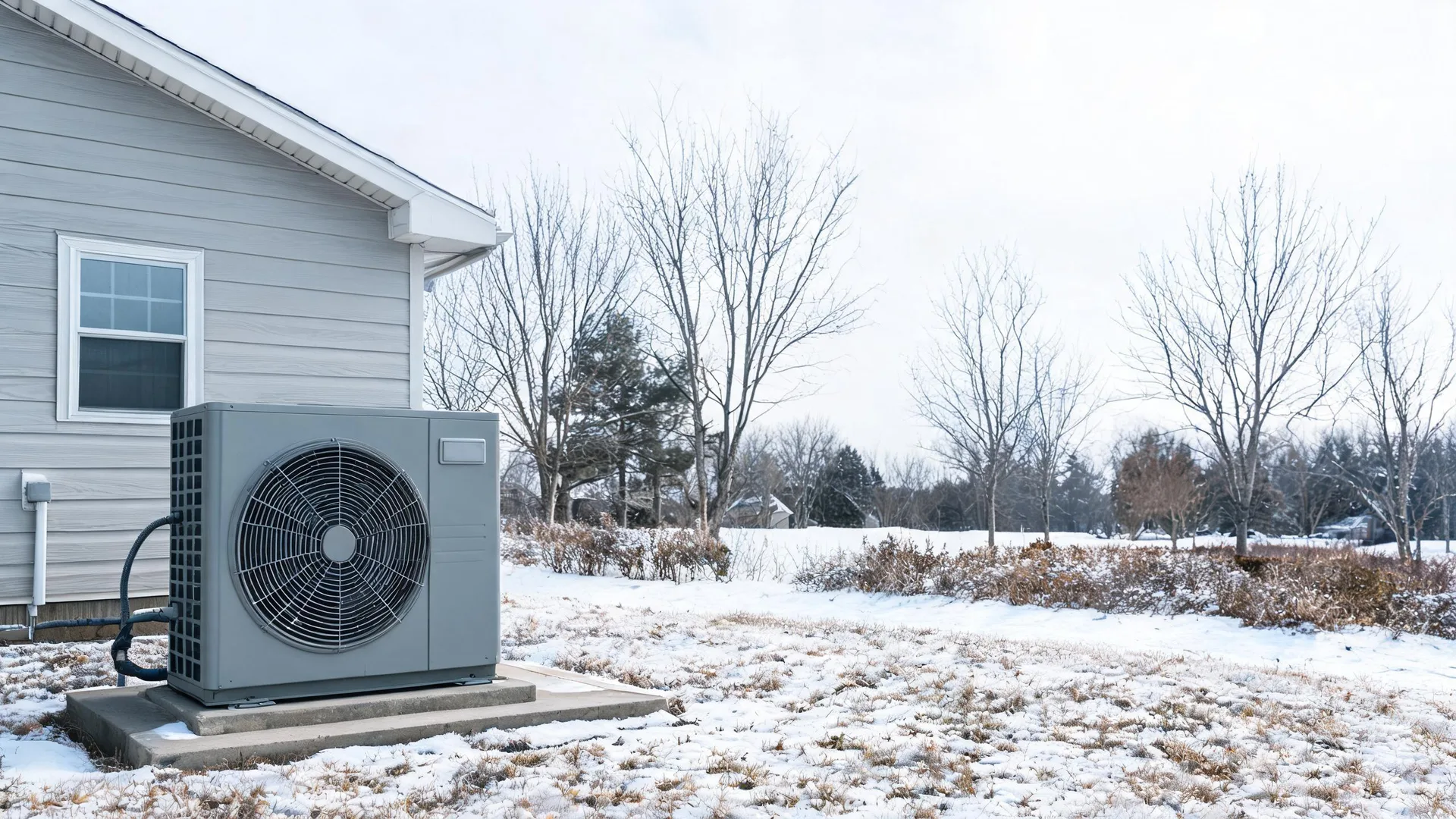
An outdoor heat pump unit mounted on a concrete pad in front of a single-story suburban house with beige siding.

Heat Pump Repair in Corbin, KY

Tell us about the job

Takes about a minute. No obligation.

RepairHeat PumpWhitley County, KY
Step 1 of 2

What ZIP code is the job in?

Whitley County saw 108 severe weather events between 2015 and 2024, and most of those were damaging wind. A heat pump's outdoor unit sits outside year round, and wind-driven debris can bend the fins or crack a fan blade without stopping the unit right away. Hail hit the county too, enough to dent a cabinet or chip a coil's coating. Even if the unit still runs after a storm, a bent coil or a nicked fan blade tends to get worse, not better, on its own.

7 months
October through April, your system heats
4 months
June through September, it cools
28°F
the average winter night it heats against
84°F
the average summer afternoon it cools against
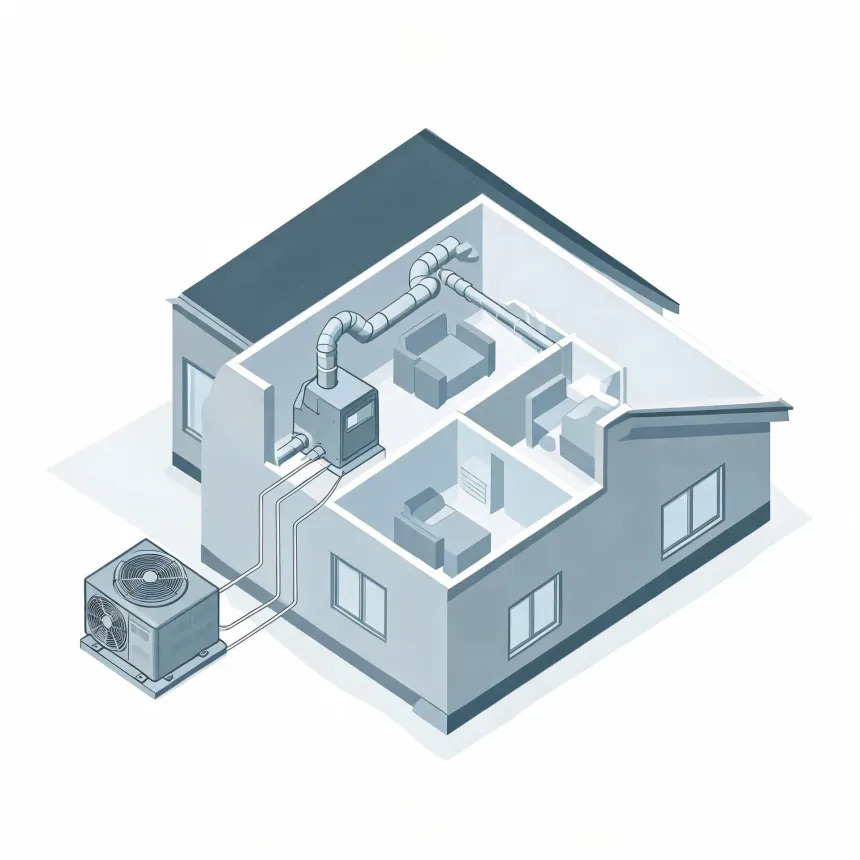
Isometric cutaway illustration of a two-room house showing an indoor air handler with ductwork connected by lines to an outdoor condenser unit on a pad.
Your system heats October through April and cools June through September.

NOAA nClimDiv, 1991–2020 normals

Heat pumps here run heat from October through April, about seven months straight.

A weak part usually gives out in the first cold snap of October, not in the easy months.

Half these homes went up by 1987. That's not what breaks a heat pump

Half the homes here were built by 1987
84 damaging wind events from 2015 to 2024
12 hail events from 2015 to 2024
An easier job than most places give itOvernight lows here average 28°F in winter, not the single-digit cold that pushes a heat pump hard.

After a bad storm, walk out and look at the unit before you decide it's fine. Check the fins for anything bent flat, and look at the fan blade for a nick or a crack you can see from a few feet back. A contractor can check the coil and the fan more closely than you can from the yard, especially after hail, since a chipped coating on the coil will corrode faster from that point on. None of this means the unit stops working today. It means the damage sits there and gets worse through the next storm and the one after it, so the sooner it's looked at, the less there is to fix.

The mild winters mean repair is usually the right call

A heat pump that hasn't been pushed hard for years usually still has good parts in it. If something's acting up now, worn insulation or a loose connection is more likely than a motor that's simply spent. That makes it worth having someone look before you plan on replacing anything.

Find a contractor
A man in a cap, gray long-sleeve shirt and tan pants climbs concrete steps toward a dark green front door, carrying a worn canvas tool bag.
A gray air-source heat pump mounted on a concrete pad next to a house with gray vinyl siding, surrounded by gravel and flanked by green shrubs and white hydrangea flowers.

What actually wears out in a heat pump

A heat pump works both sides of the year, so it fails in more ways than a furnace that only runs in winter. The reversing valve is the part unique to it, the one that switches the system between heating and cooling, and a valve that sticks will leave the system blowing the wrong temperature or stuck in one mode. The defrost board and sensor are next. They tell the unit when to melt frost off the outdoor coil, and when that sensor reads wrong, frost builds up until the coil is solid and airflow stops. The run capacitor in the outdoor unit wears down from simple cycling, getting weaker each time the compressor starts until it can't kick the compressor over at all. Refrigerant charge matters more here than in a straight AC system, since low charge shows up as weak heat as well as weak cooling. None of these usually fail all at once. They show up as a system that runs but doesn't keep up, which is worth a look before the part fails completely.

What you'll actually notice first

Air blowing from the vents that feels cool when it should feel warm is the most common complaint, and it usually means the system is stuck between modes or losing ground on heat. Ice on the outdoor unit that doesn't melt off on its own is another one. A heat pump is supposed to defrost itself in cycles. If you walk by and the coil is still frosted hours later, something in that defrost cycle isn't doing its job.
What's worth a call versus what can wait

A system that short cycles, meaning it kicks on and off in a few minutes instead of running a full cycle, needs attention soon. That pattern wears the compressor every time it happens. A system that's just noisier than usual or takes a little longer to catch up on a cold morning can often wait for a scheduled visit rather than an emergency one.

A heat pump that keeps running with a problem doesn't fix itself in the meantime. Low refrigerant charge is a good example. The compressor keeps trying to move a full cycle of refrigerant that isn't there, and that makes it run hotter and longer than it's built for. Frost that isn't clearing works the same way. Every hour it sits on the coil it blocks more airflow, so the system pulls harder to move the same heat. A failing capacitor wears down the same way in reverse. Each start draws more off a part that's already weak, until the gaps between cycles get shorter and it stops starting at all. None of these fix themselves by running longer. They wear harder on the parts around them the longer they're left alone.

A diagnostic call starts outside, with the outdoor unit running or not running at all. The tech checks refrigerant pressure on both the high and low side. That reading alone points toward a leak, a bad valve or a failing compressor before anything gets taken apart. Electrical readings come next. The capacitor's actual output gets checked against what it's rated for, the contactor gets checked for pitting, and the wiring gets checked for a loose connection that's been arcing quietly. Indoors, the tech checks the air coming off the vents against the air going into the return. That gap shows whether the system is actually moving heat or just moving air. The reversing valve gets tested directly, since a valve that's stuck partway can pass a visual check but still leave the system blowing the wrong temperature. Most of this points to one part before the panels go back on.