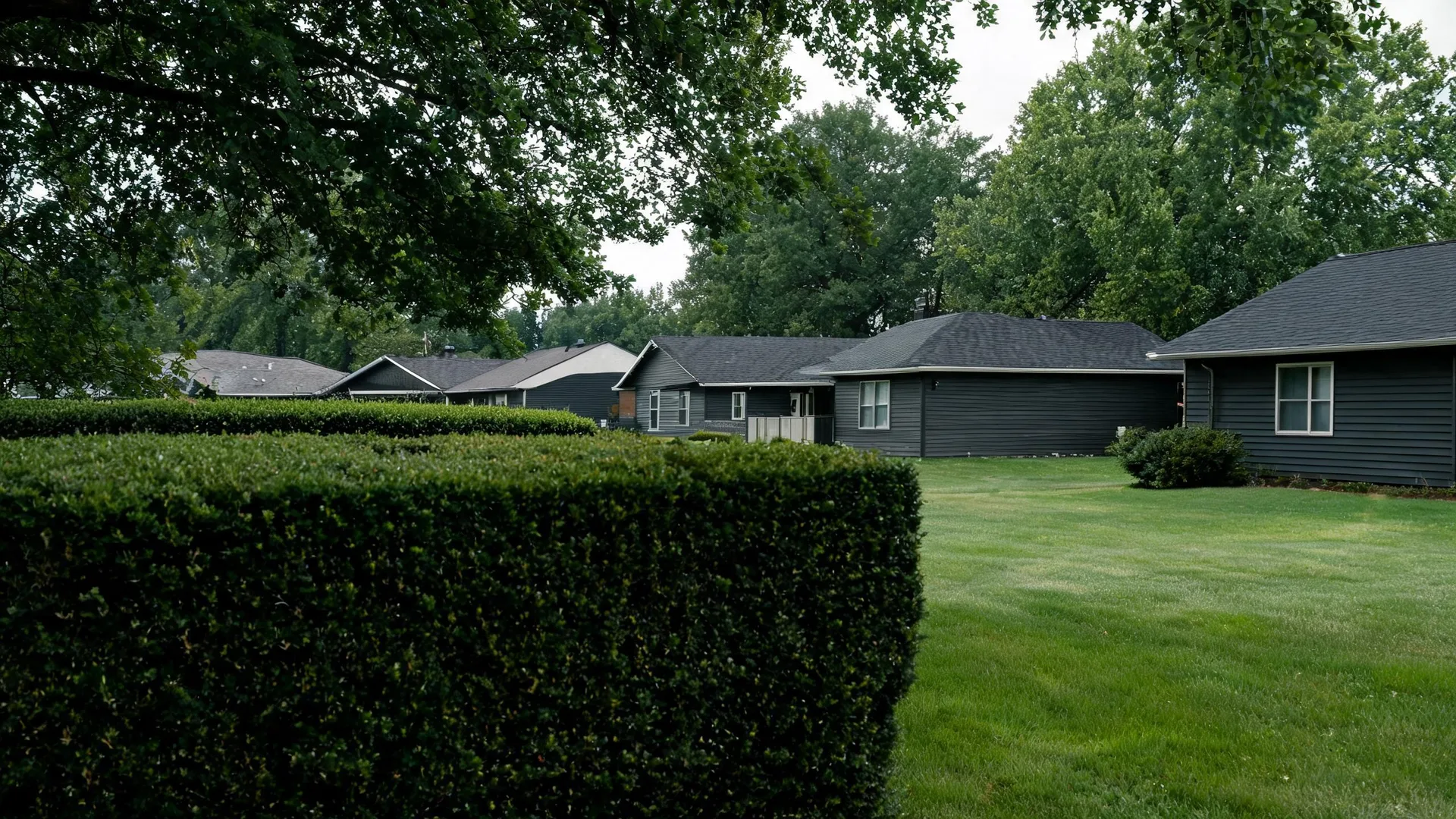






A trimmed hedge borders a mown lawn in front of single-story houses with dark siding and shingled roofs, surrounded by large leafy trees under an overcast sky.

Heat Pump Repair in Central City, KY

Tell us about the job

Takes about a minute. No obligation.

RepairHeat PumpMuhlenberg County, KY
Step 1 of 2

What ZIP code is the job in?

Muhlenberg County saw 112 severe weather events between 2015 and 2024, and damaging wind caused most of them. A heat pump's outdoor unit sits right in the path of that, exposed to wind-driven debris and hail that a furnace never has to deal with. If yours took a hit during a storm and still seems to run fine, that doesn't mean the coil or fan escaped damage. Bent fins and a dented cabinet can cut into how well it moves heat even before the unit starts acting up. Kentucky households also lose power for a day or more often enough that a heat pump needs to come back on reliably once it's restored.

7 months
October through April, your system heats
5 months
May through September, it cools
29°F
the average winter night it heats against
88°F
the average summer afternoon it cools against
Isometric cutaway illustration of a gray house showing interior rooms, a central air handler with ducts in the attic, and refrigerant lines running to an outdoor condenser unit beside the building.
Your system heats October through April and cools May through September.

NOAA nClimDiv, 1991–2020 normals

Half the homes in Muhlenberg County were built in 1978 or earlier, and close to one in five is a mobile home.

Neither one points to anything wrong with your heat pump. It's most likely the usual problem with the usual fix.

What this climate asks of a heat pump here

72 damaging wind events from 2015 to 2024
15 winter storms from 2015 to 2024
Power costs 12.79 cents a kWh statewide
Heat pumps break first in September and MayMuhlenberg County runs heat starting in October and cooling starting in May, and the switch is when a weak unit gives out.

After a storm passes, it's worth having the outdoor unit looked at, even if it kicked back on and seems to be keeping up. A tech can check the fins for crush damage and make sure the fan spins true and the cabinet hasn't shifted enough to strain a line. None of that shows up by listening to it run. Hail and wind are common enough here that this is routine work, not an emergency inspection, so there's no need to rush unless the unit is making noise or tripping off.

Get it checked after a storm

Storms hit hard here. If the outdoor unit took hail or debris, have it checked even if it still runs.

Find a contractor
A white mini-split heat pump outdoor unit mounted on a concrete pad beside a gray-sided house, surrounded by gravel and green shrubs.

What a tech actually checks

A diagnostic starts outside, with the tech checking refrigerant pressures and the condition of the outdoor coil. From there they'll check the reversing valve, since that's the part that lets a heat pump switch between heating and cooling, and a stuck valve can leave you with a system that only does one or the other. They'll test the defrost cycle, check capacitor readings, and look at the indoor coil and blower while they're at it. Most of what goes wrong hides inside a part that looks fine from across the room. A compressor working harder than it should, a fan motor drawing the wrong amperage, a contactor with pitted contacts. None of that shows up until someone puts a meter on it.

What you can look at yourself

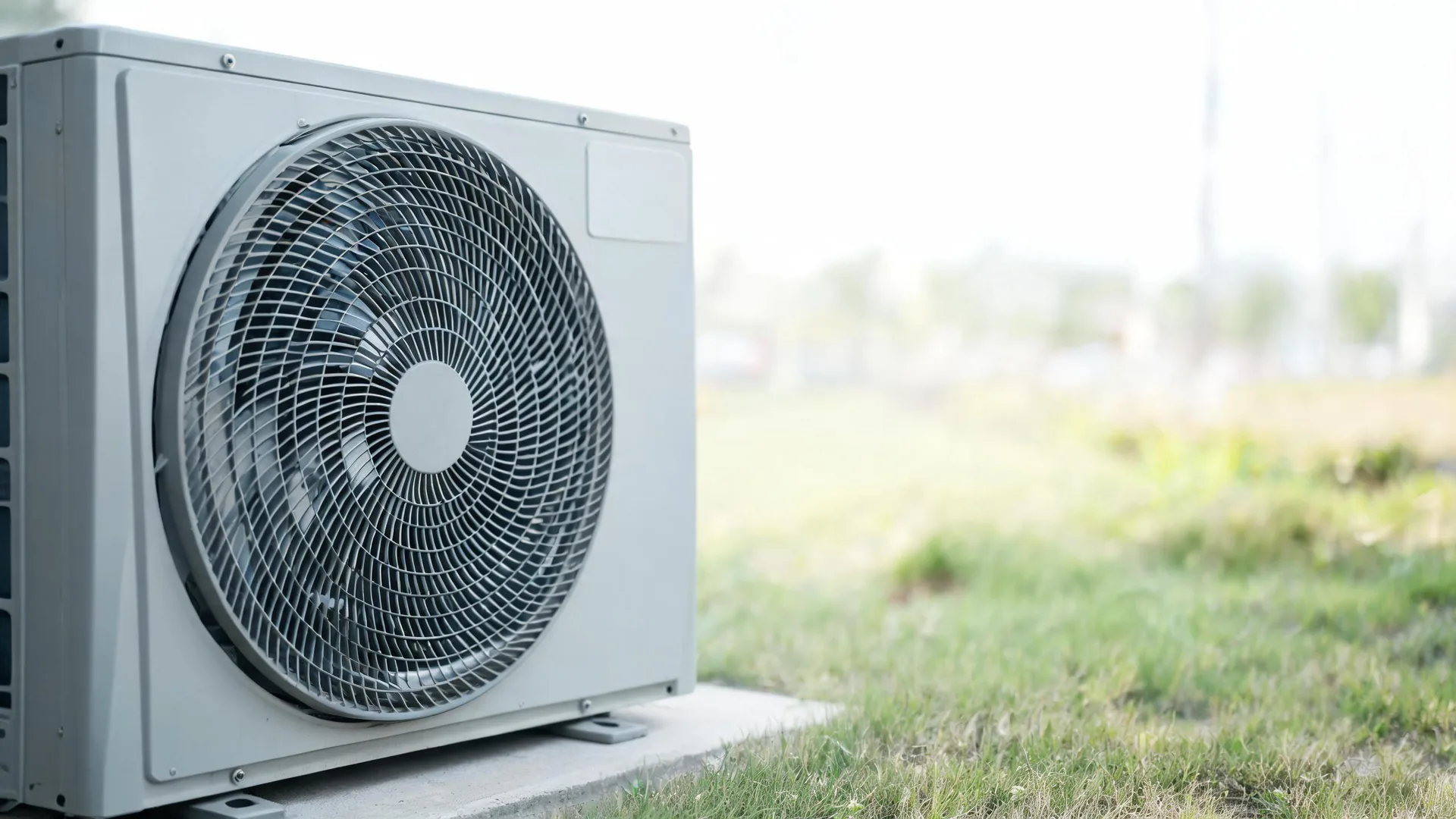
Check the outdoor unit for ice building up on the coil when it should be heating, or for the fan blocked by leaves and debris. Look at the thermostat and make sure it's set to heat or cool as needed and the batteries aren't dead. Check your breaker panel for a tripped breaker before assuming the unit itself failed. Inside, pull the air filter and hold it up to light. If you can't see through it, that alone can make a heat pump struggle or short cycle.
What to leave alone

Don't open the outdoor cabinet or touch the refrigerant lines. The capacitor inside can hold a charge even with the power off, and the wiring to the compressor isn't something to test by hand. If the unit is tripping the breaker repeatedly, stop resetting it and get someone out, since that usually means a short or a failing compressor rather than a fluke.

A heat pump that's struggling doesn't fix itself by staying on. Ice on the coil blocks airflow, so the system pulls harder to move the same amount of heat, and that extra strain is what turns a frozen coil into a compressor problem. A failing capacitor works the same way. The compressor keeps trying to start without the jolt it needs, and each attempt heats the windings a little more until one of them gives out for good. Low refrigerant is another one that compounds. The compressor still runs, but it's pumping less heat for the same effort, and it overheats doing it. None of these get better with time. Left running, they tend to take the compressor down with them, and that's the part the rest of the system depends on.

Most calls start with the system running but not keeping up. Air comes out the vents and feels wrong for the setting, barely warm in heating mode or barely cool in cooling mode, even though the unit never shuts off. Short cycling is another one people notice before they can name it. The unit kicks on, runs a few minutes, and quits, then does it again instead of settling into a normal run. A hissing or bubbling sound near the lines usually means refrigerant escaping, and it's worth mentioning when you call rather than waiting to see if it stops. Ice on the outdoor coil during the heating months means the defrost cycle isn't doing its job, and the system will keep losing ground until that's fixed. A burning smell from the indoor unit is the one sign that means shut it off and wait for a tech, not run it and watch.