A row of illuminated two-story brick houses with front porches and mature trees photographed at twilight.

Heat Pump Repair in Brandenburg, KY

Tell us about the job

Takes about a minute. No obligation.

RepairHeat PumpMeade County, KY
Step 1 of 2

What ZIP code is the job in?

Half the homes here were built in 1990 or later

Meade County splits down the middle on this. Half the housing stock is 1990 or earlier, half is 1990 or later. If your house falls on the newer side, your heat pump probably isn't carrying decades of wear on top of whatever's wrong with it now.


That changes what a repair call is worth

A newer house usually means the ductwork and electrical behind the heat pump are in decent shape too. When the system itself is still within its working life, fixing the one part that failed makes more sense than starting over.

7 months
October through April, your system heats
5 months
May through September, it cools
27°F
the average winter night it heats against
86°F
the average summer afternoon it cools against
Isometric illustration of a cutaway house showing interior rooms, ceiling ductwork and an air handler, connected by lines to an outdoor condenser unit on a pad beside the building.
Your system heats October through April and cools May through September.

NOAA nClimDiv, 1991–2020 normals

Brandenburg winters sit at 27°F on average, not deep cold, and summers ask real work but nothing extreme.

A heat pump here isn't fighting brutal swings year after year, so a repair now often makes more sense than a replacement.

Meade County's weather is ordinary, and so is most repair work

76 severe weather events from 2015 to 2024
24% of homes statewide lost power a day or more in 2024
47 damaging wind events from 2015 to 2024
Brandenburg heat pump repairSeptember and April are when a weak part usually gives out first.

When a repair call comes in, the question is usually whether the heat pump is worn out or just has one bad part. A system that hasn't spent years fighting hard against extreme heat or deep cold is more likely the second case. Check the outdoor unit and the wiring behind it before assuming the worst. If it's been maintained at all, a failed capacitor or a bad control board is a normal fix, not a sign the whole unit is done. That holds whether the breakdown came out of nowhere or built up over a few weeks.

Get the one bad part fixed

If your heat pump came with the house, there's a decent chance the house is on the newer side of the county. A repair call makes sense to schedule now, before a bad capacitor or control board turns into a no-heat morning.

Find a contractor
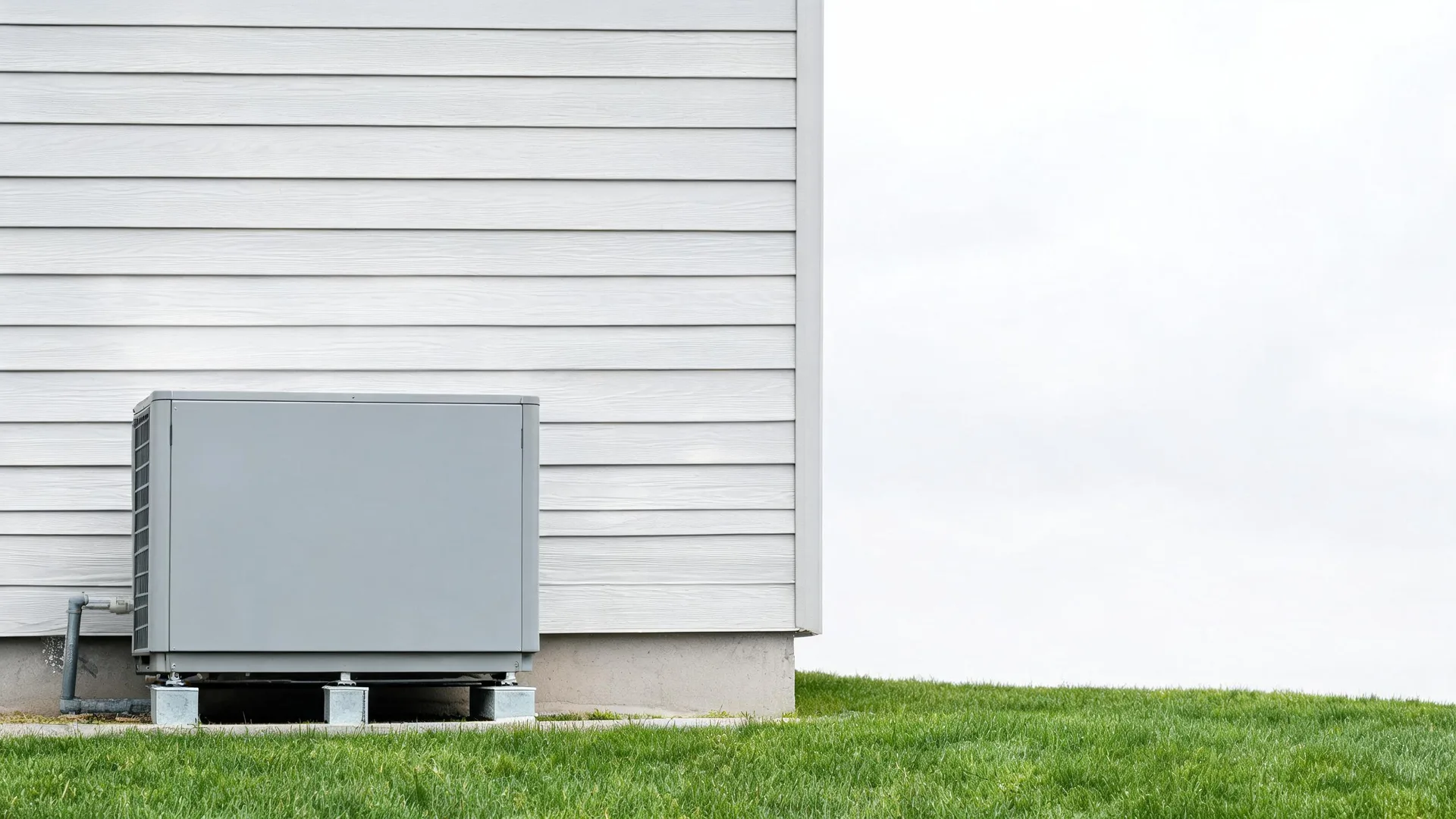
A gray outdoor HVAC unit mounted on a concrete pad beside a house with gray lap siding and a stone foundation.

A weak part doesn't hold steady

A weak capacitor doesn't get better with time. It strains a little more every time the compressor starts, and every cycle the system runs is another start. The same goes for a compressor running low on refrigerant. It runs hotter than it's built for, and heat is what breaks a compressor down from the inside, slowly, one cycle after another. If the reversing valve is slow to switch, ice that should melt off in a normal defrost can build up on the coil instead, and once that happens the system has to work harder just to move the same amount of air. None of this resets itself by running longer. The part that's already failing keeps failing a little more each time it's asked to work, and eventually it takes something bigger down with it.

Most failures start with the reversing valve or the board

The reversing valve is what lets a heat pump switch between heating and cooling, and it fails more than almost anything else in the system because it's always working, every cycle, in both directions. A stuck valve shows up as heat when you want cool, or a system stuck defrosting and never warming back up. The control board fails less often but takes more with it when it does, since it's telling every other part when to run.

The outdoor unit takes the punishment

The outdoor unit holds the compressor and the fan motor, and both sit outside through everything the weather does. A fan motor seizes or a bearing wears out and the compressor overheats with nowhere for that heat to go. A capacitor that's weakened gives the compressor a hard start every single cycle, and a hard start now is a dead compressor later.

Before anyone comes out, a few things are worth a look. Check the thermostat first. Dead batteries or a setting bumped to the wrong mode will look exactly like a broken heat pump. Go outside and look at the unit itself. If the coil is caked in ice outside of a normal defrost cycle, or the fan isn't spinning at all, that's worth noting before the call. Check the breaker panel too. A tripped breaker is a quick reset, not a repair visit. Inside, pull the air filter and hold it up to the light. A filter clogged with dust chokes airflow and can make a healthy system act like a failing one. None of this tells you whether the problem is the reversing valve or the board, but it rules out the simple stuff first.

A heat pump's age matters less than how it was treated before it broke. A system that's had regular service, coils cleaned, refrigerant charge checked, electrical connections tightened, wears differently than one that's been ignored. Neglect shows up as corrosion on the electrical contacts, as a coil so dirty the system labors to move heat at all, as refrigerant that's been low so long the compressor's been straining for months. That kind of history turns a simple repair into a bigger one, because the failed part took others down with it on the way. A well-kept system that throws one bad part is usually still a good system. The repair stands on its own instead of being the first of several.