A tall trimmed hedge runs along a mown lawn in front of a row of dark-sided townhouses with brown shingled roofs, framed by leafy tree branches under an overcast sky.

Heat Pump Repair in Bowling Green, KY

Tell us about the job

Takes about a minute. No obligation.

RepairHeat PumpWarren County, KY
Step 1 of 2

What ZIP code is the job in?

A small fault can take out the compressor

A heat pump low on refrigerant will keep running and keep trying to hit the set temperature. The compressor ends up working harder than it was built for, and that heat damages the windings inside it. Once the windings go, the compressor has to be replaced, not repaired.


A frozen coil needs the system off, not running longer

If the outdoor coil ices over, airflow across it drops and the system pulls in less heat than it should. Letting it run doesn't melt the ice, it just makes the compressor strain against a coil that can't do its job. Left alone, that ice can crack the coil fins or push liquid refrigerant back into the compressor.

7 months
October through April, your system heats
5 months
May through September, it cools
29°F
the average winter night it heats against
88°F
the average summer afternoon it cools against
Isometric line illustration of a cutaway house showing interior rooms with furniture, a furnace or air handler with overhead ductwork, and an outdoor condenser unit connected by lines outside the wall.
Your system heats October through April and cools May through September.

NOAA nClimDiv, 1991–2020 normals

Warren County sees its share of hail and wind, enough to knock the power out for a while.

A heat pump that loses power usually just needs a reset, not a repair call.

October is when heat here switches over from the AC side to the heat pump side, and that first cold stretch is when a weak part finally gets found. A heat pump that sat fine all summer can struggle the moment it has to pull heat from cold outside air instead of just moving it. If a capacitor or contactor was already marginal, the extra demand in those first weeks of October is what pushes it over. Homes here run heat clear through April, so a problem that shows up early only gets worse with seven months of use ahead of it. Getting it looked at in September, before the switch, catches a weak part while it's still just weak.

Get the usual fix

Nothing about this area is especially hard on it. It's most likely the usual problem with the usual fix.

Find a contractor
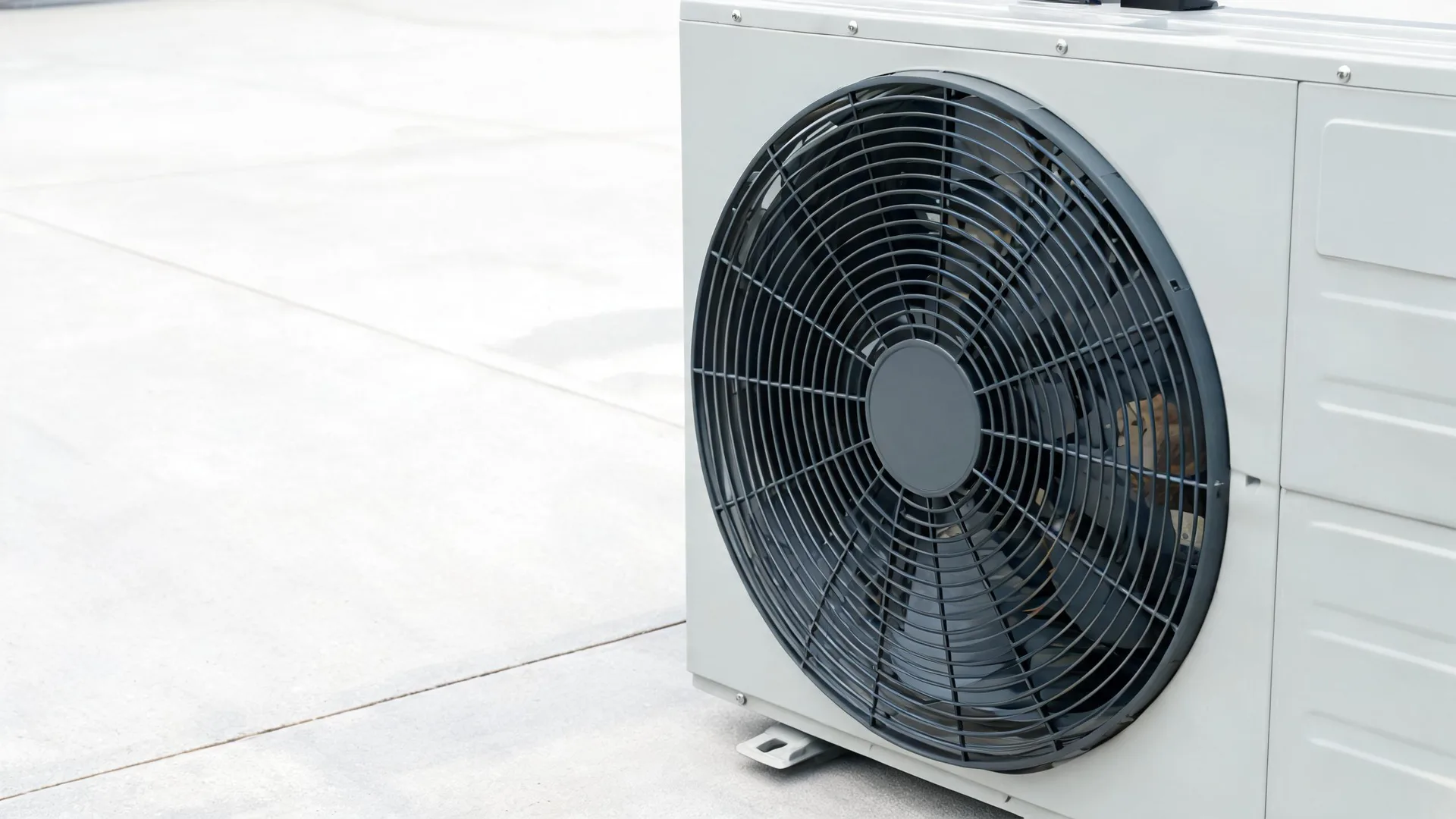
A dark gray heat pump unit mounted on a concrete pad next to a house with gray siding and a stone veneer wall.

A newer system still has years left in it

Half the homes in Warren County were built in 1993 or later. If yours is one of them, the heat pump that came with it is probably still within its working life. A system that age acting up is usually a weak part, not a sign the whole unit is done.

The reversing valve sticks instead of failing clean

The reversing valve is what lets a heat pump switch between heating and cooling, and it's one of the few parts a straight AC system doesn't have. When it sticks partway, the system can start blowing cold air during a heating cycle, or it may not switch over at all. A technician usually finds the valve got stuck on debris or a weak solenoid stopped pulling it fully into position.

Dirty coils and filters force everything else to work harder

A clogged filter or a coil caked with dirt cuts down airflow, and the whole system compensates by running longer to hit the set temperature. That extra runtime is what wears out capacitors, contactors and fan motors well before they'd normally quit. Most of what fails early on a heat pump traces back to something restricting airflow months before the part itself gave out.

Pay attention to what the system is doing, not just whether it's running. Short cycling, where it kicks on and off every few minutes instead of settling into a steady run, usually means a sensor or a control board that isn't reading the temperature right. Air coming out lukewarm instead of hot points at a reversing valve or a compressor that's struggling, not just a thermostat setting. A hissing or bubbling sound near the lines outside usually means refrigerant escaping somewhere it shouldn't. Ice on the outdoor unit outside of a normal defrost cycle means airflow or refrigerant is off, and it won't clear on its own. Any burning smell or a breaker that keeps tripping means stop running it and get it looked at, since that's electrical strain, not a minor glitch.

A diagnostic visit starts outside, at the unit itself, before anyone touches the thermostat. A technician checks the refrigerant pressure, looks at the compressor's amp draw, and watches whether the reversing valve actually shifts when it's told to. Inside, they'll pull the filter and check airflow across the coil, since weak airflow shows up everywhere else as a different problem. Electrical parts get tested under load, not just looked at, because a capacitor or contactor can look fine sitting still and still fail the moment it's asked to work. The goal is to find which part is actually causing what you're seeing, rather than replacing parts until something changes.