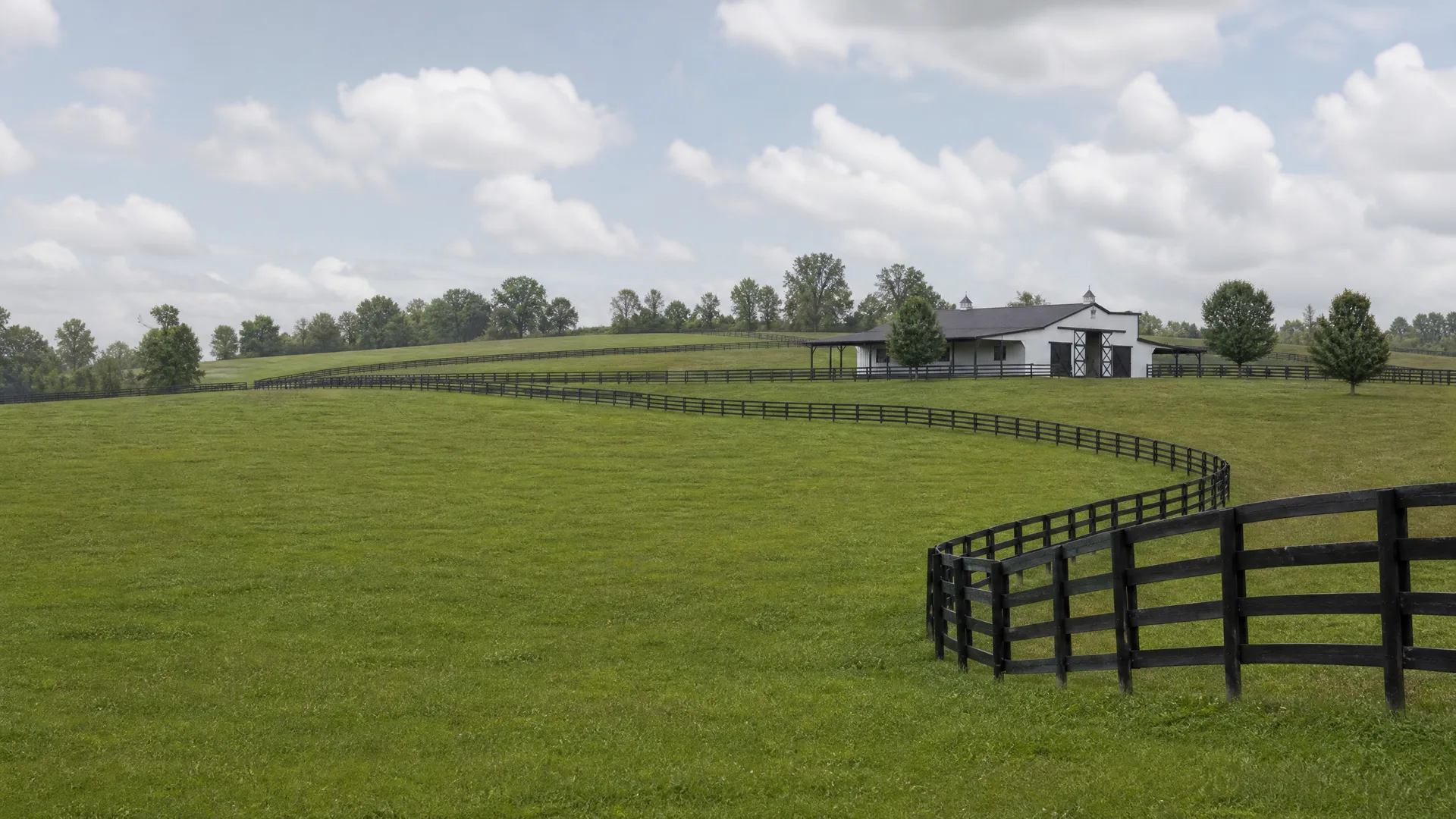
The outdoor unit running as it should
This is what a working heat pump looks like outside. The fan turns, the coil stays clear, and the unit cycles on and off as the house calls for heat or cooling. Nothing forces the strips to carry the load alone.

A heat pump stuck on emergency heat means the outdoor unit has stopped running and the system has fallen back on its backup electric heat strips to keep the house warm. On a heat pump that backup is meant for short use during a hard freeze, not for running the whole house day after day. In Warren County winters, a stuck emergency heat light usually points to one of a few things: the outdoor unit frozen over, a tripped breaker or disconnect it cannot reset from, a bad defrost control, or low refrigerant that keeps the compressor from starting. If the emergency heat switch was simply left on by accident, that is an easy fix. If the system put itself there on its own, something has failed and needs a look. Either way, electric strip heat alone will keep the house warm but costs more to run than the heat pump working normally, so the longer it sits on emergency heat, the more it shows up on the bill.




Winter nights average 29°F
Overnight lows here average 29°F in December, January and February, cold enough that the strips run long and hard if the outdoor unit stays down.
Heat runs October through April
Heat runs about seven months a year in Warren County, October through April, so a heat pump stuck this way has a long stretch left to cover.
Cooling runs May through September
Cooling takes over May through September, which means the outdoor unit has to come back and work right, not just sit idle through summer.
NOAA nClimDiv 1991-2020

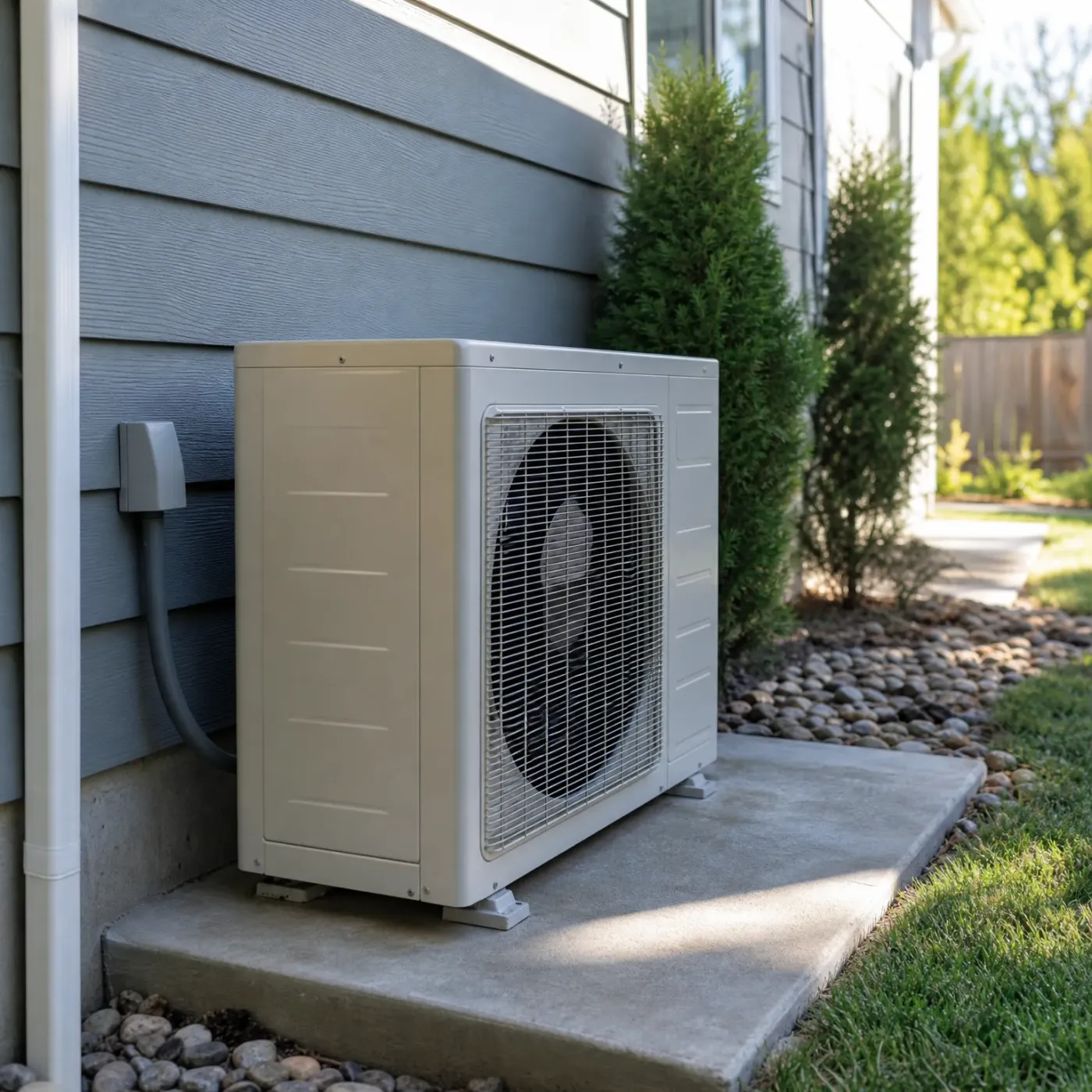
This is what a working heat pump looks like outside. The fan turns, the coil stays clear, and the unit cycles on and off as the house calls for heat or cooling. Nothing forces the strips to carry the load alone.

Grime packed into the grilles and years of weather on the cabinet often go along with a compressor or fan motor that's quit. Once the outdoor unit stops pulling its weight, the system has nowhere to go but emergency heat, and the electric strips take over full time.
Emergency heat runs on the electric strips alone, and those strips use a lot more power than the outdoor unit does to produce the same warmth. If the system has been stuck this way for a few days or more, the bill for that month will show it. You may also notice the air coming from the vents feels hotter than usual, since strip heat runs warmer than a heat pump normally delivers. Some homes trip a breaker if the strips run continuously for a long stretch. None of this fixes itself. The longer the outdoor unit sits idle, whatever stopped it, whether a tripped switch, a failed part or a thermostat set wrong, stays broken until someone looks at it.


The thermostat calls for heat and signals the outdoor unit to start.
A control board checks for a fault before letting the compressor run.
If the board finds a lockout, it shuts the outdoor unit down.
The system switches over to the electric strips to keep heating.


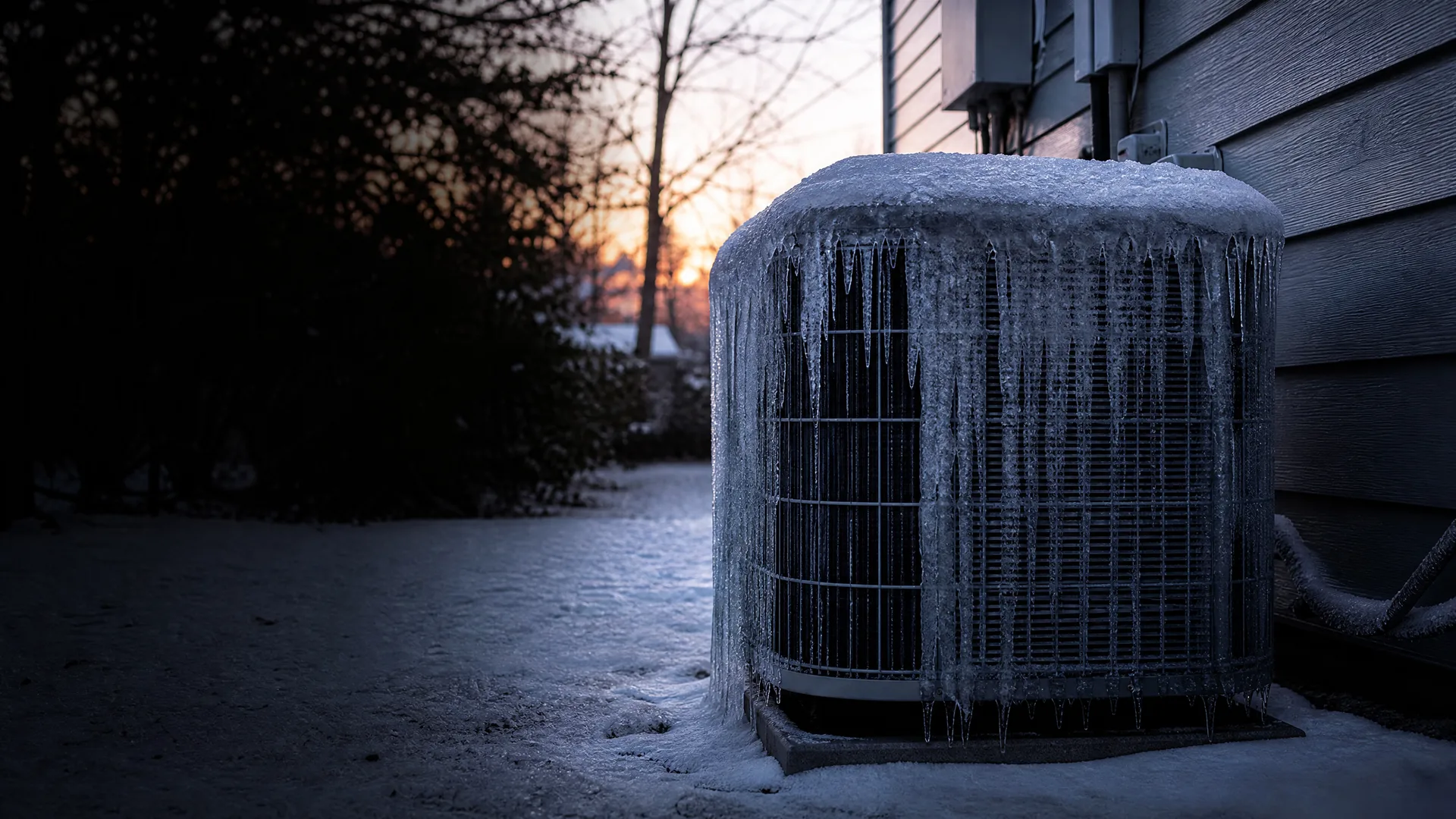
The sky is still gray at the edges when you walk out to get the trash bins. Frost covers the grass, and out past the fence your heat pump sits coated in ice, thick over the coil and dripping down into the grass below. The fan isn't turning. It hasn't turned in a while, you realize, thinking back on the hum that's been missing from the house since yesterday. Inside, the vents are still blowing, just warm enough to notice, nothing like the heat you're used to. You crouch down and look at the ice again, like looking will tell you something, then head back inside before the cold gets all the way into your socks.
A heat pump that won't come off emergency heat isn't going to fix itself. The outdoor unit stays down until something resets the lockout or clears whatever tripped it, whether that's a frozen coil, a bad sensor, or a control board that won't let the compressor start. Left alone, the strips keep carrying the whole house, and a Warren County cold snap can stretch that out for days. Checking the breaker or thermostat setting is worth a minute, but if the outdoor unit still won't run, the fix is inside the cabinet or in the wiring to it, not something to chase by trial and error while the bill climbs. Getting a contractor out to look at it is the only way the system goes back to heating the way it was built to, splitting the work between the outdoor unit and the strips instead of leaving the strips to do it all. The form above is where that starts.
A lockout doesn't happen for no reason. The control board logs a fault code when it shuts the outdoor unit down, and that code is where a technician starts, not the strips, not the thermostat. It narrows down whether the trouble is a sensor, a charge issue, or something electrical at the unit itself.
Resetting the system without reading that code is a guess. The outdoor unit might run for a day, maybe two, then lock out again the next time it gets cold enough to matter. A low refrigerant charge and a failed sensor can trip the exact same safety, which is why the board alone doesn't always settle it. Sometimes it takes a gauge set and a look at the actual pressures to know which one it is.
The reversing valve is worth checking too. It's the part that switches the system between heating and cooling, and when it sticks, the outdoor unit can look dead even though it's getting power. Defrost control is another spot that gets missed. If that control fails, ice builds on the coil well past when it should have melted off, and the strips end up carrying the house because the outdoor unit physically can't run through the ice.
Before any of that gets blamed on the compressor, a technician checks the contactor and capacitor at the outdoor unit. Those parts are cheaper to replace and fail more often than the compressor does.
At 12.48 cents per kilowatt-hour, those electric strips still cost you real money even though the rate is low. Run them for days instead of minutes and the gap shows up on your next bill, because the strips alone are doing work the outdoor unit was built to share.
EIA-861 2025

The strips are keeping the house warm right now, and that's all they were ever meant to do. Somewhere outside, the compressor is sitting idle because the control board locked it out, and it will stay that way until a technician finds out why and clears it. That might be a frozen coil, a failed sensor, or a low refrigerant charge. It isn't something that clears on its own overnight.
A technician matched to your home can look at the fault code sitting on that board, trace it back to the actual cause, and get the outdoor unit running again instead of leaving the strips to carry a Warren County winter by themselves. Once you request that match, you're done chasing it down. Someone who handles this for a living takes it from here and reaches out to you directly.

Send the request today and let a heat pump pro reach out to you.
You only hire the pro if you want to.