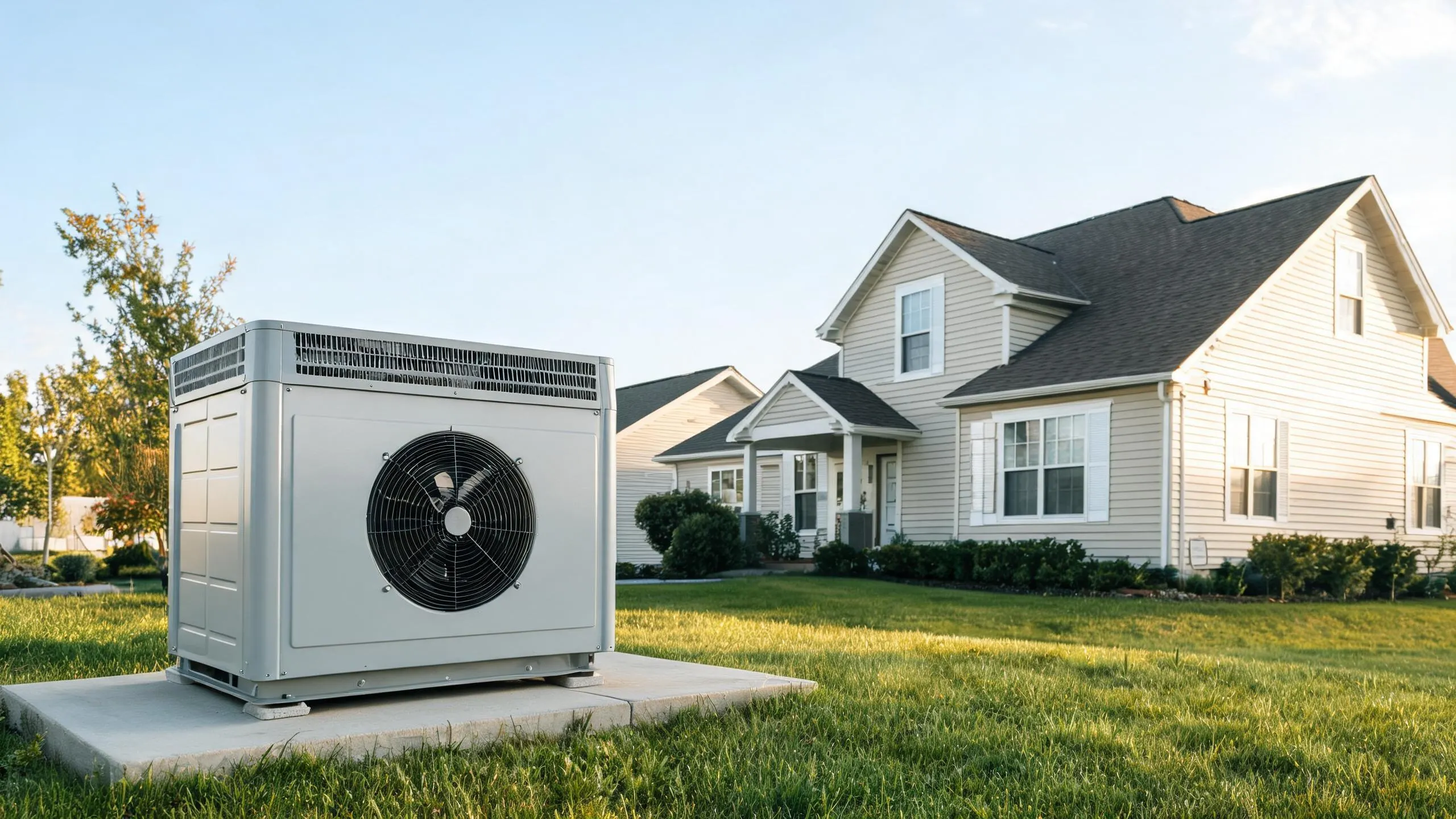






An outdoor heat pump unit mounted on a concrete pad in the front yard of a gray suburban house.

Heat Pump Repair in Bardstown, KY

Tell us about the job

Takes about a minute. No obligation.

RepairHeat PumpNelson County, KY
Step 1 of 2

What ZIP code is the job in?

Nelson County sits in a mixed climate, zone 4A, which asks for real heating and real cooling over the year. That's balanced work, not the long brutal stretch a heat pump faces further north or the nonstop cooling load it would see further south. Winters here average 27°F overnight through December, January and February, cold enough to run the heat pump hard but not so cold it's fighting ice and frost all season. That kind of middle-ground climate is easier on the compressor and the reversing valve than the extremes. So when a heat pump here starts acting up, it's less likely the machine was simply worn down by the place it lives, and more likely something specific has gone wrong, which usually means it's worth fixing.

7 months
October through April, your system heats
5 months
May through September, it cools
27°F
the average winter night it heats against
86°F
the average summer afternoon it cools against
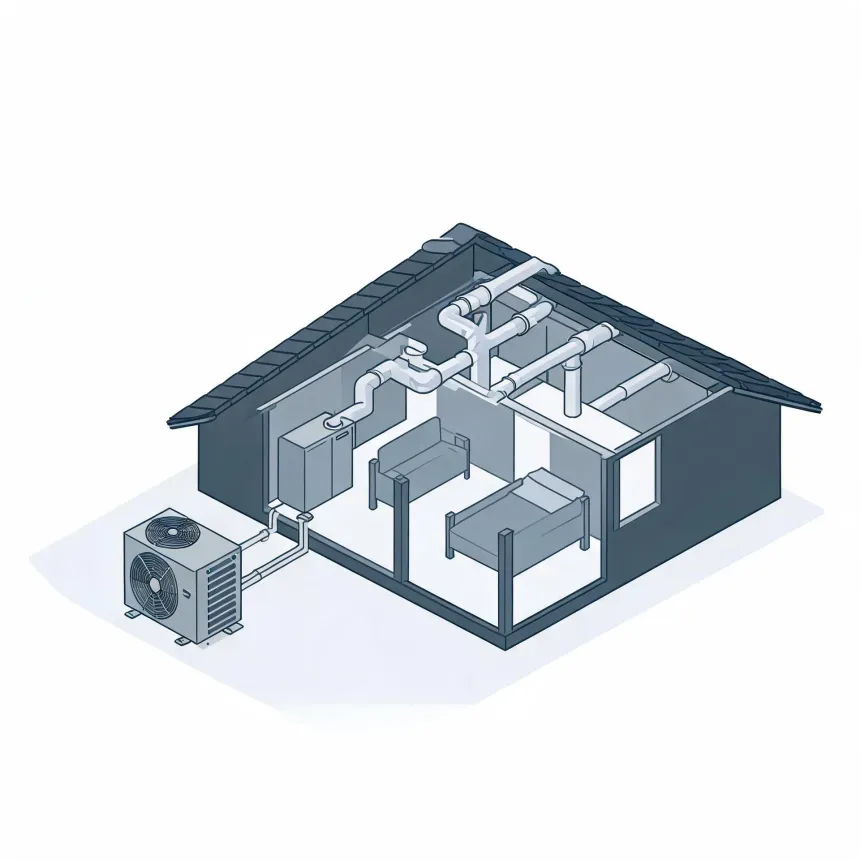
Isometric cutaway illustration of a house showing interior ductwork, an indoor air handler, and beds, with an outdoor condenser unit connected by lines outside the wall.
Your system heats October through April and cools May through September.

NOAA nClimDiv, 1991–2020 normals

Half the homes in Nelson County were built in 1992 or later.

A heat pump that came with a newer house still has years left in it, and that makes repair worth it.

Nelson County sees 104 severe weather events a decade. Hail and debris can damage a heat pump without stopping it.

104 severe weather events from 2015 to 2024
24% of homes statewide lost power a day or more in 2024
55 damaging wind events from 2015 to 2024
After the storm, check the unitHail and debris can hurt a heat pump that still seems to run fine.

If your heat pump came with the house, ask the technician for its age along with the diagnosis, not just what's wrong with it. On a system that's only a few years old, a failed capacitor or a bad control board is a repair, not a reason to replace. That's worth knowing before anyone brings up a quote for a new unit. Most homes here are standard installs, not mobile homes, so parts and the right size equipment are usually easy for a licensed contractor to get to.

Call it in and let a technician find the one part that failed

A heat pump that only has to split the work between real winters and real summers isn't fighting itself the way one further north or south would. That's why a breakdown here is usually one part giving out, not the whole machine going bad. Worth getting looked at before you weigh anything else.

Find a contractor
A man in a dark long-sleeve shirt, tan pants, cap and work boots carries a canvas tool bag up gray porch steps toward a dark green front door, with a potted shrub beside the entry.
A gray air-source heat pump mounted on a concrete pad next to a house with gray vinyl siding, surrounded by gravel and flanked by green shrubs and white hydrangea flowers.

Running it longer doesn't buy time, it spends it

A heat pump with a problem does not fix itself by staying on. If the reversing valve is sticking, the system keeps forcing the switch between heating and cooling, and the valve wears a little more each time. A low refrigerant charge makes the compressor run longer to reach the setpoint, and a compressor that runs long and hot does not last as long as one that cycles normally. A weak capacitor leaves the motor struggling to start and keep spinning, and that strain turns into heat it was not built to handle. Ice on the outdoor coil works the same way. Once it forms, airflow drops, so the system pulls in less heat and runs longer trying to catch up, and the ice builds instead of clearing on its own. The thermostat still calls for heat or cooling, so the system keeps answering, and whatever is failing keeps failing a little more with every cycle.

The reversing valve is usually the first thing to act up

The reversing valve switches the system between heating and cooling, and it does that every time the thermostat changes its mind. A valve that sticks halfway will leave the system blowing cool air when it should heat, or running backward entirely. That's a repair, not a sign the unit is done.
A refrigerant leak won't announce itself

Refrigerant doesn't get used up, it leaks out slowly through a fitting or a worn coil, and the system keeps trying to heat or cool with less of it each week. Ice forming on the outdoor coil or weak output from the vents is usually the first clue something is low, not loud or obvious.

Most heat pump trouble shows up as the system running but not keeping up, not as the system stopping outright. Air still comes out of the vents, just not warm enough or cool enough, and the thermostat shows it's been running longer than it should to hit the setpoint. A clicking sound when it switches between heating and cooling, or a reluctance to switch at all, points at the reversing valve. Frost on the outdoor unit that isn't melting off during the defrost cycle means airflow or refrigerant is off. A hiss or bubbling near the lines outside is worth mentioning to a technician too. None of these mean the unit is finished, they mean one part is asking for attention before it takes others down with it.

A diagnostic starts outside at the unit itself, not with a guess from the thermostat. A technician checks the refrigerant charge, the pressures on both sides, and the amp draw on the compressor, because those numbers point at what's actually failing instead of just what it feels like inside. The reversing valve gets tested under power, since a valve that looks fine sitting still can still fail to switch when it's told to. Airflow gets checked too, both the outdoor coil and the indoor side, since restricted airflow can mimic a refrigerant problem and send someone chasing the wrong part. The capacitor and contactor get a look as well, since a weak start component can strain a compressor that's otherwise healthy. By the end, the goal isn't just naming what's wrong, it's knowing why that part failed, so the fix holds instead of repeating in a few months.