Zone 4A works a heat pump both ways
Knox County sits in climate zone 4A, mixed and humid, which means your heat pump earns its keep heating in winter and cooling in summer. That's real work, but it's not extreme in either direction.

Takes about a minute. No obligation.
Knox County sits in climate zone 4A, mixed and humid, which means your heat pump earns its keep heating in winter and cooling in summer. That's real work, but it's not extreme in either direction.
Overnight lows average 28°F across December, January and February here. That's cold enough to run the system hard some nights, but it's not the deep freeze that wears down a compressor fast. A heat pump acting up in this county is more likely dealing with age or a worn part than a climate that's been pushing it past its limits.

NOAA nClimDiv, 1991–2020 normals
October starts the heating months here, and that's when a heat pump earns its keep.
September is worth a look first, so a weak part gets found before the first cold night finds it instead.



It has an easier job here than in most places, so your heat pump is often in decent shape. Repair is usually worth it.
Find a contractor
Before anyone comes out, there's a handful of things worth checking yourself. Look at the outdoor unit first. If it's caked in leaves, grass clippings or ice, the system can't move air through it and will struggle no matter what else is going on. Clear it off by hand, don't hose down the electrical parts. Check the thermostat is set to heat, not just on, and that the temperature you've set is actually above room temperature. Go to the air handler or furnace closet and look at the filter. A filter clogged with dust chokes airflow and can cause the whole system to ice up outside. Swap it if it's gray or you can't see light through it. Check the circuit breaker for the outdoor unit and the indoor air handler, a tripped breaker is an easy thing to miss. If the outdoor unit is running but covered in a heavy layer of ice beyond the thin frost that's normal in defrost cycles, that's worth noting for the tech rather than trying to chip off yourself. None of this tells you what's actually wrong, but it rules out the simple stuff before someone drives out to look at a filter.
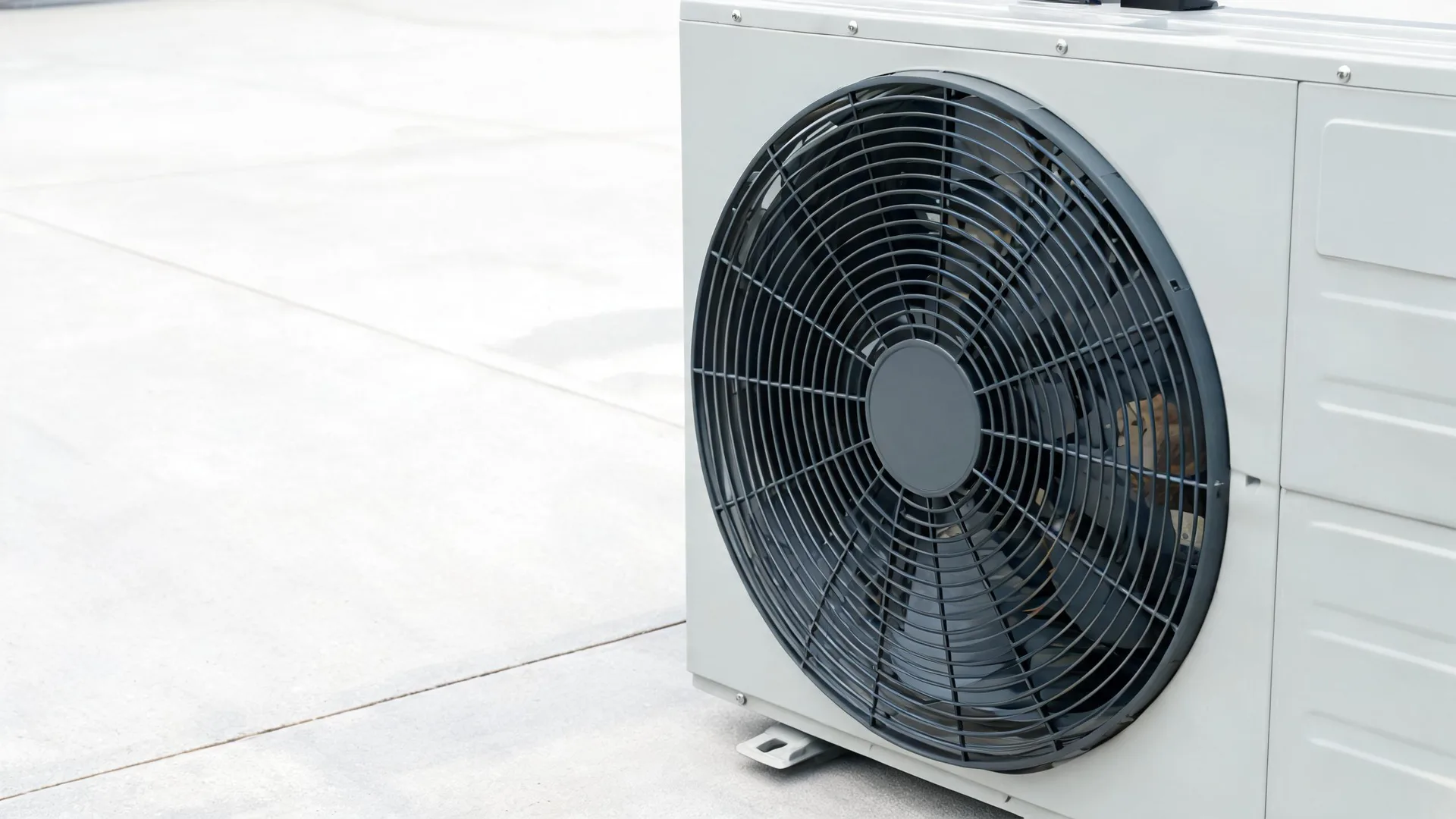
The outdoor unit holds the compressor, the reversing valve and the fan motor, and it sits exposed to weather year round. A fan motor wears out on its bearings. A reversing valve sticks from corrosion or debris and leaves the system stuck in heating or cooling when it should switch. A capacitor weakens slowly, so the compressor or fan struggles to start before it quits altogether. These are normal wear parts and replacing them is routine work.
A heat pump doesn't use up refrigerant over time. If the charge is low, it's leaking out somewhere, usually at a joint, a coil or a fitting that's corroded through. Running low on charge for long stretches makes the compressor work harder than it's built for, which is how a small leak turns into a bigger problem. A leak caught early and sealed is a far simpler job than dealing with a compressor that's been running starved for months.
Most people notice a heat pump problem through the air, not the equipment. Air coming out the vents that feels cool when it should feel warm is one of the most common complaints, and it doesn't always mean something's badly wrong. Short cycling is another one worth paying attention to, the system kicking on and off in quick bursts instead of running a full cycle. So is a unit that runs and runs but never quite gets the house to temperature. Odd noises matter too, a grinding or squealing from the outdoor fan motor, a clicking that keeps repeating instead of the normal start up click. Ice on the outdoor unit beyond a light morning frost is worth noting as well. None of these tell you exactly what's failing, but any one of them is a reason to get a tech out before it gets worse.
A diagnostic visit starts outside at the unit itself, before any gauges come out. A tech checks the air moving through the coil, listens to the compressor and fan, and looks at what the system is actually doing against what the thermostat is asking for. From there it's gauges on the refrigerant lines and a meter on the electrical parts, the capacitor, the contactor, the board. That's how a low charge gets told apart from a bad sensor, or a worn fan motor gets told apart from a stuck reversing valve, since several problems can look the same from the vents. Most of this gets answered in one visit. A slow refrigerant leak is the exception, since finding exactly where it's coming from sometimes takes more looking than a single afternoon allows.