A row of dark-painted single-story houses with gabled shingle roofs behind a trimmed hedge and mown lawn, surrounded by large leafy trees under an overcast sky.

AC Installation in Owensboro, KY

Tell us about the job

Takes about a minute. No obligation.

New system or replacementCentral ACDaviess County, KY
Step 1 of 2

What ZIP code is the job in?

Kentucky falls under the national minimum, not the Southeast rule

Daviess County is zone 4A, and Kentucky wasn't placed under the Southeast's stricter efficiency rule. A new split system here has to meet 13.4 SEER2, the federal floor for units under 45,000 Btu/h, rather than the 14.3 SEER2 required on installs further south.


That still narrows what a contractor can install

Any unit manufactured on or after January 1, 2023 has to meet that 13.4 SEER2 floor no matter where it goes. A contractor sizing a system for this climate is working from that minimum up, not down to it.

5 months
May through September, your air conditioner is on duty
87°F
the average summer afternoon it cools against
27 hail events
in ten years, and hail bends the fins on outdoor coils
13.4 SEER2
the federal minimum any new unit must meet
Isometric cutaway illustration of a single-story house showing interior rooms, ceiling ductwork, an indoor air handler, and an outdoor condenser unit connected by lines, in gray and white tones on a white background.
Your air conditioner works hardest from June through August.

NOAA nClimDiv, 1991–2020 normals

Gas heats 62.8% of homes in Daviess County.

A contractor installing central air here is usually adding it alongside a gas furnace, not replacing an all-electric system.

May starts five months of cooling here. Put the new system in before it does.

Cooling runs May through September
Summer afternoons average 87°F
95 damaging wind events from 2015 to 2024

Half the homes in Daviess County were built in 1977 or earlier, half in 1977 or later. That split doesn't call for anything special in a new system. A standard split system sized to the house works whether the home is older or newer, as long as the sizing is done right for that house, not for the county. If your ductwork came with the house, that's worth having the contractor look at before install, since it affects how well the new unit moves air. But the unit itself, its size and its efficiency rating, doesn't need to change because of when the home was built.

Pick for reliability, not payback speed

Electricity here runs 12.79 cents per kilowatt-hour, below what most of the country pays. A high-efficiency unit still costs more up front, and at this rate it takes longer to earn that back. What matters more in Owensboro is a system that holds up when the power goes out and the weather turns hard. That's a question of the right size and the right install, not the SEER2 number on the sticker.

Find a contractor
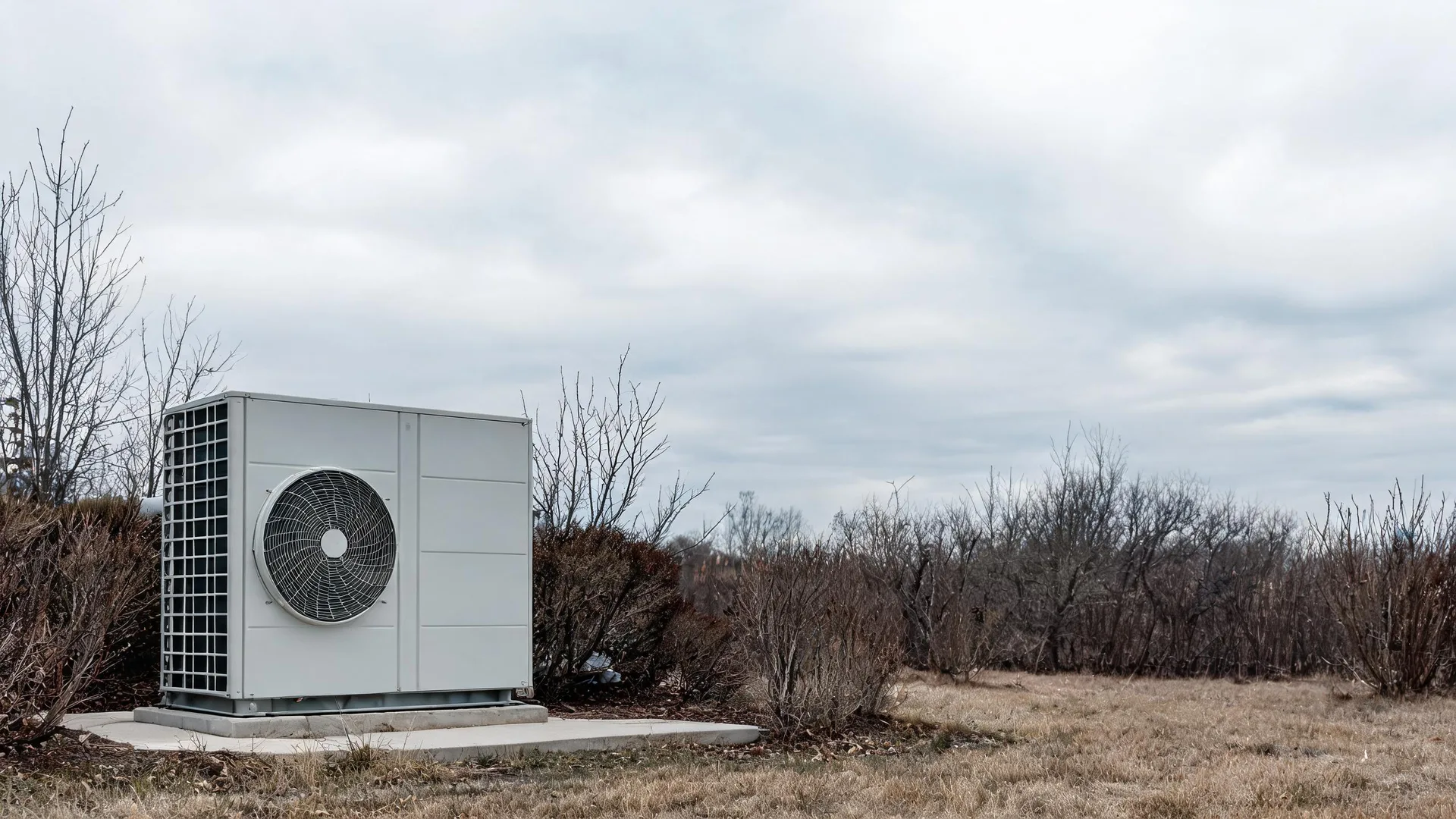
An outdoor air conditioning condenser unit mounted on a concrete pad surrounded by gravel, photographed against a partly cloudy blue sky.

The unit doesn't wear out from the season. It wears out from strain.

A compressor and a coil are built to run for years without trouble, assuming nothing else goes wrong. Long hours in a single season aren't what wears them down. Strain is what wears them down. A unit that short cycles because it's oversized puts more wear on the compressor and the contactor than one running long, steady cycles. A system that's sized and charged right can run every day for months and come through fine, because the load it's handling matches what it was built for. That gets set at install, not after. A clean brazing job, a proper vacuum to clear out moisture, a charge matched to the line length, those decide whether the compressor works within its design the whole time it runs or strains against a bad install from the start.

Bigger isn't better

An oversized air conditioner cools the room fast and then shuts off before it pulls the moisture out of the air. The house ends up clammy even though the thermostat says it's satisfied. It also cycles on and off more often, and that short cycling wears on the compressor and the contactor faster than a unit that runs a full, steady cycle.

The sizing comes from a load calculation

A contractor works out the right size room by room. Square footage, windows and which way they face, insulation, ceiling height, how many people are usually home, all of it factors in. That calculation is what gives you the tonnage. It's not a guess based on the old unit or a rule of thumb for the square footage alone. If the ductwork is undersized or leaky, that gets weighed in too, since it limits how much air the new unit can actually move no matter how it's sized.

Aerial view of a gray outdoor air conditioning condenser unit mounted on a concrete pad next to a house with vinyl siding.

Going above the federal minimum saves little here, about $20 a year.

  • A higher-efficiency unit$270 a year
  • A new unit at the federal minimum, 14.3 SEER2$290 a year

Estimates for a typical Daviess County home, from EIA household energy data, Kentucky fuel prices and NOAA climate normals. Your home will differ.

Install day starts with the old unit coming out, not the new one going in. The line set gets disconnected, the refrigerant recovered, and the pad or slab checked to see if it still sits level and clear of the drip line. Setting the condenser and air handler is the fast part. Most of the day goes to brazing the line set, pulling a vacuum to clear out moisture and air, then charging the system to the exact weight the manufacturer specifies for that line length. A unit charged by feel instead of by the numbers will run, but it won't run efficiently, and it can shorten the life of the compressor. Before anyone leaves, the system should get cycled through a full run, checked for proper airflow at the registers, and the thermostat set up and tested.