





A nighttime street view of several illuminated two-story red brick homes with front porches, flanked by a large tree.

AC Installation in Louisville, KY

Tell us about the job

Takes about a minute. No obligation.

New system or replacementCentral ACJefferson County, KY
Step 1 of 2

What ZIP code is the job in?

Jefferson County saw 332 severe weather events between 2015 and 2024. Damaging wind made up most of that count, with hail and a handful of tornadoes in the mix too. A new outdoor unit is going to sit outside through all of it. Where the installer sets the condenser matters. Keep it clear of branches that could come down, and away from a roofline where ice or snow could let go onto it. Power is the other piece. Nearly a quarter of Kentucky households lost power for a day or more in 2024, and when the power is out, the AC is out with it. Ask the installer what a surge can do to the new system and whether it's worth protecting against.

5 months
May through September, your air conditioner is on duty
86°F
the average summer afternoon it cools against
60 hail events
in ten years, and hail bends the fins on outdoor coils
13.4 SEER2
the federal minimum any new unit must meet
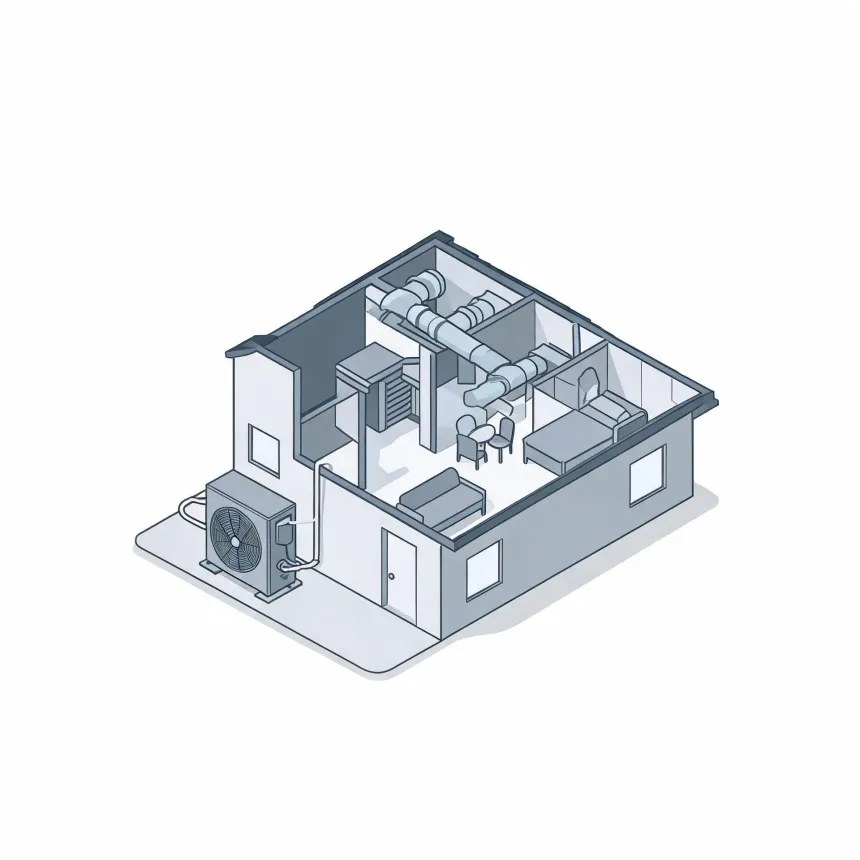
Isometric line illustration of a cutaway house showing interior rooms with furniture and ceiling ductwork, connected to an outdoor condenser unit with a fan beside the building.
Your air conditioner works hardest from June through August.

NOAA nClimDiv, 1991–2020 normals

AC runs here from May through September.

April is the month to put in a new system, before the first hot stretch asks something of it.

Half the homes in Jefferson County were built in 1972 or earlier, and a new system has to match the house it's going into

Half the homes here were built by 1972
Cooling runs May through September
Summer afternoons average 86°F
Built for Louisville summersFive months of cooling a year, with afternoon highs averaging 86°F in June, July and August

Louisville falls under zone 4A, a mixed climate that asks real work of both the heating and cooling side of a system. Any new split-system air conditioner under 45,000 Btu/h has to meet at least 14.3 SEER2 here, and units at or above that size have to hit at least 13.8 SEER2. That's higher than the baseline manufacturers have to meet nationally, so a unit built for a drier or milder region won't necessarily clear what's required here. A federal tax credit is available for qualifying high-efficiency equipment, worth checking against whatever system the installer proposes.

Most Jefferson County homes heat with gas, which shapes what your AC install needs to match

Gas heats most homes in Jefferson County, close to six in ten. AC installs here are usually paired with a gas furnace already in place, so the new condenser and coil need to match what's there rather than replace the whole system. When you're comparing quotes, ask whether the air conditioner is being sized and matched to your existing furnace or whether the installer is proposing a change to that too.

Find a contractor
An outdoor air conditioning condenser unit mounted on a concrete pad surrounded by gravel, photographed against a partly cloudy blue sky.

Size it for your house, not the old unit

If your ductwork and furnace were sized decades ago, they were sized for a smaller load than a lot of today's equipment assumes. Ask the installer to run a load calculation on your house rather than size off the unit you're replacing. A system sized for a different house can short cycle, run longer than it should, or leave rooms uneven.

The math behind the size

Sizing comes from a load calculation, not a chart that matches square footage to tonnage. The contractor works through the walls, the windows, the insulation, the ceiling height, which way the house faces. A house that holds heat well needs less equipment than one that doesn't, even if they look the same size from the street.

What the wrong size does

An oversized unit cools the air fast and shuts off before it pulls the moisture out. The house ends up cold and damp at the same time. It also cycles on and off more than it should, and that wears the compressor faster than steady runs would. An undersized unit does the opposite. It runs long on the hottest days and still can't catch up, so some rooms stay warm no matter how long it works.

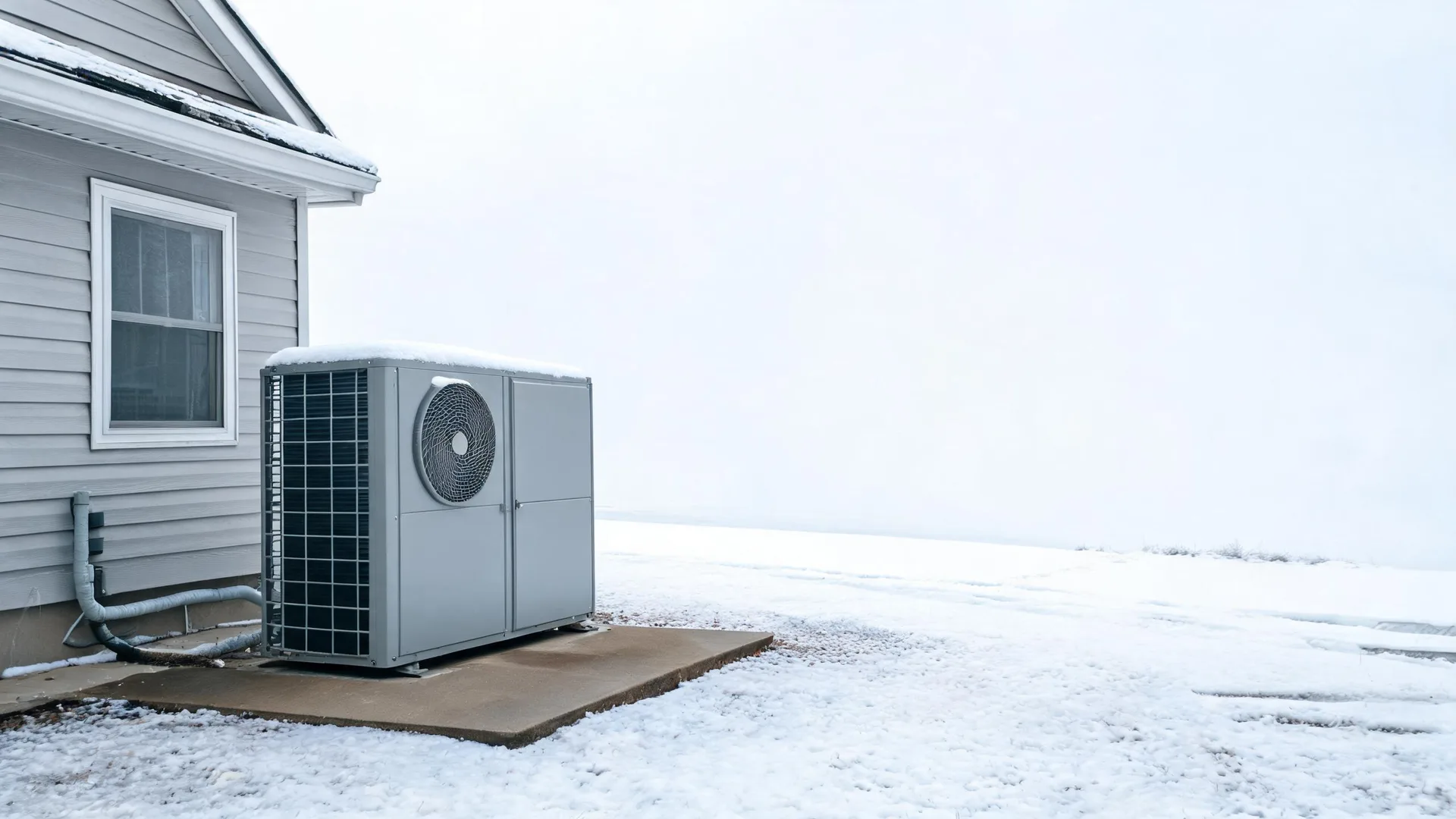
Aerial view of a gray outdoor air conditioning condenser unit mounted on a concrete pad next to a house with vinyl siding.

Going above the federal minimum saves little here, about $20 a year.

  • A higher-efficiency unit$260 a year
  • A new unit at the federal minimum, 14.3 SEER2$280 a year

Estimates for a typical Jefferson County home, from EIA household energy data, Kentucky fuel prices and NOAA climate normals. Your home will differ.

Installation day starts with the old equipment coming out, not the new going in. The crew recovers the refrigerant from the old system, since it can't legally be vented into the air, then disconnects the lines, the electrical, and the condensate drain before anything new gets set. If the line set isn't being reused, new copper gets run between the indoor coil and the outdoor condenser, and that run gets pressure tested for leaks before it's charged. The indoor coil usually ties in above or beside the furnace, so that part of the day overlaps with the ductwork already in place rather than replacing it. Once the new condenser is set on its pad and leveled, the system gets charged to the manufacturer's spec and run through its paces, checking the temperature split between the air going into the return and the air coming out of the supply. A tech who's thorough will also check static pressure in the ducts, since that tells them whether the blower is moving the air the new coil actually needs.