A row of illuminated two-story brick houses with front porches and mature trees photographed at twilight.

AC Installation in Bowling Green, KY

Tell us about the job

Takes about a minute. No obligation.

New system or replacementCentral ACWarren County, KY
Step 1 of 2

What ZIP code is the job in?

Most homes here run on electricity

Electricity heats 56.5% of homes in Warren County, with utility gas a distant second at 37.6%. An electric furnace or heat pump paired with central air is the setup most installers see here, so matching what the house already has is usually the straightforward path.

What that means for your install

A new AC unit or heat pump on an all-electric home ties into wiring and a breaker already sized for electric heat, which makes the installer's job more predictable. If your home runs on utility gas or bottled gas instead, pairing new AC with the gas furnace is less common here but still worth asking about.

5 months
May through September, your air conditioner is on duty
88°F
the average summer afternoon it cools against
22 hail events
in ten years, and hail bends the fins on outdoor coils
13.4 SEER2
the federal minimum any new unit must meet
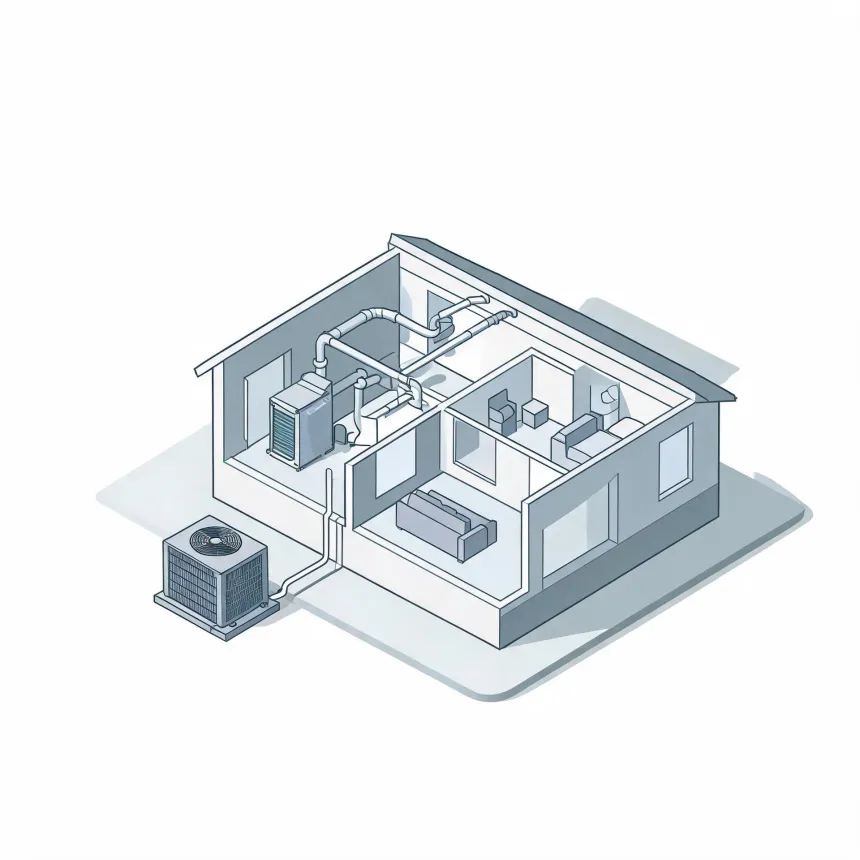
Isometric line illustration of a cutaway house showing interior rooms, a furnace or air handler with ductwork, and an outdoor condenser unit beside the building.
Your air conditioner works hardest from June through August.

NOAA nClimDiv, 1991–2020 normals

AC runs here from May through September.

Get the new system in during April, before the first hot week puts it straight to work.

Cheap power here means reliability matters more than the efficiency rating

Power costs 12.79 cents a kWh statewide
Cooling runs May through September
Summer afternoons average 88°F

Warren County falls under zone 4A, a climate that puts real demand on both heating and cooling. Any new split-system air conditioner going in here has to clear a higher bar than the national minimum. For a unit under 45,000 Btu/h, this region requires 14.3 SEER2, where the rest of the country only needs 13.4. That rules out the cheapest units sold elsewhere. A system that meets this standard may also qualify for the federal tax credit available on qualifying equipment, which is worth asking about when comparing options.

A right-sized system is all this county asks for

Summers here run May through September, with afternoons averaging 88°F through June, July and August. A standard-size, standard-efficiency system handles that fine. Nothing about Warren County calls for oversizing a unit or paying for a higher tier than the install needs.

Find a contractor
A gray residential air conditioning condenser unit mounted on a concrete pad outdoors, surrounded by green grass under a partly cloudy blue sky.

The install is more than the box outside

What drives the cost of an install isn't just the unit sitting outside. It's what the job takes to do right. A load calculation tells the installer what size system the house actually needs, room by room, based on windows, ceiling height and layout. Skip that step and you either pay for capacity the house doesn't use or end up with a system too small to keep up on the hottest afternoons. Ductwork matters just as much. Existing ducts have to carry the right amount of air to every room, and if they're leaky or undersized, extending or sealing them adds to the job. The line set connecting the outdoor unit to the indoor coil has to be the right length and properly charged with refrigerant, and if the indoor coil doesn't match the outdoor unit, the whole system runs below its rating no matter what the label says. Electrical work can factor in too. A new condenser needs a dedicated circuit and a breaker sized to match, and older panels sometimes need upgrading to handle it. None of this shows up in a quick glance at a unit, but all of it decides whether the system installed matches the system promised.

Ask what size the quote is based on

Any installer worth hiring should walk through a load calculation before naming a size, not after. If a quote lists tonnage before anyone has measured the house, ask what that number is based on. Matching the old system's size is not the same as sizing the new one.

Ask what happens to the existing ductwork

A new condenser and coil only perform as rated if the ducts can move the air they're designed to move. Ask whether the installer plans to test airflow or just connect to what's already there. Leaky or undersized ducts will hold back even a correctly sized system.

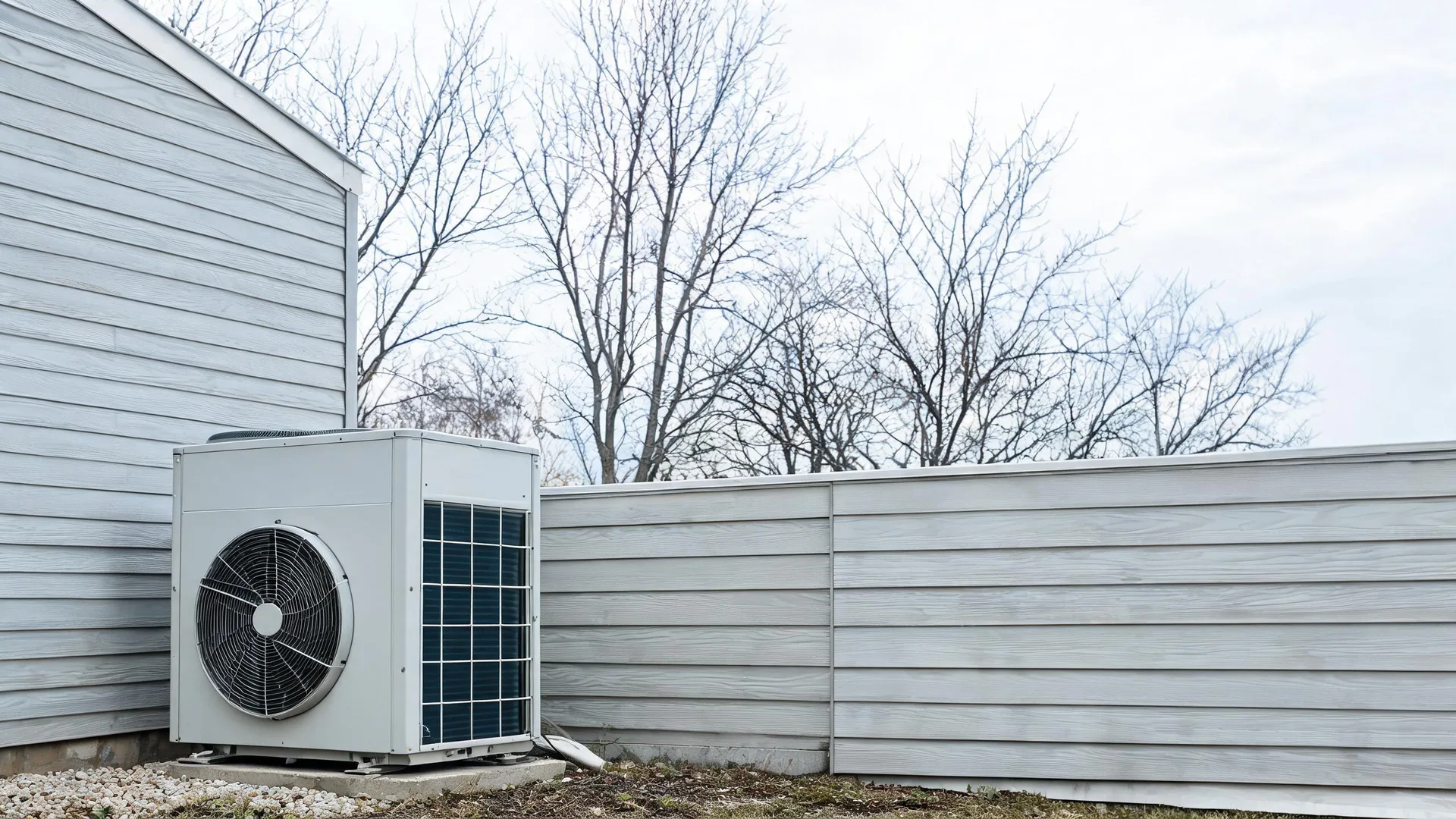
An outdoor air conditioning condenser unit on a concrete pad next to the gray vinyl siding of a residential home.

Going above the federal minimum saves little here, about $20 a year.

  • A higher-efficiency unit$290 a year
  • A new unit at the federal minimum, 14.3 SEER2$310 a year

Estimates for a typical Warren County home, from EIA household energy data, Kentucky fuel prices and NOAA climate normals. Your home will differ.

Installation day starts with the old system coming out, not the new one going in. The outdoor condenser gets disconnected, the indoor coil gets pulled, and the refrigerant in the old lines has to be recovered properly rather than vented. Once the old equipment is clear, the installer sets the new condenser on its pad, runs or reuses the line set, and mounts the indoor coil to match it. Electrical work usually follows. That means a dedicated circuit, a disconnect box by the condenser, and a breaker sized to the new unit's draw. Before anyone calls it done, the system gets charged with refrigerant to the exact amount the manufacturer specifies, then checked for correct airflow and temperature split at the vents. A thermostat that's old or incompatible with the new system often gets swapped at this point too, since it's a small step compared to everything else happening that day.