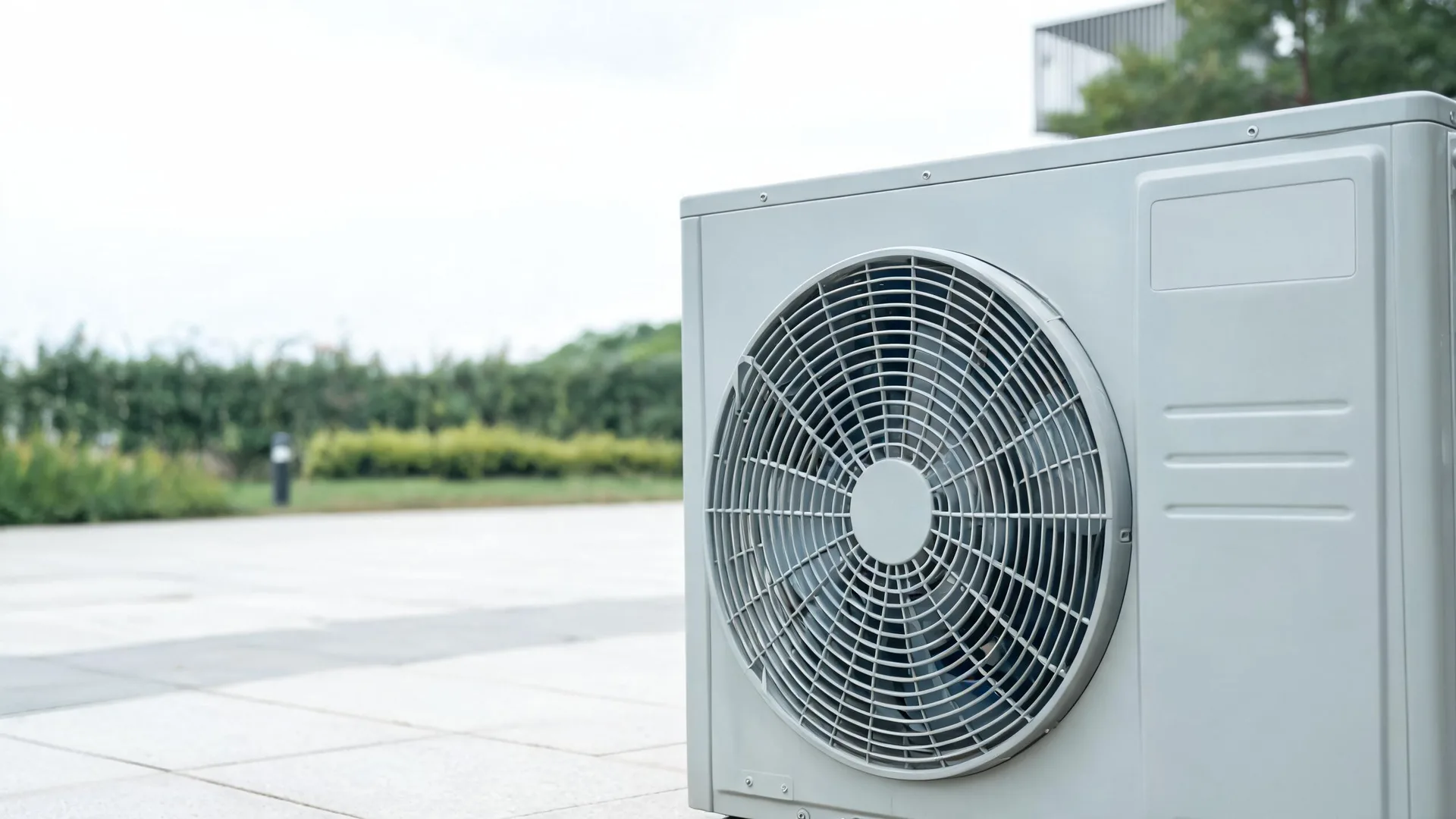
Aerial view of a gray central air conditioning condenser unit on a concrete pad next to a house with vinyl siding.

AC Installation in Richmond, KY

Tell us about the job

Takes about a minute. No obligation.

New system or replacementCentral ACMadison County, KY
Step 1 of 2

What ZIP code is the job in?

Bigger isn't better

An oversized air conditioner cools the air fast and shuts off before it pulls the moisture out of it, so the house feels clammy even at the right temperature. It also cycles on and off more, and that short cycling wears on the compressor over time. The right size runs longer, steadier stretches, and that's what actually dries the air out.


How a contractor sizes it

A proper contractor works out the load with a room by room calculation, known as a Manual J, that accounts for the square footage, the windows, the insulation, and which way the house faces. Anyone who quotes a system size off the square footage alone, or just matches whatever was there before, is guessing. The old system may have been wrong too.

5 months
May through September, your air conditioner is on duty
85°F
the average summer afternoon it cools against
17 hail events
in ten years, and hail bends the fins on outdoor coils
13.4 SEER2
the federal minimum any new unit must meet
Isometric 3D cutaway render of a house with dark siding showing interior rooms, ductwork and an air handler, connected by lines to an outdoor condenser unit on a white background.
Your air conditioner works hardest from June through August.

NOAA nClimDiv, 1991–2020 normals

Electricity heats 80.9% of homes in Madison County.

An electric furnace or heat pump paired with this new AC is what most contractors here will plan around first.

Five months of cooling, nothing that calls for more than a standard system

Cooling runs May through September
Summer afternoons average 85°F
87 damaging wind events from 2015 to 2024
Cheap power here changes the payback mathKentucky electricity runs 12.79 cents per kilowatt-hour, below the national average.

April is when to get this done here. Cooling starts in May and runs through September, so going into spring with a working system means it's broken in and running before the first hot stretch, not during it. Installing ahead of the season gives the contractor time to run the Manual J properly and order the right size if it's not already in stock. It also means any startup problems get caught and fixed while the weather is still mild. Wait until the house is already hot and the choice narrows to whatever unit and whatever appointment are available that week.

Plan for storms

Storms and outages are common here. Plan where the outdoor unit goes, how it's protected, and how you'll keep heat and hot water in an outage.

Find a contractor
An outdoor air conditioning condenser unit mounted on a concrete pad beside a house, with electrical conduit running to a wall-mounted disconnect box.

What you're paying for isn't just the unit

The unit itself is only part of what gets installed. A contractor is also running line sets, setting a pad or bracket outside, connecting to the ductwork or running new lines if there's no ductwork to tie into, and wiring it into the electrical panel. How much of that already exists in good condition, and how much has to be built new, is most of what separates a straightforward swap from a bigger job. A straight replacement where the old equipment matched the house well enough is a different job than a first-time install or a repair job where the old system was wrong from the start. The ductwork matters as much as the condenser. A system sized right but pushing air through ducts that are too small, leaky, or poorly laid out won't perform like the specs say, and fixing that is part of the cost, not separate from it. Electrical capacity is the other piece worth asking about early. Some panels can take a new condenser as is, others need an upgrade to handle the load, and that's not something to find out partway through the job.

The old unit gets hauled away

A contractor disconnects the old condenser from the line set and the electrical whip, then cuts the lines open to let the refrigerant out before anything moves. That refrigerant has to be captured, not vented, so it gets pulled into a recovery tank with a recovery machine rather than released into the air. Once it's empty and disconnected, the unit gets carried off the pad and hauled out with the job, pad or bracket included if it's not being reused.

What stays depends on what's underneath

If the line set and ductwork are in good shape and sized right for the new unit, a contractor can often reuse them instead of replacing everything. Old line sets sometimes get swapped anyway if they're the wrong diameter for the new refrigerant charge, since that mismatch causes problems down the road. The indoor coil usually comes out with the old system too, since it's matched to the old condenser and won't pair correctly with the new one.

An outdoor air conditioning condenser unit positioned beside a blue-sided house at sunset.

Going above the federal minimum saves little here, about $10 a year.

  • A higher-efficiency unit$230 a year
  • A new unit at the federal minimum, 14.3 SEER2$240 a year

Estimates for a typical Madison County home, from EIA household energy data, Kentucky fuel prices and NOAA climate normals. Your home will differ.

The SEER2 number on the label is a seasonal average, not a fixed rate of power use. It compares the cooling a unit puts out over a season against the electricity it takes to do that, under a standard test. A higher number means the compressor and fan are doing more of that work efficiently, not that the unit cools a bigger house. Systems with the same rating can still behave differently once they're installed, because duct losses, a bad charge, or the wrong size pull the actual result away from what the label promises. The sticker tells you what the equipment is capable of under test conditions. What a homeowner actually gets out of it depends on sizing and installation as much as it depends on that rating.