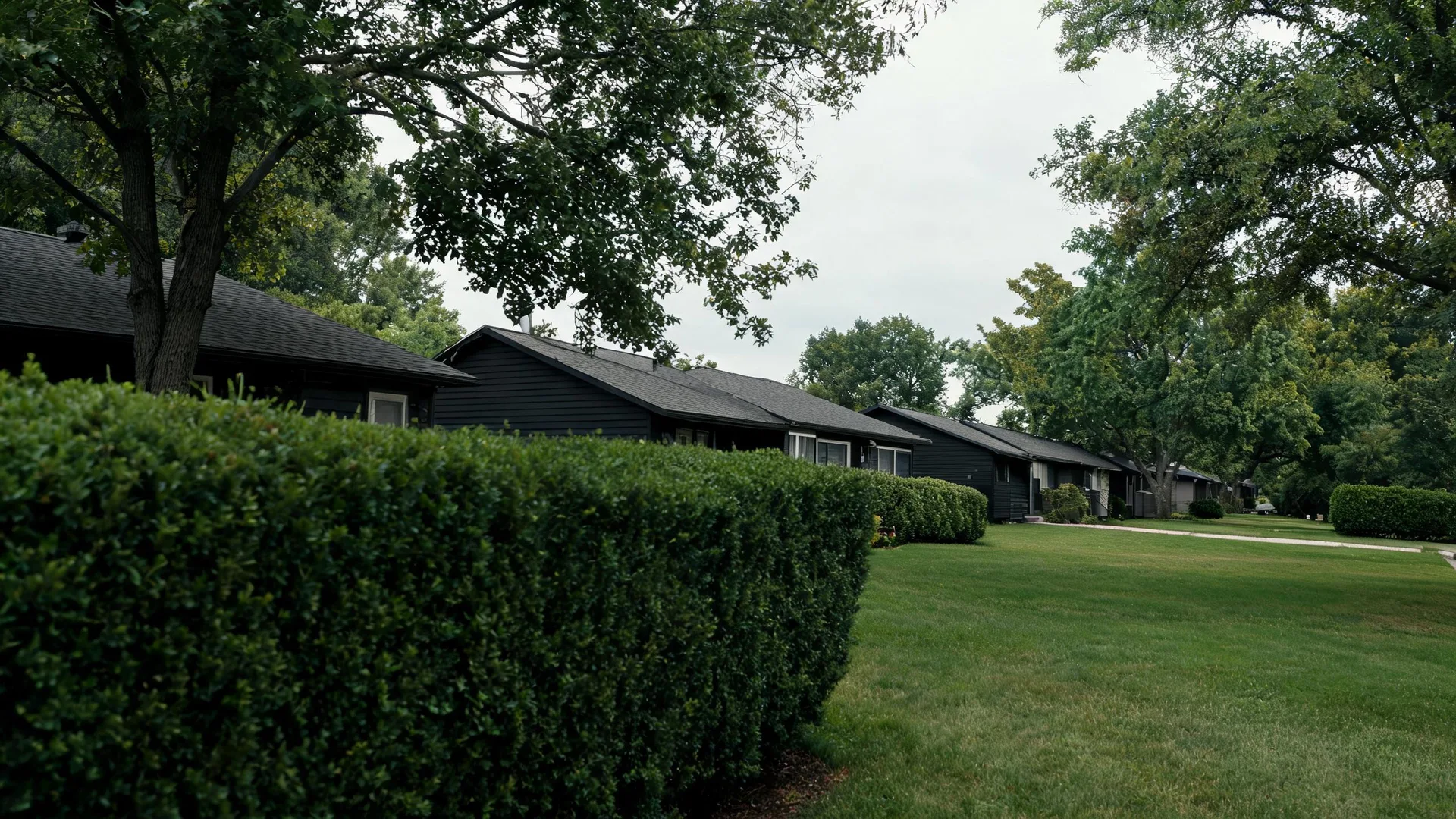






A row of dark-sided single-story houses behind a long trimmed hedge, with mown lawn, a paved path and large leafy trees under an overcast sky.

AC Installation in Prestonsburg, KY

Tell us about the job

Takes about a minute. No obligation.

New system or replacementCentral ACFloyd County, KY
Step 1 of 2

What ZIP code is the job in?

Floyd County saw 98 damaging wind events and 16 hail events over the past decade. Hail dents a condenser's fins and bends the coil behind them, and that cuts how well it sheds heat. Wind drives branches and grit into the unit from the side. Where the installer sets the new condenser, and what if anything shields it, is worth deciding before the install rather than after a storm. Almost a quarter of Kentucky households lost power for a day or more in 2024, and a new AC does nothing for you while the power is out.

4 months
June through September, your air conditioner is on duty
86°F
the average summer afternoon it cools against
16 hail events
in ten years, and hail bends the fins on outdoor coils
13.4 SEER2
the federal minimum any new unit must meet
Isometric line illustration of a cutaway single-story house showing interior rooms, ceiling ductwork and an air handler, connected to an outdoor condenser unit on a pad beside the building.
Your air conditioner works hardest from June through August.

NOAA nClimDiv, 1991–2020 normals

AC here runs June through September.

May is the month to get the new unit in, before that first stretch of heat.

A standard system, sized and installed right, is all this county needs

Half the homes here were built by 1982
Cooling runs June through September
Summer afternoons average 86°F

Electricity heats 62.8% of homes in Floyd County, more than any other fuel. Utility gas comes in well behind at 29.8%, and bottled or tank gas accounts for a small share beyond that. If your AC install is paired with a furnace or air handler, matching what the house already runs keeps the job simpler and the parts easier to source later. An electric furnace or heat pump draws on the same power the new AC needs, so the wiring and panel are already set up for that load. Going the other way, adding gas where none runs now, means bringing in a line that was never part of the house.

A standard AC, sized right, handles Floyd County summers

Summers here mean four months of real heat, afternoons averaging 86°F through June, July and August. That is a normal cooling load for this area, nothing that calls for an oversized system or a special spec. A standard unit, sized to the house and installed correctly, will keep up through the season.

Find a contractor
A man in a backwards cap, dark long-sleeved shirt and brown work pants, seen from behind, carries a worn canvas tool bag up steps toward a dark green paneled front door beside a potted shrub.
A gray cylindrical air conditioning condenser unit mounted on a concrete pad next to a light-colored vinyl-sided house exterior.

The old condenser comes out before the new one goes in

Whoever installs the new unit still has to deal with the one coming out. A condenser holds refrigerant under pressure, and that has to be recovered with a machine built for it, not vented into the air. That's the law, and it's also the only way to know the line set is empty before anyone disconnects it. Once it's drained, the old unit unbolts from the pad and the line set, and the wiring to the disconnect box comes free the same way it went in. Scrap haulers take the cabinet apart for the metal and the compressor inside it. None of that holds up the new install. A tech can set the new condenser on the same pad once the old one is clear, or on a new pad if the spot was never quite right to begin with.

The size comes from a room-by-room load calculation, not the old unit's tag

A contractor works out how much heat the house actually gains, counting the windows, the insulation, the walls and the ceiling, room by room. The number that comes out of that is what sizes the system. Going by what the last unit was rated for just repeats whatever mistake was built into that install, if there was one.

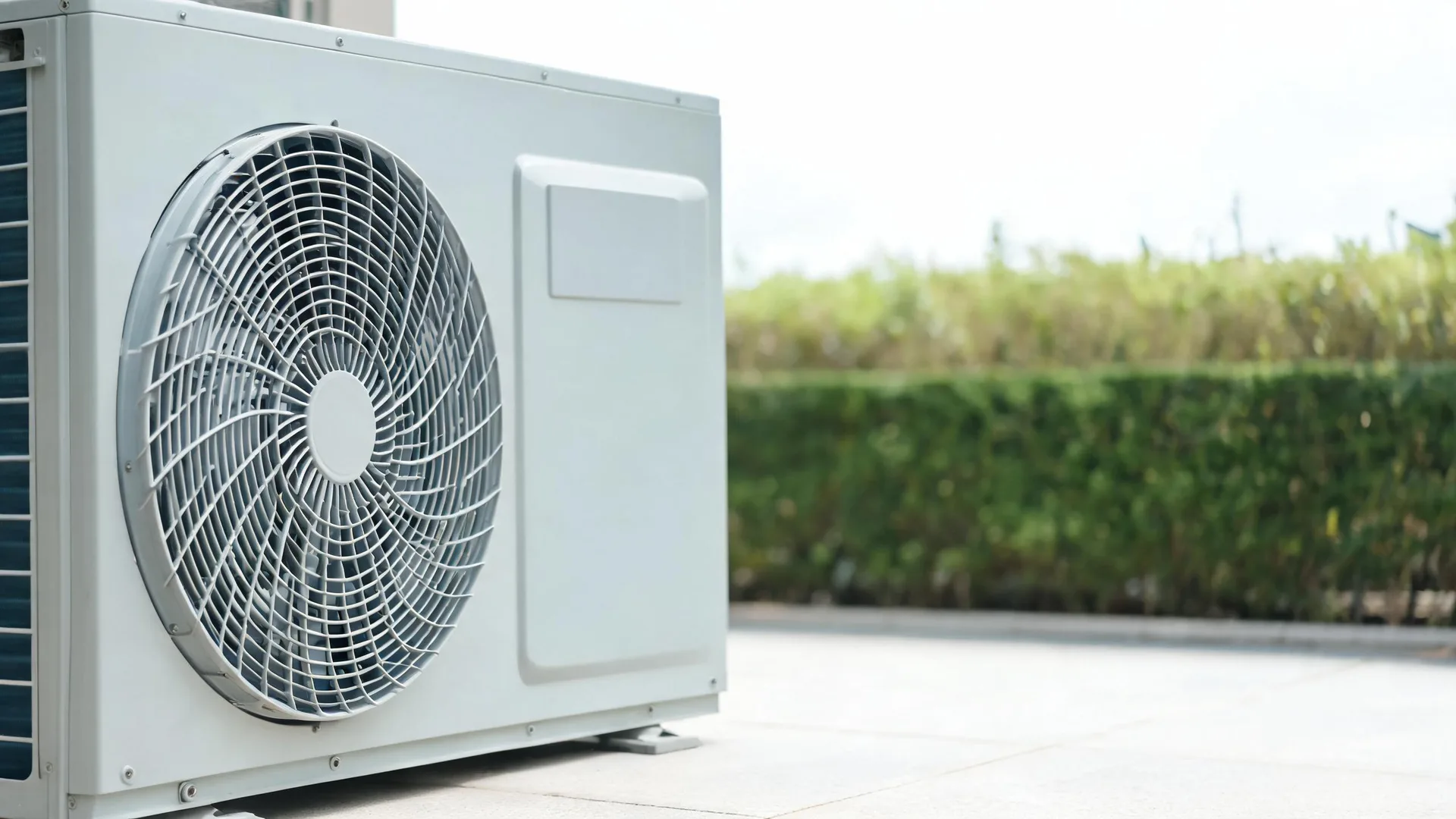
Oversized cools the air fast and leaves the moisture behind

A unit too big for the house satisfies the thermostat before it ever pulls much humidity out of the air. It shuts off, runs again a few minutes later, and keeps cycling that way all afternoon. The room feels cool and still feels damp. A correctly sized system runs longer stretches and actually dries the air while it cools it.

Overhead view of an outdoor AC condenser unit on a concrete pad next to a house with a dark shingle roof.

Going above the federal minimum saves little here, about $10 a year.

  • A higher-efficiency unit$220 a year
  • A new unit at the federal minimum, 14.3 SEER2$230 a year

Estimates for a typical Floyd County home, from EIA household energy data, Kentucky fuel prices and NOAA climate normals. Your home will differ.

The crew needs most of a day for a straight swap, longer if the ductwork or electrical needs work too. The new condenser gets set on the pad and leveled, since a unit sitting crooked wears its compressor mounts unevenly over time. Inside, the coil gets matched to the condenser, and the line set connecting them either gets reused, if it's clean and the right size, or replaced. Once everything's connected, the system gets evacuated to pull all air and moisture out of the lines before any refrigerant goes in. That step matters more than people think. Moisture left in the lines turns to acid over time and eats at the compressor from the inside. After charging, a tech checks the refrigerant level against the manufacturer's spec, not by feel, and runs the system through a full cycle to see that it's pulling the temperature down and holding steady.