A row of dark-sided single-story houses among large deciduous trees, with a trimmed hedge in the foreground and a mown lawn crossed by a paved path.

AC Installation in Murray, KY

Tell us about the job

Takes about a minute. No obligation.

New system or replacementCentral ACCalloway County, KY
Step 1 of 2

What ZIP code is the job in?

The Southeast minimum sets the floor

Calloway County falls in the Southeast region for federal efficiency rules, which puts the minimum higher than the national baseline. A split system below 45,000 Btu/h has to hit at least 14.3 SEER2 here, not the 13.4 SEER2 allowed elsewhere.


That narrows what gets installed

Any new central AC going into a home here has to meet that 14.3 SEER2 floor before it can be sold or installed, regardless of what the homeowner prefers. This also means older, lower-rated equipment is not an option for a new install.

5 months
May through September, your air conditioner is on duty
87°F
the average summer afternoon it cools against
31 hail events
in ten years, and hail bends the fins on outdoor coils
13.4 SEER2
the federal minimum any new unit must meet
Isometric cutaway illustration of a single-story house showing interior rooms with ductwork and an air handler, connected by refrigerant lines to an outdoor condenser unit on the left.
Your air conditioner works hardest from June through August.

NOAA nClimDiv, 1991–2020 normals

A bigger number on the spec sheet does not mean the system fits your house.

Ask for a load calculation on your home, not just a SEER2 rating off the shelf.

April is the month to get it done, before May turns the heat on

Cooling runs May through September
Climate zone 4A
Power costs 12.79 cents a kWh statewide

More than half the homes in Calloway County heat with electricity, and that shapes what central AC installation looks like here. A lot of these homes already run an electric furnace or heat pump, so adding or replacing central AC usually means working with wiring and ductwork already sized for an electric system. Gas heats about a third of homes here, and in those houses the AC still runs on its own electrical circuit regardless of what heats the place in winter. Either way, the installer needs to check the existing electrical panel can handle the new unit's draw before anything gets swapped out.

The standard size and rating is the right fit here

A standard system at the required efficiency minimum runs on the same electricity rate as everything else in a Kentucky home, 12.79 cents per kilowatthour. There's no local reason to pay for a bigger or higher-rated unit than this house needs. Get the load calculation, meet the floor, and install that.

Find a contractor
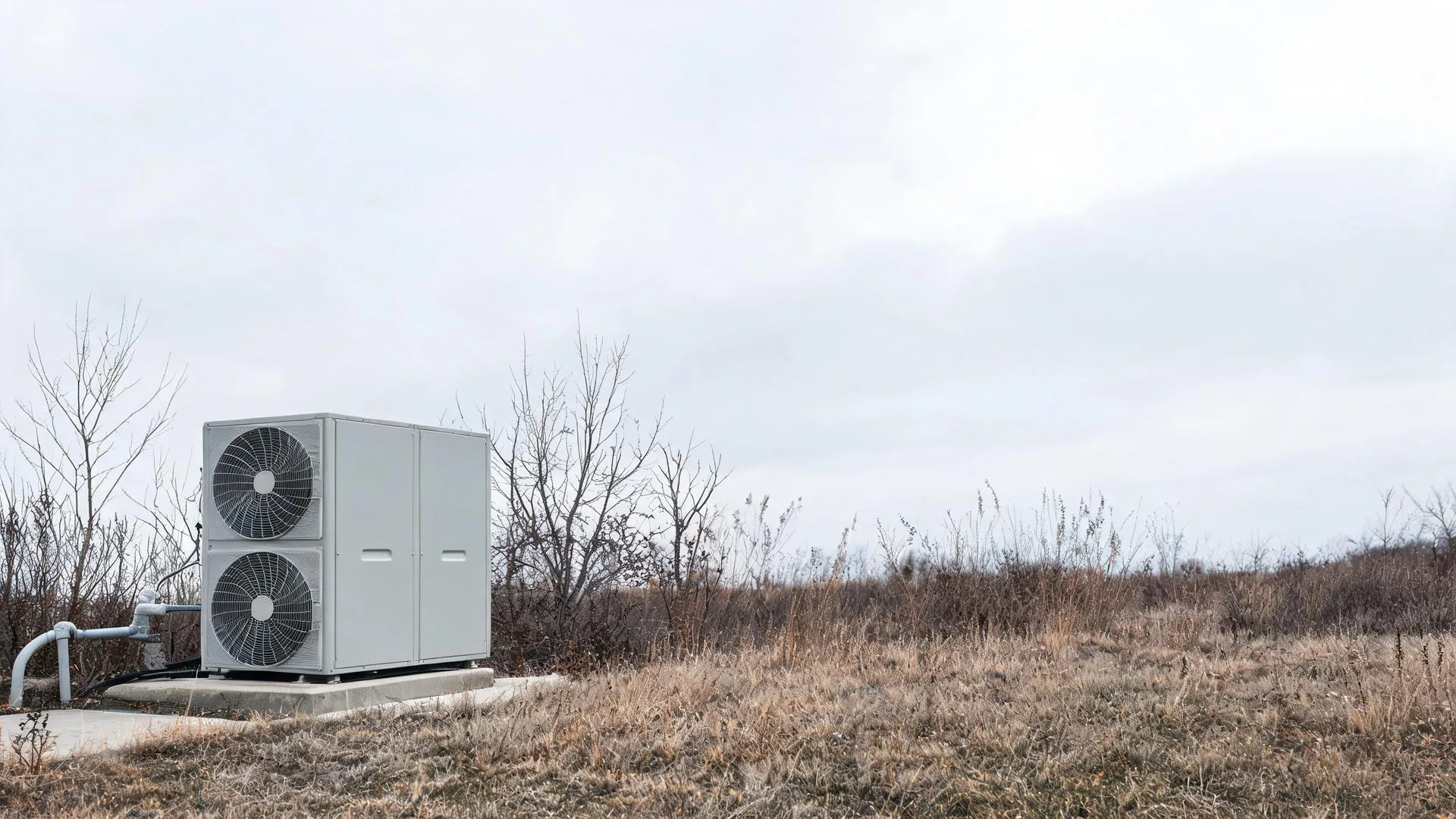
A gray metal air conditioning condenser unit mounted on a concrete pad in a flat grassy field under a partly cloudy sky.

The number on the label is a starting point, not a result

That SEER2 number on the label is a ceiling, not a guarantee. It tells you what the system can do under test conditions, run at steady speed with clean coils and the right charge. Day to day it runs lower than that, because real houses have duct losses, dirty filters, and temperature swings the test never sees. The rating is still worth comparing between units, since a higher one means the compressor is doing less work to move the same heat. But it only pays off if the system is sized right for the house and installed so the refrigerant charge is correct and the airflow across the coil matches what the equipment needs. A high-rated unit with a bad charge or a blocked return will run worse than a lower-rated one installed right. Ask whoever installs it how they verify charge and airflow when the job is done, not just what number is on the box.

The ductwork decides more than the equipment does

If the existing ducts are undersized or leaky, the new system has to work around that, or the ducts need work too. A contractor who skips this and just swaps the outdoor unit can hand you a system that never performs like the label says, no matter how good the equipment is.

Where the unit sits adds labor before it adds anything else

Running new line set, moving the disconnect, or relocating the condenser pad all take time on top of the install itself. Houses with the same size system can still take very different amounts of labor depending on how far the indoor and outdoor units sit from each other and from the electrical panel.

Aerial view of a residential air conditioning condenser unit mounted on a concrete pad next to a house with vinyl siding and a sliding glass door.

Going above the federal minimum saves little here, about $20 a year.

  • A higher-efficiency unit$300 a year
  • A new unit at the federal minimum, 14.3 SEER2$320 a year

Estimates for a typical Calloway County home, from EIA household energy data, Kentucky fuel prices and NOAA climate normals. Your home will differ.

Install day starts with the old equipment coming out, not the new unit going in. The outdoor condenser gets disconnected and removed, and the indoor coil gets pulled from the plenum. If the line set is being replaced, that comes out too. The new coil goes in matched to the plenum so air isn't leaking around the edges. New line set gets run if the old one isn't rated for the refrigerant the new system uses. Once the lines are connected, the installer pulls a vacuum on the system to remove air and moisture before any refrigerant goes in. Either one left behind will damage the compressor over time. Only after that does the refrigerant get weighed in and checked against what the equipment calls for. The last stretch is testing. Airflow at the registers, the temperature drop across the coil, and the thermostat actually talking to the right equipment before anyone calls it finished.