A row of dark-sided single-story houses behind a tall trimmed hedge and a large tree, with a mown lawn and a paved path under an overcast sky.

AC Installation in London, KY

Tell us about the job

Takes about a minute. No obligation.

New system or replacementCentral ACLaurel County, KY
Step 1 of 2

What ZIP code is the job in?

The region sets a higher floor

Laurel County falls in the Southeast compliance region, where a new split system under 45,000 Btu/h has to hit at least 14.3 SEER2. That's above the national minimum of 13.4 SEER2, so a unit built to the lower number can't legally go in here.


Zone 4A means both sides of the system work

Laurel County sits in climate zone 4A, mixed and humid, which asks real work of both heating and cooling. Whatever gets installed has to handle summer cooling loads and hold up when it's called on for the opposite job too.

4 months
June through September, your air conditioner is on duty
84°F
the average summer afternoon it cools against
21 hail events
in ten years, and hail bends the fins on outdoor coils
13.4 SEER2
the federal minimum any new unit must meet
Isometric line illustration of a cutaway single-story house showing interior rooms, ducted air handler, ceiling ductwork, and an outdoor condenser unit connected by refrigerant lines.
Your air conditioner works hardest from June through August.

NOAA nClimDiv, 1991–2020 normals

Electricity heats 82.1% of homes in Laurel County.

A new AC almost always ties into an existing electric furnace or air handler, so installation means matching a system, not rewiring a house for power it doesn't have.

A standard system is built for summers like this

Cooling runs June through September
Summer afternoons average 84°F
115 damaging wind events from 2015 to 2024

Cooling here runs June through September. May is the month before it starts, and it's the better time to put in a new system. An installer can schedule the work, size the unit to the house, and get everything tested before the first hot stretch. Wait until June and you're doing the same job under pressure, often with the old system already struggling or dead. Getting it done in May means the new unit is just running by the time it needs to, not being rushed into service.

Here, fit and reliability matter more than the efficiency rating

Electricity in Kentucky ran 12.79 cents per kilowatt-hour in 2024, cheaper than most of the country. That changes what's worth paying for. A high-SEER2 unit takes longer to earn back its extra cost here than it would somewhere with pricier power, so chasing the top efficiency number isn't the main job. Picking a system sized right for the house and built to keep running through a summer outage is.

Find a contractor
A man in a dark long-sleeve shirt, tan pants, cap and work boots carries a canvas tool bag up gray porch steps toward a dark green front door, with a potted shrub beside the entry.
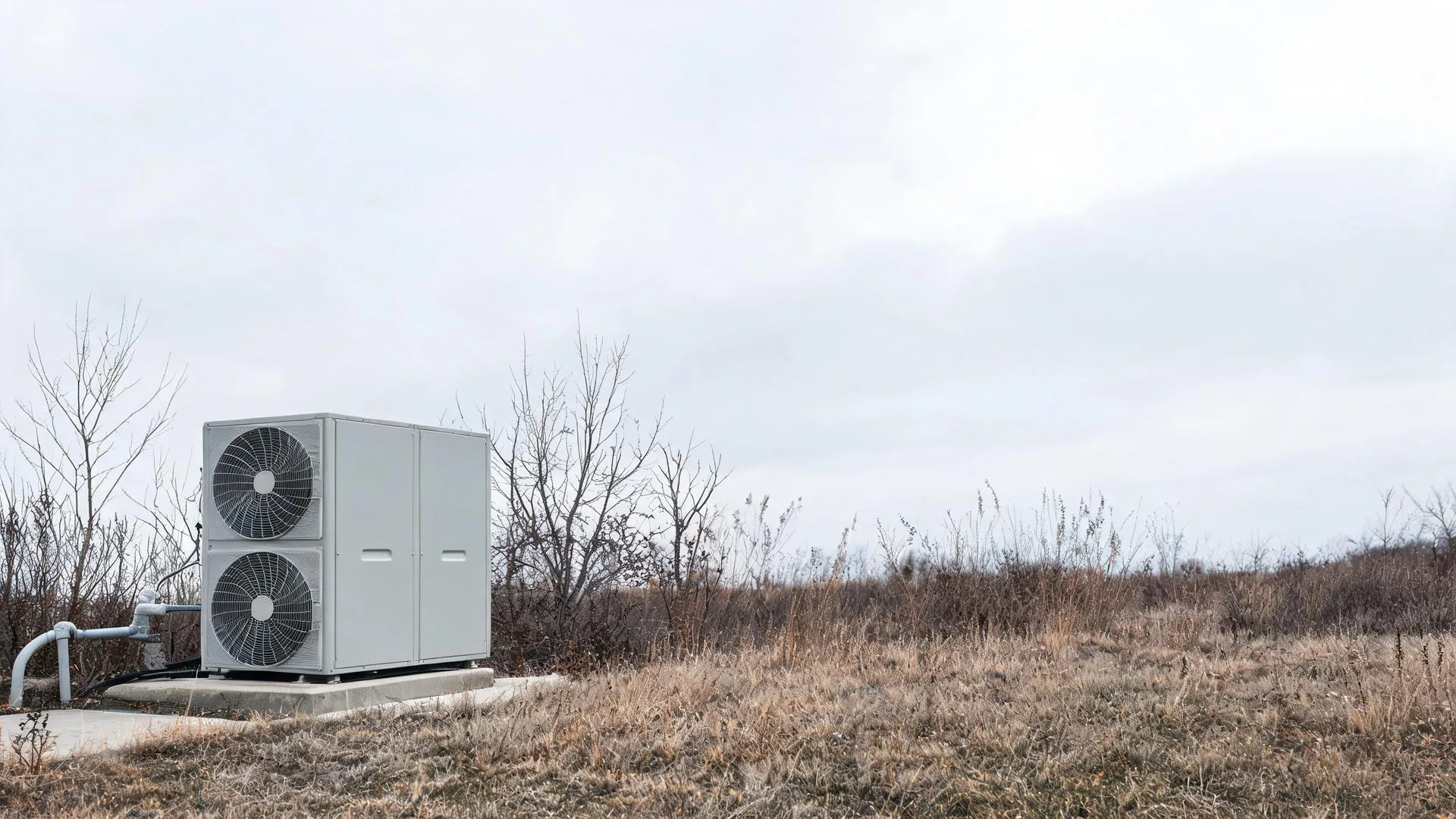
A gray metal air conditioning condenser unit mounted on a concrete pad in a flat grassy field under a partly cloudy sky.

The old unit comes out before the new one goes in

The old condenser doesn't get rebuilt, it gets disconnected. A tech will recover the refrigerant from the lines before anything is unhooked, that's required, you can't just cut a line open. Once the old unit's out, the pad under it either stays for the new one or gets cleared if the new system sizes differently. The line set gets checked too. If it's still in good shape and matches what the new system needs, it can sometimes stay in place rather than being replaced outright, saving a step. Old refrigerant, especially if it's a phased-out type, gets handled separately from the metal. None of it goes back in the new system regardless of condition.

The number is tested in a lab, not your attic

SEER2 comes from a fixed test that runs the unit through set conditions in a controlled space. It tells you how the equipment performs on that bench. Ductwork, the size of the house, and how the system was installed all change what it actually delivers once it's running in a real home.

Units with the same rating can still run differently

The rating describes the equipment as built, not as installed. A unit set in place correctly, with the refrigerant charge dialed in and the airflow matched to the ductwork, runs closer to its rated efficiency than the same unit installed loose. The number on the label only holds up if the installation backs it up.

Overhead view of a gray outdoor AC condenser unit on a concrete pad beside a mulched garden bed and a house with vinyl siding.

Going above the federal minimum saves little here, about $10 a year.

  • A higher-efficiency unit$210 a year
  • A new unit at the federal minimum, 14.3 SEER2$220 a year

Estimates for a typical Laurel County home, from EIA household energy data, Kentucky fuel prices and NOAA climate normals. Your home will differ.

Install day starts with the old system still running or already dead, and the new equipment and line parts staged nearby before anyone opens a line. The indoor coil usually comes first if it's being swapped, since the furnace or air handler has to be opened up to get at it. Outside, the new pad gets leveled and the condenser set on it, then the line set gets connected and the whole system gets pressure tested before any refrigerant goes in. That pressure test matters more than it sounds like it should. A system that holds pressure overnight has no leaks to chase later. Once it passes, the tech pulls a vacuum on the lines to clear out moisture and air, charges the system to the weight the manufacturer specifies, and only then fires it up and checks the temperature split at the vents. The thermostat gets wired or paired last, after the system's already proven it runs.