





A quiet suburban street at twilight featuring two-story brick homes with illuminated windows and large trees lining the sidewalk.

AC Installation in Hopkinsville, KY

Tell us about the job

Takes about a minute. No obligation.

New system or replacementCentral ACChristian County, KY
Step 1 of 2

What ZIP code is the job in?

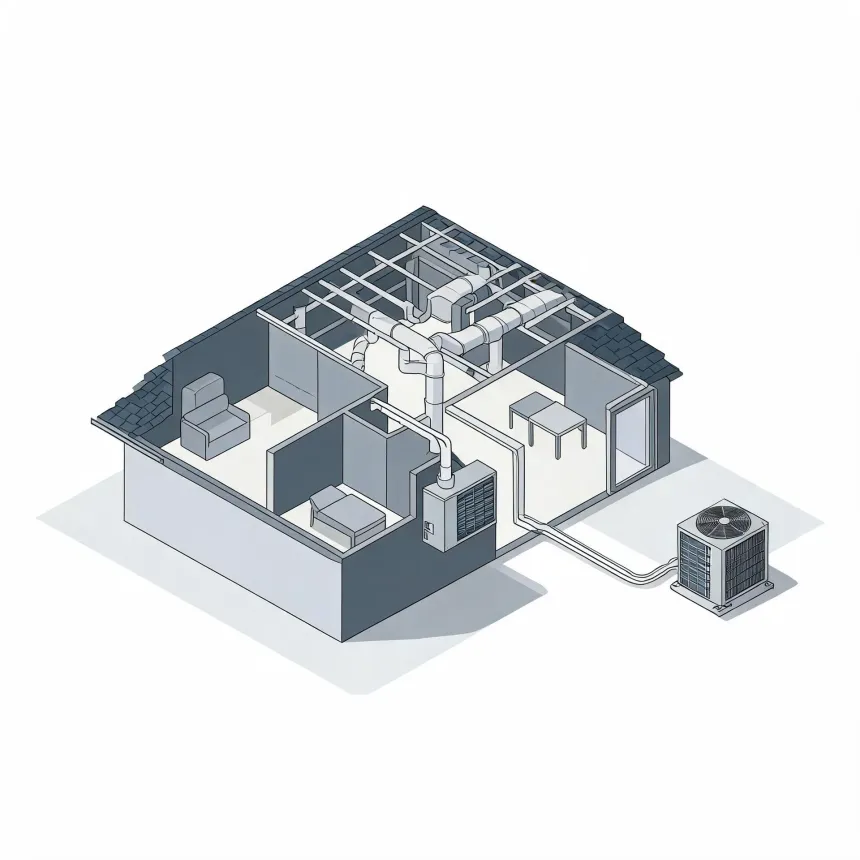
The size of the unit matters more than the brand. An air conditioner that's too big for the house cools the air fast and shuts off before it pulls the moisture out, so the rooms feel damp and clammy even at the right temperature. One that's too small runs constantly and never quite catches up. Getting the size right takes a load calculation, not a guess based on the old system or the square footage alone. Beyond the unit itself, the ductwork matters just as much. If the ducts are undersized, leaky, or poorly laid out, even the right size system will struggle, and fixing that adds real work to the job. Where the condenser sits, how far the line set has to run, and whether the electrical panel can handle the new system all factor in too.

5 months
May through September, your air conditioner is on duty
87°F
the average summer afternoon it cools against
26 hail events
in ten years, and hail bends the fins on outdoor coils
13.4 SEER2
the federal minimum any new unit must meet
Isometric cutaway illustration of a house showing attic ductwork, an indoor air handler, and an outdoor condenser unit connected by lines.
Your air conditioner works hardest from June through August.

NOAA nClimDiv, 1991–2020 normals

A quote that only lists the tonnage hasn't told you much.

Ask what the load calculation showed and whether the ductwork was inspected, not just what size they landed on.

At 12.79 cents a kWh, the payback on a high-efficiency unit stretches out

Power costs 12.79 cents a kWh statewide
Cooling runs May through September
Summer afternoons average 87°F
Get it done before MayCooling runs May through September here. April is the month to have it in.

Christian County sits in zone 4A, a mixed climate that asks real work of both the furnace and the AC over a year. That's part of why the Southeast carries its own efficiency floor, higher than what the rest of the country allows. A split system under 45,000 Btu/h installed here has to hit 14.3 SEER2. Larger systems have their own floor, still above the national minimum. A contractor quoting something below that number isn't offering a deal. It's offering something that can't legally go in.

Electric is the safe bet here

Electricity heats 61.7% of homes in Christian County, gas another 27.7%. If your house is already wired for electric heat, an electric AC and air handler match what the home expects and what most contractors here install routinely. Matching the fuel that's already in the house keeps the job closer to a straight swap instead of a rework.

Find a contractor
A gray residential air conditioning condenser unit mounted on a concrete pad outdoors, surrounded by green grass under a partly cloudy blue sky.

The old unit comes out before the new one goes in

The old condenser and coil get disconnected and hauled off. If the system runs on an older refrigerant, the technician has to recover whatever is left in the lines before anything comes apart. That refrigerant can't be vented into the air. Breaking the old line set loose matters too, because a new system running a different refrigerant usually can't reuse those lines. The pad underneath often gets cleared as well, since a new condenser may not sit the same way the old one did. None of this is the hard part of the job. Sizing the replacement right and making sure the ductwork can move the air it's built to deliver, that's where the job gets decided.

The calculation accounts for more than floor space

A load calculation looks at how much sun hits the windows, how many walls face outside, how high the ceilings run, and how much attic sits above each room. Houses of the same size can need different size systems depending on how they're built and which way they face. Square footage alone skips all of that.

An oversized system wears out its parts faster

Short cycling, where the system shuts off soon after it starts, puts more strain on the compressor than a longer, steady run does. The compressor and the contactor that switches it on take the brunt of that extra starting and stopping over the life of the system.

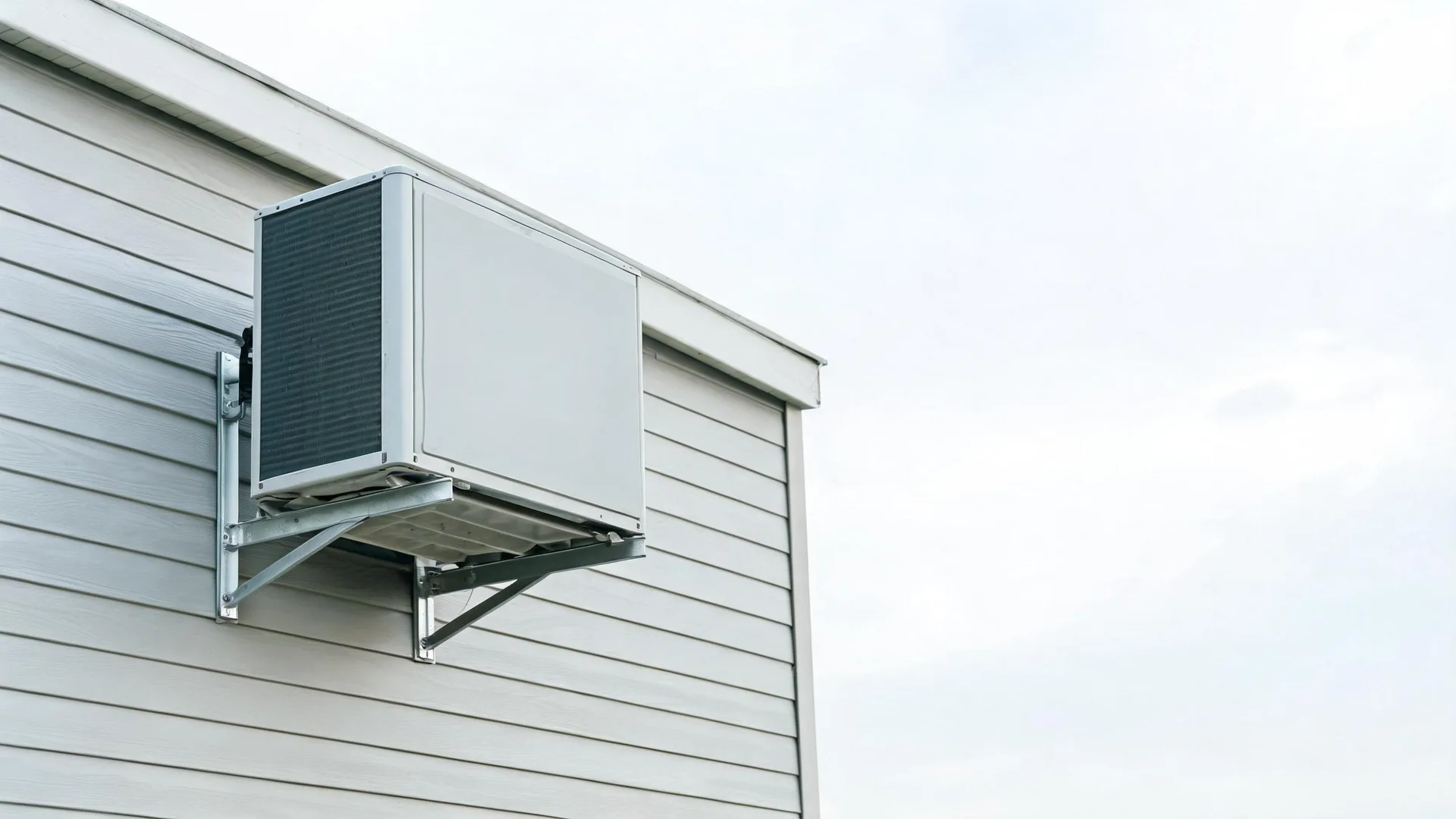
Overhead view of an air conditioning condenser unit on a concrete pad next to a house with asphalt shingle roofing and vinyl siding.

Going above the federal minimum saves little here, about $20 a year.

  • A higher-efficiency unit$290 a year
  • A new unit at the federal minimum, 14.3 SEER2$310 a year

Estimates for a typical Christian County home, from EIA household energy data, Kentucky fuel prices and NOAA climate normals. Your home will differ.

Installation day starts with the old system coming out and the new one going in, but most of the day goes to what connects them. The line set gets run or reused, pressure tested, then pulled into a vacuum to clear out any air and moisture before refrigerant goes in. Skip that step or rush it and moisture sits in the lines, which leads to compressor trouble down the road. The electrical hookup gets checked too, since the new condenser may draw differently than the old one did. Once everything is connected, the system gets charged to the exact amount the manufacturer specifies, not just topped off until it feels cold. Then it runs, and the technician checks the airflow at the vents and the temperature split between the air going in and the air coming out, to confirm the system is actually doing what it's supposed to before calling the job done.