A quiet suburban street at twilight featuring two-story brick homes with illuminated windows and large trees lining the sidewalk.

AC Installation in Henderson, KY

Tell us about the job

Takes about a minute. No obligation.

New system or replacementCentral ACHenderson County, KY
Step 1 of 2

What ZIP code is the job in?

Weather here is hard on outdoor units

Henderson County logged 108 severe weather events between 2015 and 2024, including damaging wind, hail, and tornadoes. An outdoor condenser sits through all of it, so where it gets placed and what shields it matters.


Power doesn't always stay on

Nearly a quarter of Kentucky households went at least 24 hours without power in 2024. A new AC install is a good time to ask the contractor about backup options, since a cut that long leaves a house without cooling until power is restored.

5 months
May through September, your air conditioner is on duty
87°F
the average summer afternoon it cools against
9 hail events
in ten years, and hail bends the fins on outdoor coils
13.4 SEER2
the federal minimum any new unit must meet
Isometric cutaway illustration of a house interior showing ducted air handling equipment, ceiling ducts, furniture in two rooms, and an outdoor condenser unit connected by lines outside the wall.
Your air conditioner works hardest from June through August.

NOAA nClimDiv, 1991–2020 normals

Electricity heats 51.5% of homes in Henderson County, more than gas and propane combined.

An electric furnace or heat pump paired with this AC is the straightforward match for a house already wired for electric heat.

A standard system fits a house like this

Half the homes here were built by 1976
Cooling runs May through September
Summer afternoons average 87°F

Henderson County sits in zone 4A, a mixed climate that pushes both heating and cooling over the year. New central air installed here has to meet 14.3 SEER2, the regional minimum for the Southeast and higher than what the rest of the country requires. That rule decides what a contractor can legally install here, no matter what turns up cheaper out of state. A system that meets it may also qualify for a federal tax credit, worth asking about before the install is final.

A standard system is the right call for Henderson County

Cooling runs about five months here, May through September. Afternoon highs average 87°F in June, July and August. That is a normal load. A standard-size, standard-efficiency system handles it without needing to be upsized or upgraded. What matters more for this install is where the condenser sits and whether the house has a backup plan for the power going out.

Find a contractor
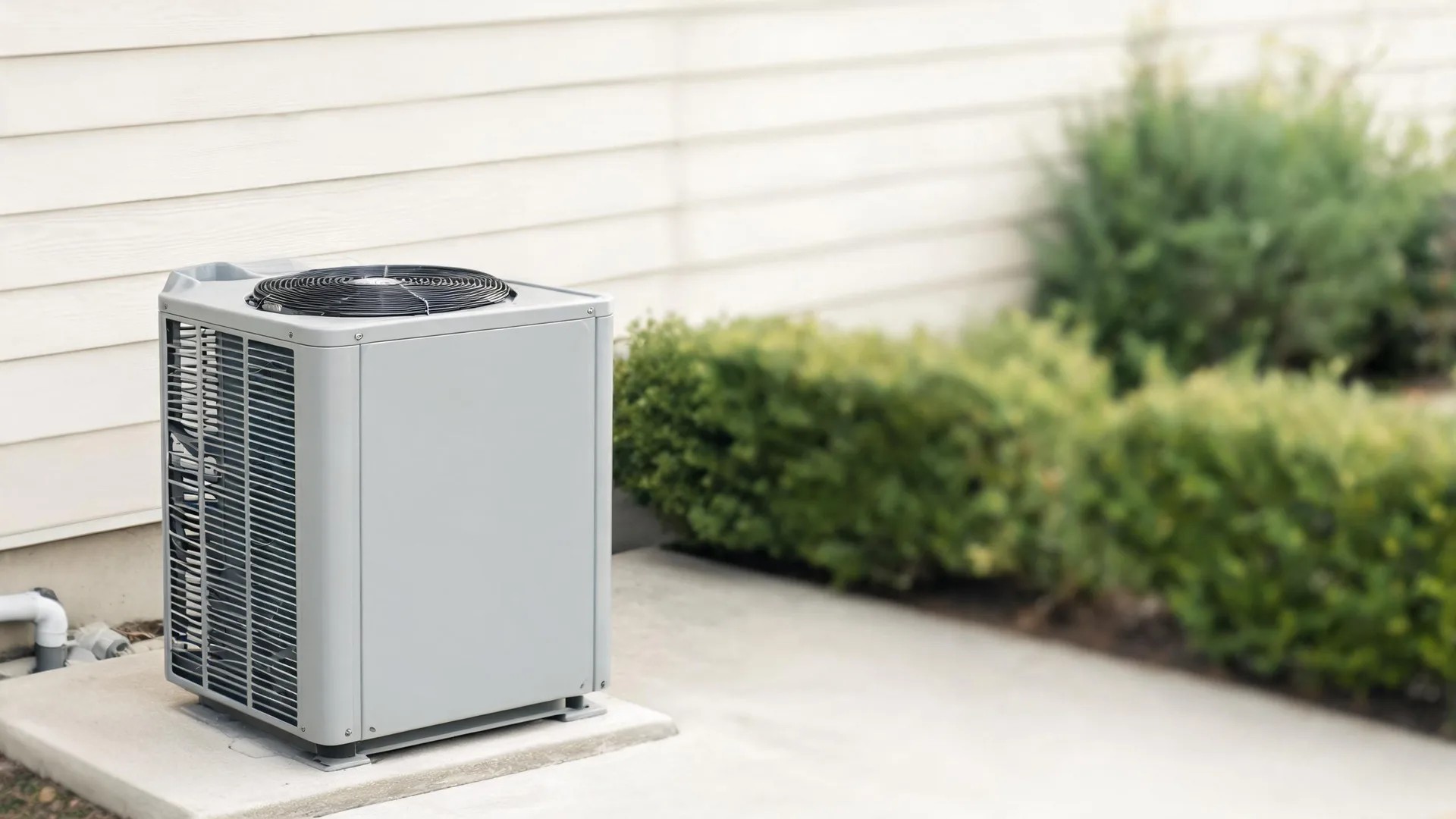
A gray cylindrical air conditioning condenser unit mounted on a concrete pad next to a light-colored vinyl-sided house exterior.

Get it done before May

Cooling runs May through September here, five months straight. Installing in April means the system goes in before that load starts, on a normal schedule, with time to size it right and place the condenser somewhere that holds up. Wait until the first hot week and a failed system becomes an emergency call, with less say over who does the work or when.

Size comes from a load calculation, not square footage

A contractor works out the right size by running a load calculation on the house. That looks at how much window area faces the sun, how much insulation is in the attic, how the rooms are laid out. Houses the same size can end up needing different tonnage once that work is done. Going by square footage alone skips all of it.

Oversized cools fast but leaves the air damp

A system that's too big shuts off before it finishes a full cooling cycle. The house hits the set temperature quick, but the air handler never runs long enough to pull humidity out of the air. The house ends up cool and clammy at the same time, with the compressor cycling on and off far more than it should.

Overhead view of a gray residential air conditioning condenser unit mounted on a concrete pad beside a house with asphalt shingle roofing.

Going above the federal minimum saves little here, about $10 a year.

  • A higher-efficiency unit$290 a year
  • A new unit at the federal minimum, 14.3 SEER2$300 a year

Estimates for a typical Henderson County home, from EIA household energy data, Kentucky fuel prices and NOAA climate normals. Your home will differ.

Installation day starts with the old equipment coming out, not the new unit going in. The indoor coil, the refrigerant lines, and the outdoor condenser all have to come out before anything new gets set. If the line set isn't being replaced, it gets flushed and pressure tested before the new condenser connects to it, since old oil or debris left behind will shorten the life of the new compressor. The electrical disconnect gets checked too, because a new system sometimes draws different power than what the old whip and breaker were sized for. Once the new coil, condenser, and lines are in place, the system gets evacuated with a vacuum pump to pull out moisture and air before refrigerant goes in. Charging it right means weighing in refrigerant to the manufacturer's spec, then checking the pressures and the temperature split at the vents to confirm it's cooling the way it should before anyone leaves.