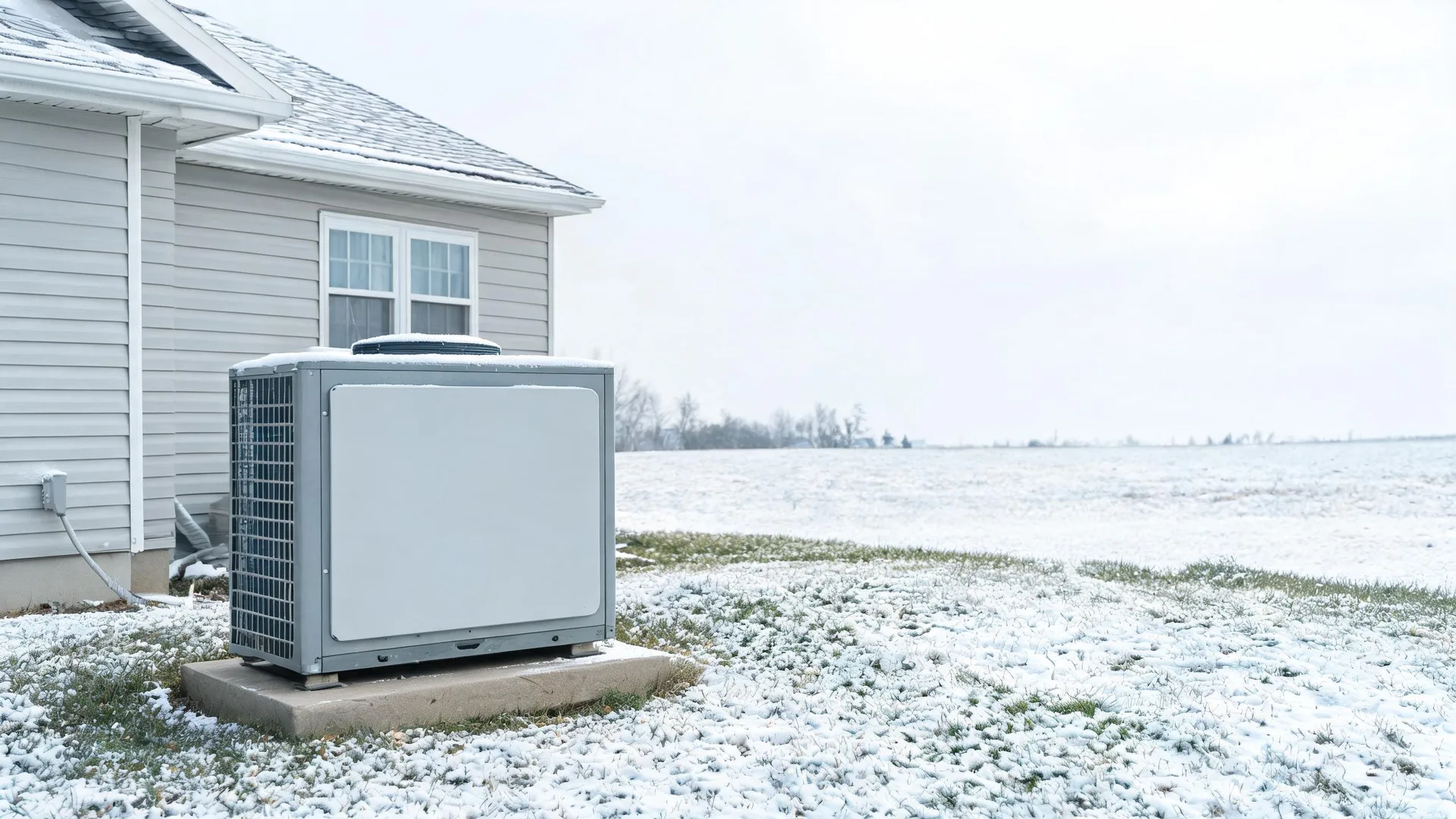
Most homes here run on electric heat
Electricity heats 56.2% of homes in Barren County, more than any other fuel. Gas furnaces run second at 27.0%, with propane at 12.1%.
Takes about a minute. No obligation.
Electricity heats 56.2% of homes in Barren County, more than any other fuel. Gas furnaces run second at 27.0%, with propane at 12.1%.
If your home already heats with electricity, a new AC installation is a chance to ask whether a heat pump makes sense alongside it, since the electrical setup for cooling is already there.

NOAA nClimDiv, 1991–2020 normals
Barren County sees damaging wind or a winter storm most years, and the power doesn't always hold through it.
A standard AC sized right for this house is the safe bet here, nothing oversized to chase a storm that may not come.




Kentucky falls under the Southeast rule, so a new split-system AC going in here has to hit 14.3 SEER2 if it's under 45,000 Btu/h. That floor is higher than what the rest of the country gets. Barren County also sits in climate zone 4A, a mixed zone that asks real work from both sides of the system, not just cooling. A unit meeting the Southeast minimum is built with that kind of year-round demand in mind. Ask a contractor which systems on the market qualify, since not everything sold meets this region's number.
Cooling here runs May through September. Putting a new system in during April means it's running on your schedule, with time to sort out the unit and the install before the first hot stretch hits.
Find a contractor
The old outdoor unit has been cycling on every warm afternoon for years, and that adds up in ways you can't see from outside. The compressor is the part that wears hardest, and once it's been running on a worn contactor or a failing capacitor for a while, those parts tend to go first, sometimes taking the compressor with them. Refrigerant lines that have held up fine can start seeping slowly at the fittings. None of this means the new system needs to be bigger or different. It means the old equipment gets disconnected, the refrigerant recovered the way the EPA requires, and the unit hauled off. If the line set or pad is in good shape, a contractor may reuse them. If not, that gets sorted during the install, not after.
A contractor works out the cooling load room by room, counting the windows, which way they face, how much attic sits overhead, and how the place is insulated. Houses the same size on paper can need different tonnage once that work is done. Skip that step and the size is a guess.
A unit that's too big drops the temperature quick and shuts off before it's pulled the moisture out of the air. That leaves rooms feeling clammy even at the right temperature, and the compressor spends its life starting and stopping instead of running steady.
Estimates for a typical Barren County home, from EIA household energy data, Kentucky fuel prices and NOAA climate normals. Your home will differ.
The old equipment comes out first, with the refrigerant recovered before any line gets disconnected. The new outdoor unit sits on its pad, the indoor coil goes in next to the furnace, and the line set between them gets connected, reused if it's in good shape or run new if it's not. The joints get brazed, then the lines get pulled down to a vacuum to clear out air and moisture before any refrigerant goes in. Charge gets weighed in to the manufacturer's spec, not judged by feel. A dedicated circuit and a disconnect box within sight of the unit are part of the electrical work, along with matching the thermostat wiring to the new control board. Before the crew leaves, the system should run a full cooling cycle while the contractor checks the charge, the airflow across the coil, and the temperature split between the air going in and the air coming out. A charge that's off or a vacuum that didn't hold tends to show up later, in the first real heat, as a system that runs but never quite keeps up.