Three lit brick homes on a tree-lined residential street photographed at dusk.

AC Installation in Frankfort, KY

Tell us about the job

Takes about a minute. No obligation.

New system or replacementCentral ACFranklin County, KY
Step 1 of 2

What ZIP code is the job in?

Most homes here run on electric heat

Electricity heats 54.4% of occupied homes in Franklin County. Utility gas covers 38.9%, and LP gas another 4.4%. Where electric heat is already in place, a central AC system usually pairs with an electric furnace or an air handler on the same power the house already has.

What that means for this installation

If your home already heats with electricity, adding or replacing central AC fits the setup you have. No gas line to plan around, no venting to reroute. The install comes down to matching the new AC to your existing ductwork and electric system rather than working around a second fuel.

5 months
May through September, your air conditioner is on duty
86°F
the average summer afternoon it cools against
11 hail events
in ten years, and hail bends the fins on outdoor coils
13.4 SEER2
the federal minimum any new unit must meet
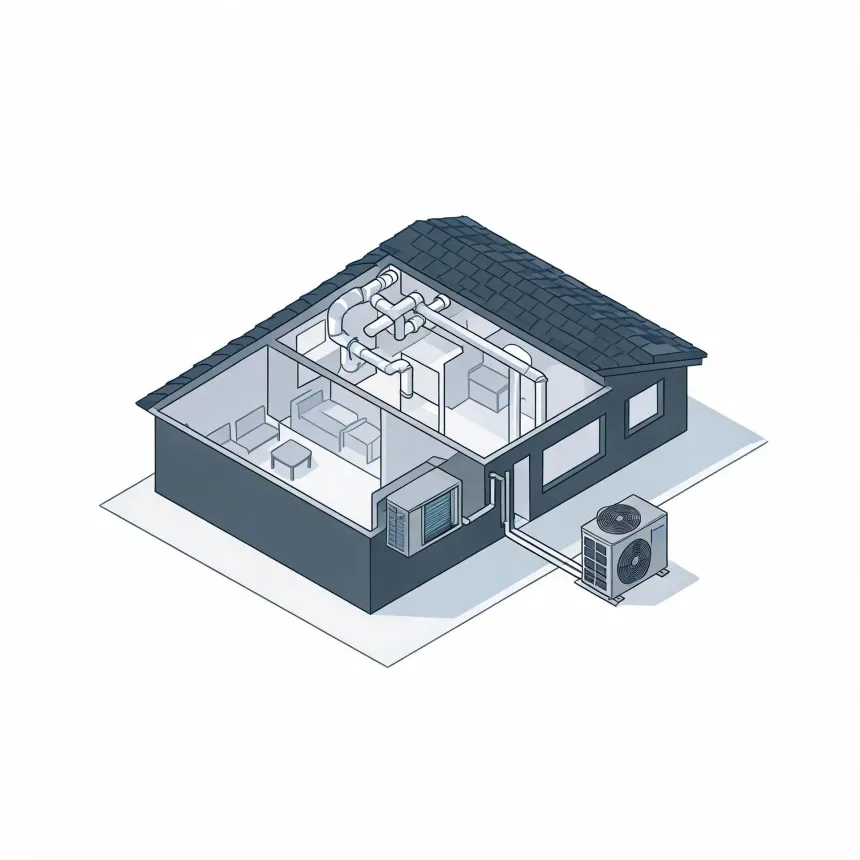
Isometric line illustration of a cutaway single-story house showing interior rooms with furniture, ceiling ductwork, an indoor air handler, and an outdoor condenser unit connected by lines along the exterior wall.
Your air conditioner works hardest from June through August.

NOAA nClimDiv, 1991–2020 normals

The size of the unit has to match the house, not the other way around.

A unit too big for the space cools the air fast but never runs long enough to pull out the moisture.

April is the month to have it ready, not the month to start calling around

Cooling runs May through September
Summer afternoons average 86°F
Power costs 12.79 cents a kWh statewide
A standard system fits most homes hereHalf the homes in Franklin County were built in 1977 or earlier, half since

Nothing about the weather here calls for a bigger system than your house actually needs. Franklin County sees damaging wind and the occasional hail event most years, but that affects how well the unit is protected outside, not how big it should be or how it's rated. A standard size and a standard efficiency rating do the job here the same as anywhere else in Kentucky. What matters more is the power behind it. Close to a quarter of Kentucky households went at least a full day without power in 2024, so the bigger question is how your home's electrical setup handles the new system, not whether to size up.

Any new system here has to clear a higher bar

Franklin County sits in zone 4A. Anything installed here has to meet the Southeast's minimum, 14.3 SEER2 for most central air conditioners, not the lower national baseline. That rules out some lower-end units sold elsewhere. A system that clears this bar may also qualify for a federal tax credit, which is worth asking about when you compare options.

Find a contractor
An outdoor air conditioning condenser unit mounted on a concrete pad surrounded by gravel, photographed against a partly cloudy blue sky.

The old unit has to come out before the new one goes in

Whoever installs the new system still has to deal with the old one, and that's a job on its own. Refrigerant in the old lines has to be recovered, not vented, before anything gets disconnected. Then the outdoor unit, the indoor coil, and in some cases the old line set all come out. If the new system uses a different refrigerant or a different line size, the old lines usually can't just be reused, so expect new copper run alongside whatever path the old lines took. The slab or pad outside stays in most cases, but the contractor will check it for cracks or settling before setting the new unit down on it.

The number is a ratio, not a size

SEER2 compares the cooling a system puts out over a season against the electricity it uses to do it. A higher number means more cooling per unit of power, nothing about how much cooling your house needs. That part still comes from a load calculation on the house itself, not the label.

The rating only holds if the install is right

A high-efficiency unit still has to have the right refrigerant charge and the right airflow across the coil to actually run at the rating on its label. Undercharged, or choked by a duct system that can't move enough air, the same unit burns more power to do the same job. The number on the sticker assumes a correct install behind it.

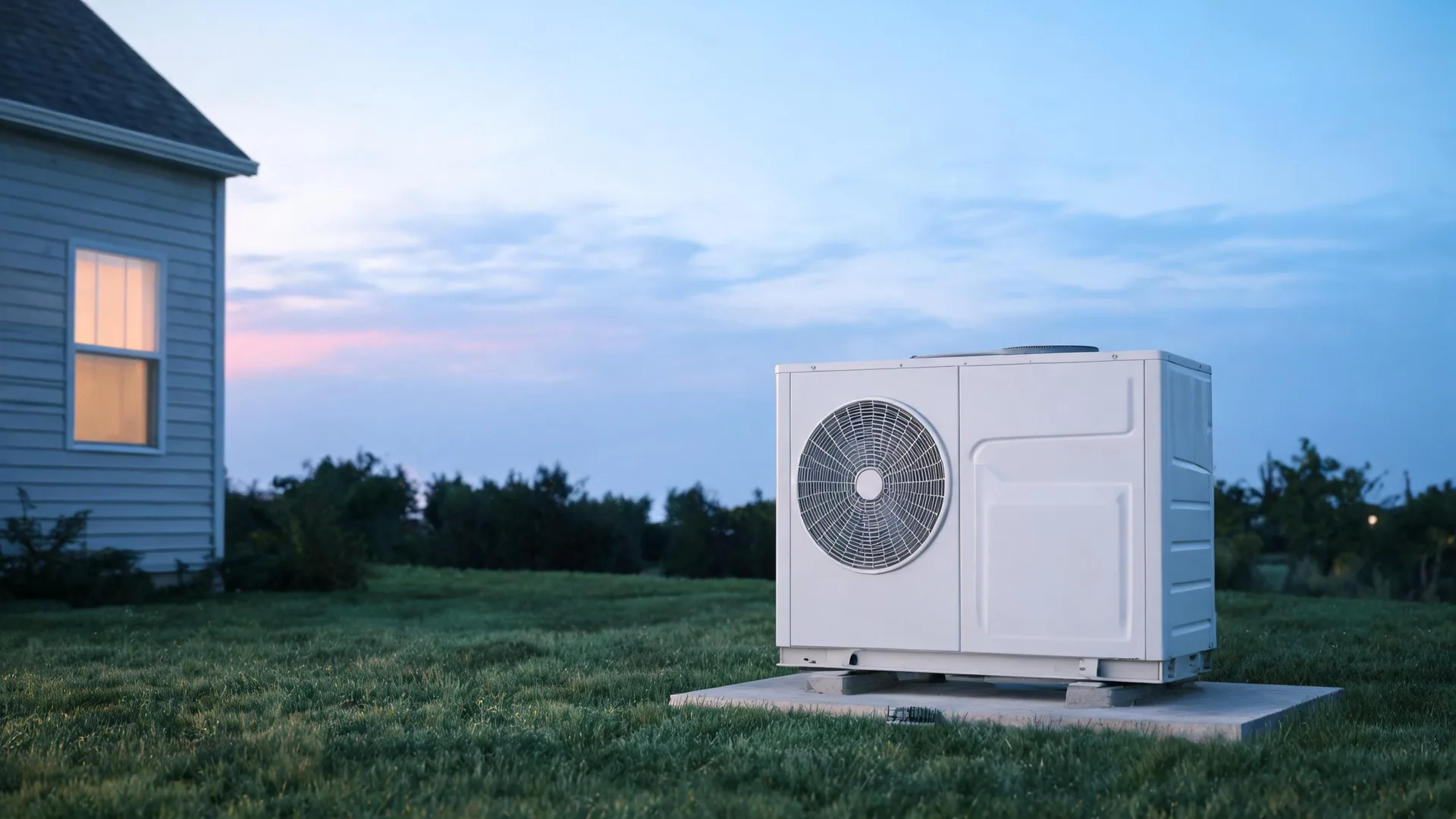
An outdoor air conditioning condenser unit positioned beside a blue-sided house at sunset.

Going above the federal minimum saves little here, about $10 a year.

  • A higher-efficiency unit$230 a year
  • A new unit at the federal minimum, 14.3 SEER2$240 a year

Estimates for a typical Franklin County home, from EIA household energy data, Kentucky fuel prices and NOAA climate normals. Your home will differ.

Installation day starts with the old system coming apart and ends with the new one running. Once the lines are disconnected and the new outdoor unit and coil are set, the installer runs new line set, wires in the thermostat, and pulls a vacuum on the lines before any refrigerant goes in. That vacuum has to hold. Any moisture or air left in the lines causes problems with the compressor down the road. After charging, the installer checks refrigerant pressure against what the unit calls for, then checks airflow at the vents. A system can be wired correctly and still run poorly if the charge is off or the ductwork can't move enough air across the coil. The last part of the day is usually the slowest. Not because the equipment is hard to set, but because getting the charge and airflow right is what makes the system perform the way it's rated to.