A row of illuminated two-story brick houses with front porches and mature trees photographed at twilight.

AC Installation in Fort Thomas, KY

Tell us about the job

Takes about a minute. No obligation.

New system or replacementCentral ACCampbell County, KY
Step 1 of 2

What ZIP code is the job in?

Gas furnaces are the norm here

Utility gas heats 47.5% of homes in Campbell County, more than any other fuel. Electricity comes next at 43.2%. A central air conditioner paired with a gas furnace is what most installers here are working with, since it shares the ductwork and the air handler.


What this means for your install

If your home already has a gas furnace and ducts, adding or replacing central air usually means matching new equipment to what's already there rather than rebuilding the system. If you're on electric heat, the installer will size the AC against a different setup, often a heat pump or an air handler built for electric resistance coils.

4 months
June through September, your air conditioner is on duty
85°F
the average summer afternoon it cools against
23 hail events
in ten years, and hail bends the fins on outdoor coils
13.4 SEER2
the federal minimum any new unit must meet
Isometric line illustration of a cutaway house showing interior rooms with furniture, ductwork leading to an indoor air handler, and an outdoor condenser unit connected by a line set.
Your air conditioner works hardest from June through August.

NOAA nClimDiv, 1991–2020 normals

The SEER2 number on the label tells you how much cooling the unit delivers for the power it draws, not how big a house it can cool.

A high rating on a unit that's the wrong size for the ductwork still runs worse than a properly matched one with a lower rating.

Cooling starts in June. Get it installed while May is still quiet.

Cooling runs June through September
Summer afternoons average 85°F
23 hail events from 2015 to 2024

Kentucky electricity ran 12.79 cents per kilowatthour in 2024, well below what a lot of the country pays. That changes the math on which system to install. A higher SEER2 unit costs more up front, and with power this cheap it takes longer for the lower bills to make up the difference. That doesn't mean skip efficiency. It means sizing and installation quality matter more than chasing the highest number on the label. A correctly sized unit on your existing ductwork will cool the house evenly and hold up for years. One picked for its rating alone, if it doesn't match your ducts and your home, won't make up for that in what it saves you monthly.

Any new AC here has to meet 14.3 SEER2

Campbell County falls under the Southeast's regional rule, not just the national minimum. A split system under 45,000 Btu/h has to hit at least 14.3 SEER2 to go in here. That rating narrows the field before anything else about your home enters into it. A federal tax credit is available on top of that for qualifying equipment, worth checking against whatever unit you're considering.

Find a contractor
A man in a cap, dark jacket and tan work pants carries a worn canvas tool bag up concrete steps toward a dark green paneled front door of a house with horizontal siding and a potted shrub.
An outdoor air conditioning condenser unit mounted on a concrete pad beside a house, with electrical conduit running to a wall-mounted disconnect box.

Half the homes here were built in 1972 or earlier

Half the homes in Campbell County were built in 1972 or earlier. A house that age has had its ductwork sized once, for whatever furnace and coil were standard at the time. An installer fitting a new AC into that house has to size the equipment to those ducts, not the other way around. If your home dates back that far and still has its original ductwork, that's worth having checked before you pick a unit.

Ask for a load calculation, not a guess off the old unit's size

A contractor should measure the house room by room, windows, insulation, duct layout, before naming a system size. Matching the new unit to whatever was there before just repeats any sizing mistake that was already baked in.

Ask what happens to your existing ductwork

A new condenser and coil still move air through the same ducts you already have. If those ducts are undersized, leaky, or routed for a different system, the new equipment will fight that layout every time it runs, no matter how well it's rated.

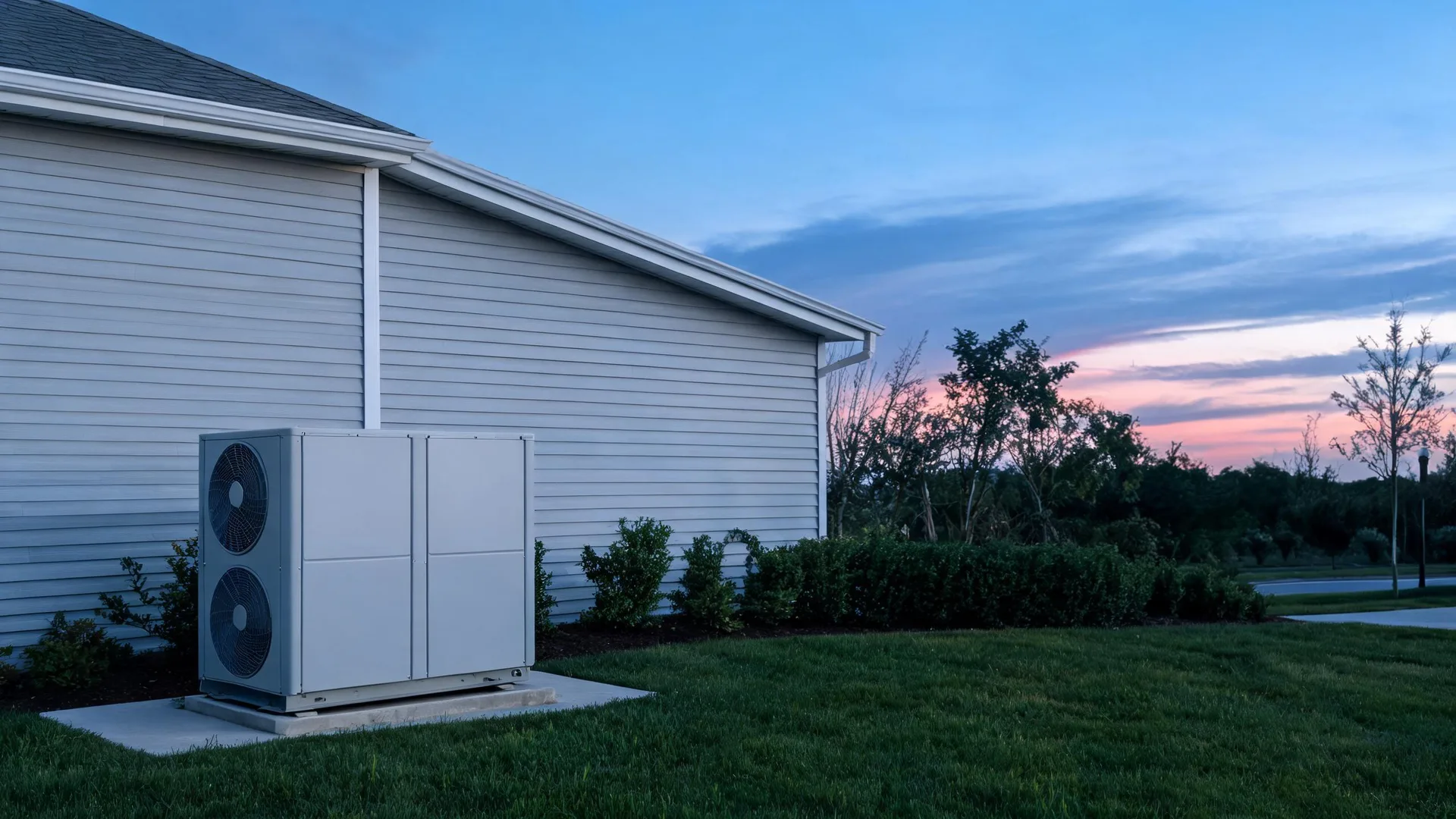
Aerial view of a gray central air conditioning condenser unit on a concrete pad next to a house with vinyl siding.

Going above the federal minimum saves little here, about $10 a year.

  • A higher-efficiency unit$220 a year
  • A new unit at the federal minimum, 14.3 SEER2$230 a year

Estimates for a typical Campbell County home, from EIA household energy data, Kentucky fuel prices and NOAA climate normals. Your home will differ.

Install day starts with the old equipment coming out, the condenser outside and the coil that sits on top of or beside the furnace. The copper line set gets replaced or checked over since reusing old lines with a new system can carry contamination into the new compressor. Once the new coil is in, the installer checks the ductwork connection at the plenum before anything gets charged with refrigerant. The electrical disconnect outside gets matched to the new unit's draw, and the condensate line gets run and tested so the coil has somewhere for the water to go. Charging the system with refrigerant is the last step, done against the manufacturer's spec for that line length, not just filled until it feels right. Before the crew leaves, the system should run a full cycle while someone checks airflow at the vents and the temperature split between the return and supply air.