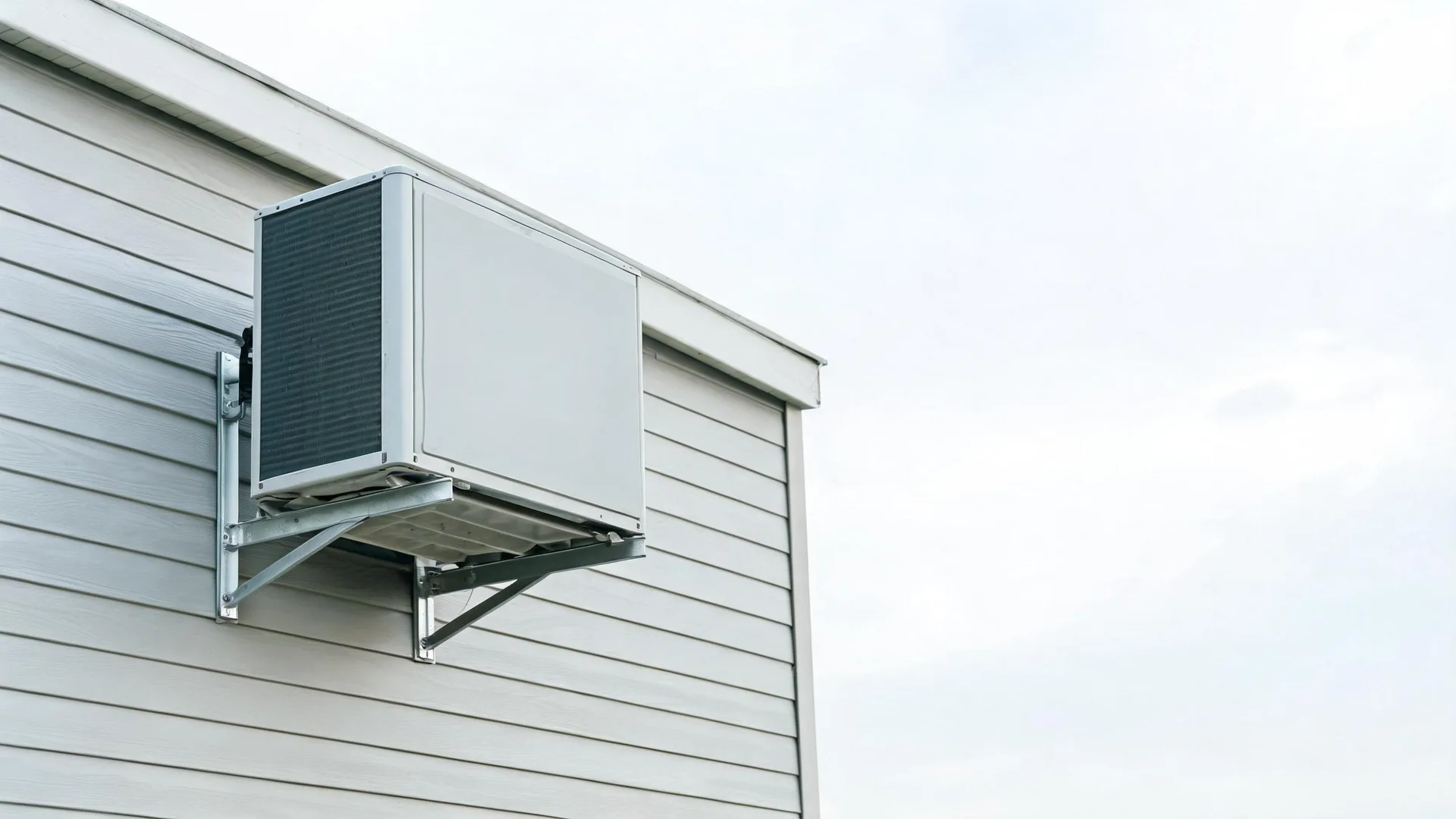
Boone County sees its share of storms
Boone County logged 121 severe weather events between 2015 and 2024, including damaging wind, hail, and a tornado. An outdoor condenser sitting in the open takes that weather directly.
Takes about a minute. No obligation.
Boone County logged 121 severe weather events between 2015 and 2024, including damaging wind, hail, and a tornado. An outdoor condenser sitting in the open takes that weather directly.
Where the installer sets the condenser, and what if anything shields it, matters more here than in a calmer county. Almost a quarter of Kentucky households lost power for a day or more in 2024, so it's worth asking how the new system handles an outage before it's installed, not after.
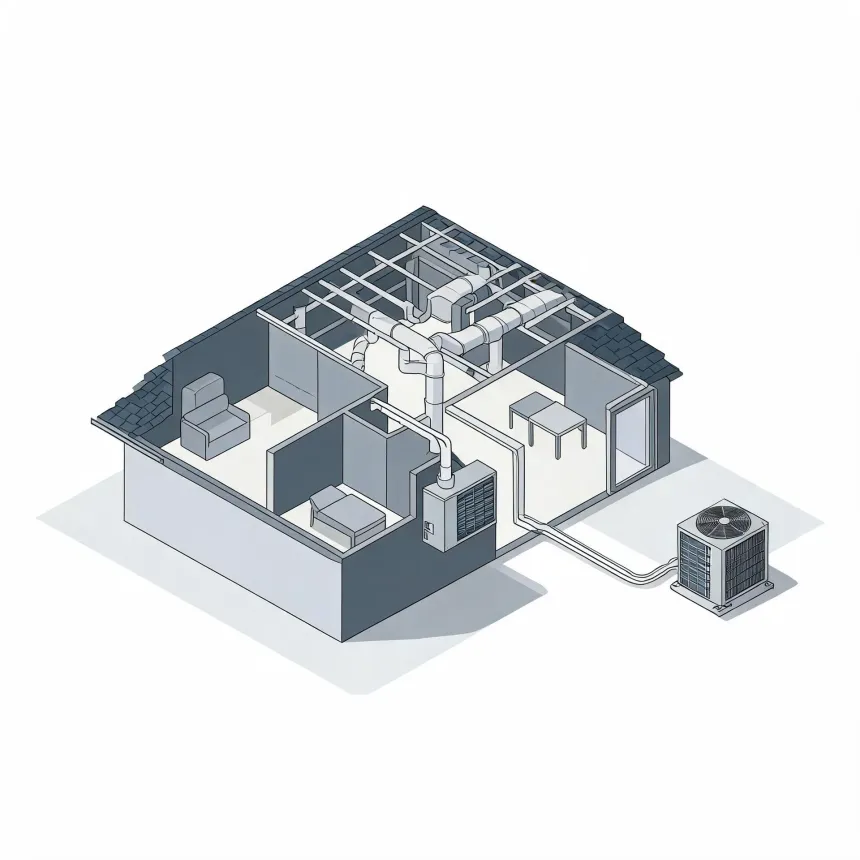
NOAA nClimDiv, 1991–2020 normals
Kentucky electricity ran 12.79 cents per kilowatthour in 2024, cheaper than most of the country.
A high-efficiency AC costs more up front and takes longer to earn that back here, so get the unit that holds up and fits the house first.




Florence sits in zone 4A, a mixed climate that works both the heating and the cooling side of the system through the year. Any new split-system AC going in has to meet 14.3 SEER2 under 45,000 Btu/h, and 13.8 SEER2 at or above it, the Southeast minimum rather than the lower national one. That rules out some of the base units sold in cooler parts of the country. Buy one that qualifies and it may also qualify for the federal energy efficiency tax credit, worth looking into before the install is scheduled rather than after.
Electricity heats 47.9% of homes in Boone County, gas another 43.8%. If your home is electric, the AC going in now likely ties into the same system that heats it come winter, so the installer needs to size and set up both sides together, not just the one you called about.
Find a contractorAsk how long the compressor is expected to run on a normal afternoon and how long it sits idle between cycles. A system that's sized right clicks on, runs a stretch, shuts off, and waits. One that's oversized blasts cold air fast, shuts off quick, then has to start again soon after, and all that extra starting wears on the compressor faster than steady runtime would. Ask the installer to walk through the load calculation room by room rather than just quoting a tonnage. Also ask what the system does across a full day. It's not just about hitting a set temperature once. It's about holding there for hours without short-cycling, then doing it again tomorrow, and the next day, for years. A unit that's a size too big looks like it's working harder but is actually working worse.
SEER2 compares the cooling a system puts out over a season against the electricity it takes to do it. A higher number means the compressor and coil move that heat with less waste. It says nothing about how big the unit is or whether it fits the house. A high-efficiency system sized wrong for the space still runs up the power bill and still wears out early.
The refrigerant charge has to be right, the airflow across the coil has to be right, and the ductwork has to be sized to carry what the system moves. An installer who shortcuts the charge or leaves undersized ducts alone can put in a high-SEER2 unit that never runs at that number. Ask what gets checked and measured after the unit is in, not just which model is being sold.
Estimates for a typical Boone County home, from EIA household energy data, Kentucky fuel prices and NOAA climate normals. Your home will differ.
Taking out the old condenser isn't just unbolting it and hauling it off. It's running on a refrigerant charge, and that has to be recovered into a tank before the lines get disconnected, not vented into the air. The old refrigerant lines and electrical whip usually get reused or replaced depending on their condition, so the installer should check them rather than assume. Inside, if the air handler or coil is being swapped too, that coil comes out of the plenum and the old condensate line gets inspected while it's open. Ask what happens to the unit once it's out. Most of the metal gets scrapped and the refrigerant gets reclaimed or destroyed, not released.