






An outdoor air conditioning condenser unit mounted on a concrete pad next to a blue-sided residential house at sunset.

AC Installation in Covington, KY

Tell us about the job

Takes about a minute. No obligation.

New system or replacementCentral ACKenton County, KY
Step 1 of 2

What ZIP code is the job in?

Gas furnace and central AC is the common setup around Covington. Just over half the homes in Kenton County heat with utility gas, and most of those have ductwork already in place for a matching cooling system. That makes a straight AC install simpler, since the ducts and the space for an air handler are usually already there. Electric heat is the next most common at 41.4 percent, and those homes often run on a heat pump or an air handler with electric coils instead of a furnace, which changes what the AC side connects to. If your home falls into that second group, it's worth checking what system is already in place before deciding what to install.

4 months
June through September, your air conditioner is on duty
85°F
the average summer afternoon it cools against
11 hail events
in ten years, and hail bends the fins on outdoor coils
13.4 SEER2
the federal minimum any new unit must meet
Isometric cutaway illustration of a single-story house showing interior rooms with furniture, attic ductwork connected to an indoor air handler, and an outdoor condenser unit on a pad linked by refrigerant lines.
Your air conditioner works hardest from June through August.

NOAA nClimDiv, 1991–2020 normals

Electricity in Kentucky runs about 12.79 cents a kilowatt-hour, well below the national average.

A high-SEER2 system costs more up front and takes longer to earn that back here, so pick for reliability and fit first.

A normal cooling load, four months a year

Cooling runs June through September
Summer afternoons average 85°F
67 damaging wind events from 2015 to 2024

Half the homes in Kenton County were built in 1974 or earlier, and half in 1974 or later. That split doesn't point toward any special equipment. An older house isn't working against a bigger cooling load here, and a newer one isn't getting a pass on sizing either. What decides the right AC size is the square footage and layout of your home, the same as anywhere else. A contractor doing the load calculation measures your rooms, your windows, your insulation, not the year on the deed.

Any system installed here has to clear 14.3 SEER2

Kenton County sits in a mixed climate zone that asks real work of both heating and cooling. New central air conditioners installed in the Southeast, Kentucky included, have to meet 14.3 SEER2 below 45,000 Btu/h, higher than the national minimum of 13.4. That rules out some of the lower-end equipment sold elsewhere. A federal tax credit is available on qualifying installations, which can offset some of that difference.

Find a contractor
A man in a dark long-sleeve shirt and tan work pants climbs porch steps toward a dark green front door, carrying a worn canvas and leather tool bag, with a potted conical shrub beside the entry.
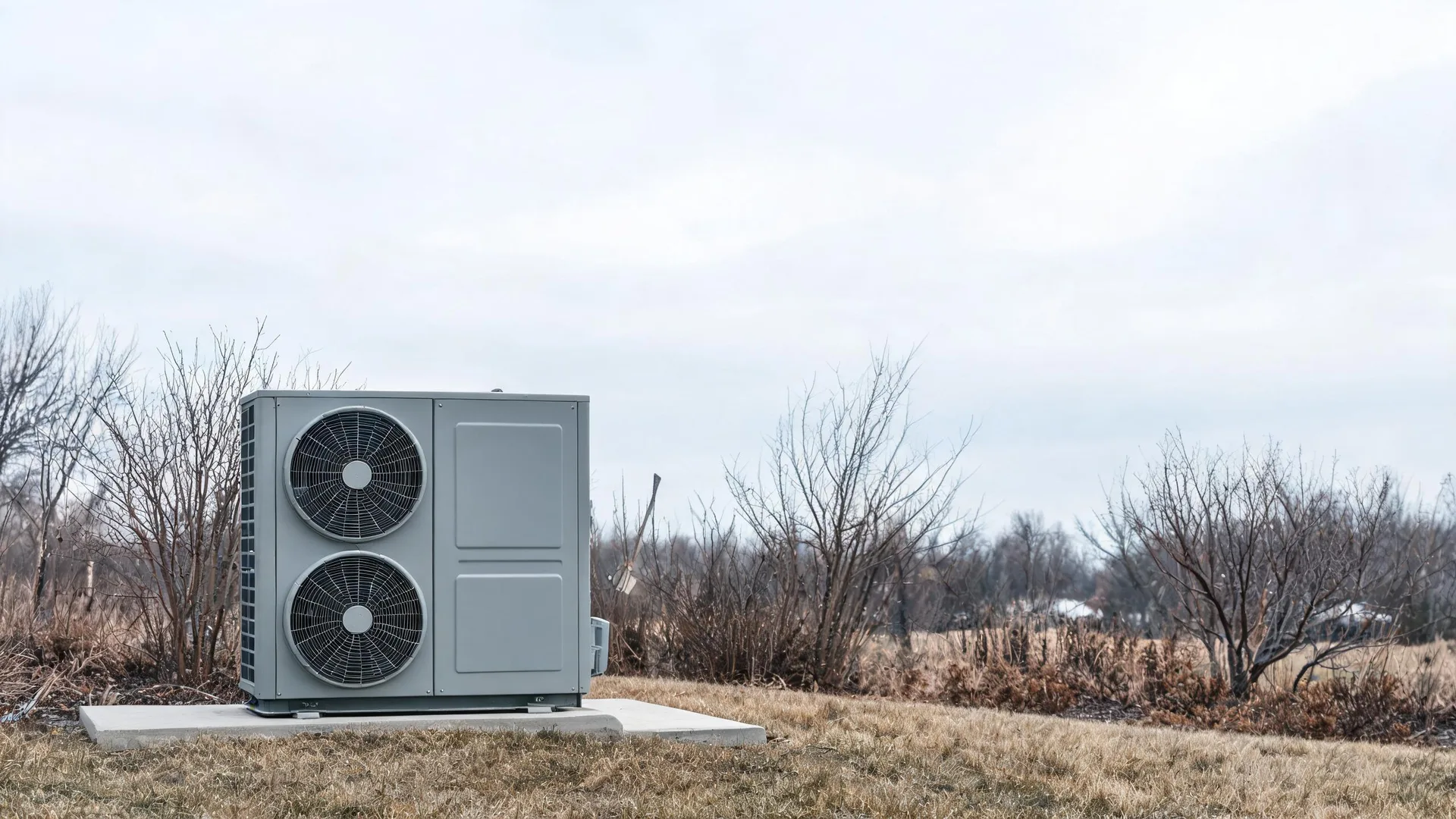
A gray metal air conditioning condenser unit mounted on a concrete pad in a flat grassy field under a partly cloudy sky.

Four months of cooling a year, so install it before the first one

Cooling runs June through September here, four months. May is the month before it starts, and that's the window for a replacement. An installer can take the time to size the system right and get the refrigerant charge exact, instead of rushing it while your house is already hot. Wait until the first warm week and you're choosing equipment off whatever's in stock, on whatever day a crew is free. Put it in during May and you're choosing on your own schedule.

The old unit gets disconnected and hauled off

Once the new condenser and coil are in and running, the old outdoor unit gets disconnected, the refrigerant lines capped or removed, and the unit itself hauled away. The indoor coil comes out too if it's being replaced. None of that old equipment stays on the property.

The refrigerant has to come out first, not just the metal

Before any of the old equipment is cut loose, the refrigerant inside has to be recovered into a tank rather than vented into the air. That's a legal requirement, not a courtesy. A contractor pulling a system has the equipment to do this as a normal part of the job.

An outdoor air conditioning condenser unit positioned on a concrete pad next to a blue-sided house, surrounded by green shrubs and flowering hydrangeas at sunset.

Going above the federal minimum saves little here, about $20 a year.

  • A higher-efficiency unit$210 a year
  • A new unit at the federal minimum, 14.3 SEER2$230 a year

Estimates for a typical Kenton County home, from EIA household energy data, Kentucky fuel prices and NOAA climate normals. Your home will differ.

Ask what size was calculated for your house, not just matched to the old equipment's nameplate. A contractor doing it right measures your rooms and ductwork rather than quoting the same tonnage that's already out there. Ask whether the quote includes a new line set or reuses what's already run through the walls, since old refrigerant lines sized for an old system aren't automatically right for a new one. Ask what refrigerant the system uses, since that affects what's available for repairs down the road. Ask whether the indoor coil is being matched to the new outdoor unit or left in place. A condenser and coil sold as a pair are tested together by the manufacturer. Pair a new condenser with an old coil and the system may still run, but nobody can tell you exactly how well.