A row of dark-clad single-story houses with gabled roofs behind trimmed hedges, lawn and leafy trees under an overcast sky.

AC Installation in Corbin, KY

Tell us about the job

Takes about a minute. No obligation.

New system or replacementCentral ACWhitley County, KY
Step 1 of 2

What ZIP code is the job in?

Weather here is rough on outdoor units

Whitley County logged 108 severe weather events between 2015 and 2024, most of it damaging wind. An outdoor condenser takes the brunt of that. Where it gets placed and what shields it matters as much as the unit itself.


Power cuts are part of the picture

Nearly a quarter of Kentucky households lost power for 24 hours or more in 2024. A new AC won't run without power, and a day without it is a day without cooling. Worth asking about during installation, before the system goes in.

4 months
June through September, your air conditioner is on duty
84°F
the average summer afternoon it cools against
12 hail events
in ten years, and hail bends the fins on outdoor coils
13.4 SEER2
the federal minimum any new unit must meet
Isometric line illustration of a cutaway single-story building showing interior rooms, ceiling ductwork, an indoor air handler, and an outdoor condenser unit connected by a line set.
Your air conditioner works hardest from June through August.

NOAA nClimDiv, 1991–2020 normals

The size written on the quote matters more than the brand on the unit.

Ask each contractor to show the load calculation, not just hand you a number.

Most of Whitley County already heats with electricity

57.2% of homes heat with electricity
Cooling runs June through September
Summer afternoons average 84°F

Summers here run about four months, June through September, with afternoon highs averaging 84. That's a normal cooling load, nothing an outdoor unit needs to be oversized for. Whitley County is zone 4A, which asks real work of a system in both directions, winter and summer, but it doesn't call for extra tonnage or a premium efficiency tier. A correctly sized standard system will keep up here. What matters more than reaching for a bigger or pricier unit is getting the size right for the house it's going into.

Install before June, while you still have the choice

Cooling starts in June here. Get a new system in during May and it's running on its own schedule, with time to size it right and no rush on the install. Wait until the heat is already on and you're deciding in a hurry, on whatever timeline a breakdown gives you.

Find a contractor
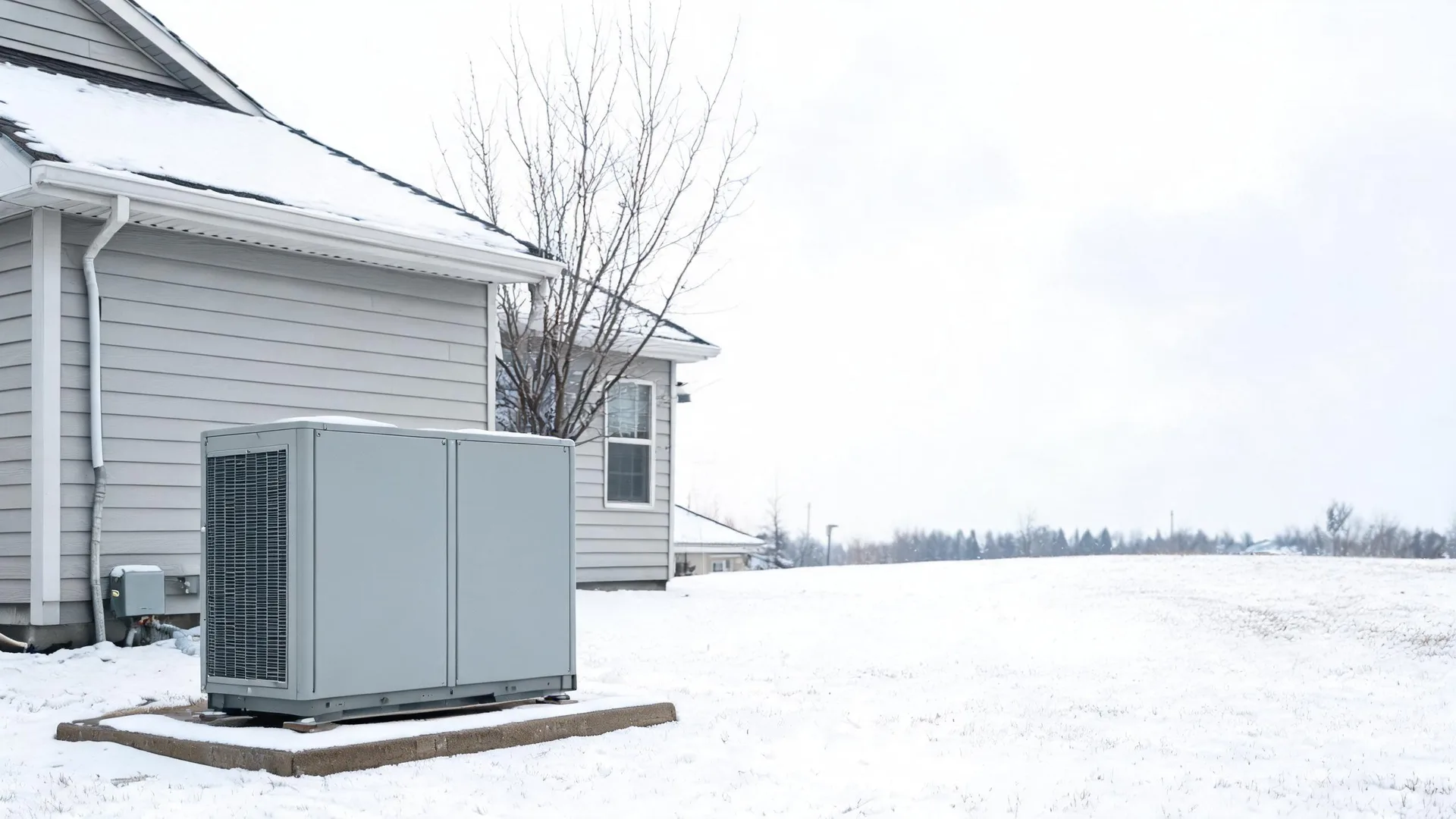
A gray metal air conditioning condenser unit mounted on a concrete pad in a flat grassy field under a partly cloudy sky.

What drives the price beyond the unit itself

A straight swap costs less because the hard part is already done. Same spot for the condenser, same line set, same breaker, same ductwork, and the crew just sets the new unit in place and connects it. Move the condenser to a better pad, run new line set, upgrade the disconnect, add a return, and each of those is its own job stacked on top of the equipment. Ductwork decides more than people expect. A correctly sized system pushing air through ducts that are too small or leaking in the attic will never perform the way the load calculation says it should. A contractor who checks the duct runs before quoting, not after the unit is already in, is pricing the job that actually needs doing. Labor is the last piece, and it is not padding. Charging a system to the right pressure and setting the airflow correctly takes time, and rushing that step is how a new unit ends up running worse than the one it replaced.

A bigger unit isn't a safer bet

An oversized condenser cools the air fast and shuts off before it pulls the moisture out of it, so the house ends up cold and damp. It also cycles on and off more, and that short cycling wears on the compressor faster than a system sized to run longer, steadier stretches.

The load calculation looks at the house, not just its footprint

Window placement, insulation, ceiling height, even which way the house faces all factor into how much heat it gains through the day. Houses the same size can need different tonnage depending on all of that. That's what the calculation is for, and it's worth seeing before a number goes on the quote.

An overhead view of a residential air conditioning condenser unit mounted on a concrete pad next to a house with vinyl siding.

Going above the federal minimum saves little here, about $10 a year.

  • A higher-efficiency unit$210 a year
  • A new unit at the federal minimum, 14.3 SEER2$220 a year

Estimates for a typical Whitley County home, from EIA household energy data, Kentucky fuel prices and NOAA climate normals. Your home will differ.

Installation day starts with the old system coming out. The crew recovers the refrigerant from the old unit, since it can't just be vented, then disconnects the line set, the electrical, and the condensate drain. The indoor coil usually comes out too, especially if the new system uses a different refrigerant than the old one did. Once the old equipment is clear, they check the line set and ductwork before assuming either one can be reused as is. Setting the new condenser, running or reconnecting line set, and mounting the indoor coil takes a few hours on its own. What follows takes longer. The crew pulls a vacuum on the line set to clear out moisture and air, charges the system to the exact pressure the manufacturer specifies, then checks airflow at the vents. A system that's installed fast but charged wrong will still run. It just won't run the way it's supposed to.