







An outdoor air conditioning condenser unit mounted on a concrete pad next to a blue-sided residential house at sunset.

AC Installation in Central City, KY

Tell us about the job

Takes about a minute. No obligation.

New system or replacementCentral ACMuhlenberg County, KY
Step 1 of 2

What ZIP code is the job in?

Muhlenberg County logs a lot of rough weather, 112 severe events in the last ten years, with wind and hail doing most of that damage. A condenser sits outside through all of it, so where it goes and what's near it matters, clear of falling branches and anything that throws debris in a storm. Power is the other issue. Close to a quarter of Kentucky households lost power for a day or more in 2024. Ask about a surge-protected disconnect when you plan this install, and think through how you'll keep things running if the power goes out for a while.

5 months
May through September, your air conditioner is on duty
88°F
the average summer afternoon it cools against
18 hail events
in ten years, and hail bends the fins on outdoor coils
13.4 SEER2
the federal minimum any new unit must meet
Isometric line illustration of a cutaway house showing interior rooms, ceiling ductwork, an indoor air handler unit, and an outdoor condenser connected by lines along the exterior wall.
Your air conditioner works hardest from June through August.

NOAA nClimDiv, 1991–2020 normals

Kentucky electricity ran 12.79 cents per kilowatt-hour in 2024, well under what a lot of the country pays.

A high-efficiency AC takes longer to earn back its extra cost here, so pick this system for how it holds up, not for the SEER2 number.

A standard system is the right call here

Half the homes here were built by 1978
Cooling runs May through September
Summer afternoons average 88°F
Electricity is the fuel here63.5% of homes in Muhlenberg County heat with electricity, more than any other fuel

Muhlenberg County falls in climate zone 4A, which asks real work of both your heating and your cooling system. Any new central air unit installed here has to meet the Southeast's minimum efficiency, 14.3 SEER2 for most residential sizes. That's higher than the baseline the rest of the country builds to, so not every unit on a supply house shelf qualifies for installation here. Ask your contractor which models on their truck already meet this regional minimum before you start comparing prices.

A standard system, installed to last through a Muhlenberg County storm

Five months of cooling a year, with afternoons near 88 in June, July and August, is a normal load for a standard system sized right. Nothing about this county asks a bigger unit or a pricier one to handle it. Put the budget into the install itself, the disconnect, the pad, where the condenser sits, so it holds up through the next storm.

Find a contractor
A man in a cap, gray work shirt and brown pants, seen from behind, steps up porch stairs toward a dark green front door while carrying a canvas tool bag, with a potted shrub beside the entry.
A gray residential air conditioner condenser unit mounted on a concrete pad in an open grass field.

Get it in before May, not during it

Cooling runs May through September here, five months. If you're installing before next summer, April is the month to get it done. Wait until the first hot week and you're choosing from whatever's in stock, on whatever day a crew is free. Install it in April and you pick the unit, the install date, and you've got time to ask about the disconnect and the pad before any of it matters.

The old unit gets hauled away

Whoever installs your new condenser will disconnect the old one, cap or reroute the refrigerant lines, and take the unit off the pad. The refrigerant inside has to be recovered properly rather than vented, so factor that into the job even though you won't see it happen.

The pad and lines don't always get replaced

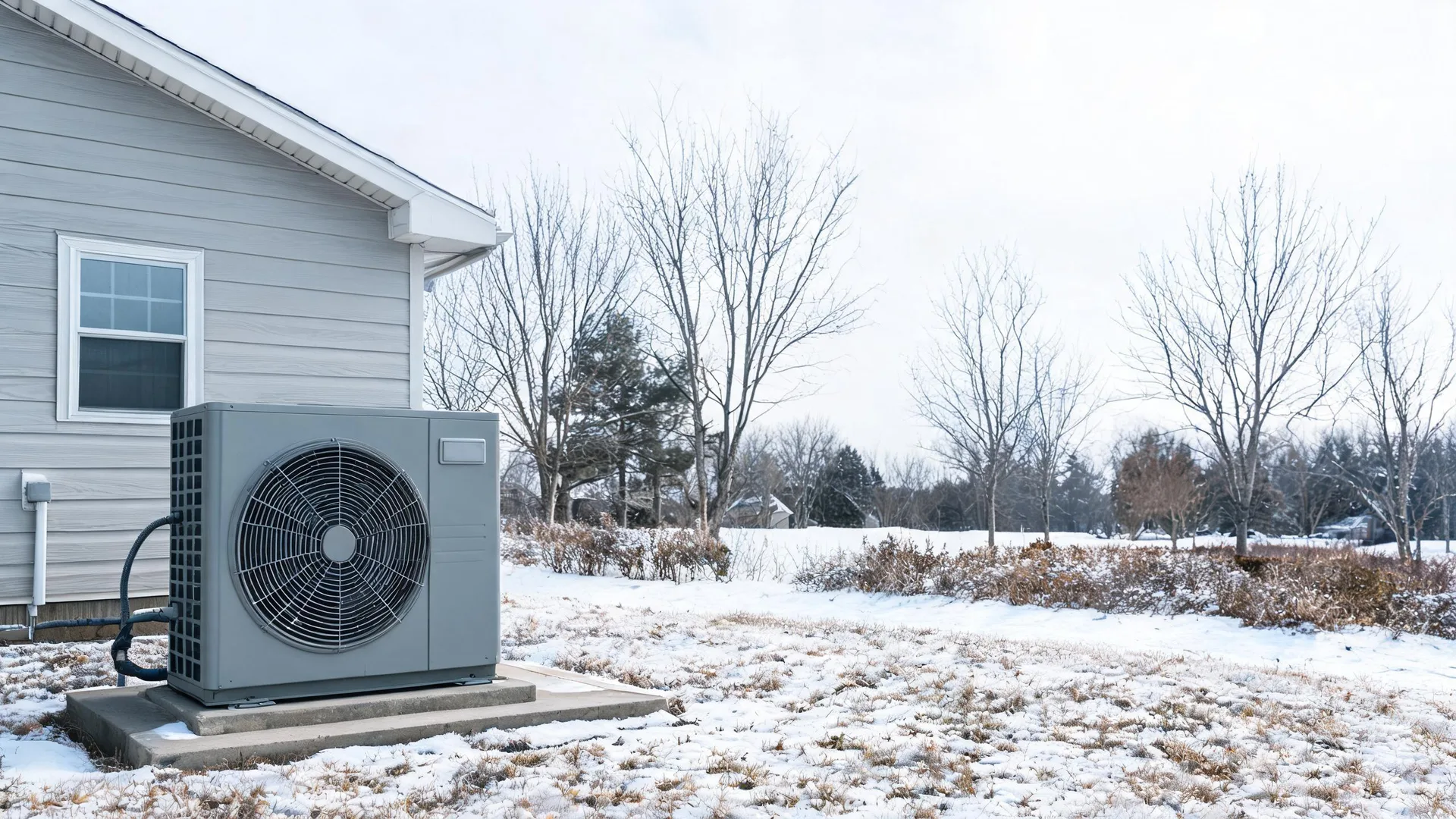
If the existing pad is level and sound, a new condenser can often sit right on it. Same with the line set running to the indoor coil, it may get reused if it's in good shape rather than replaced outright. Ask your contractor what they plan to reuse and what they're swapping, since that affects what the install actually involves.

An outdoor air conditioning condenser unit installed beside the exterior wall of a blue vinyl-sided house at sunset.

Going above the federal minimum saves little here, about $10 a year.

  • A higher-efficiency unit$290 a year
  • A new unit at the federal minimum, 14.3 SEER2$300 a year

Estimates for a typical Muhlenberg County home, from EIA household energy data, Kentucky fuel prices and NOAA climate normals. Your home will differ.

Install day starts with a load calculation walkthrough if it wasn't done already, then the old equipment comes out before the new goes in. The indoor coil and outdoor condenser get swapped, the line set gets pressure tested for leaks, and the system gets evacuated to pull moisture and air out of the lines before refrigerant goes in. That vacuum step matters more than people think, since trapped moisture turns to acid inside a system and wears it down early. Once the refrigerant charge is set, a tech checks it against the manufacturer's spec rather than just running the unit and calling it good. The last part is airflow, checking that the ductwork delivers what the new system is rated to push, since a unit matched wrong to the duct it's feeding won't cool the way it should. Expect some testing and adjusting at the end rather than a quick switch-on and a handshake.