






An outdoor air conditioning condenser unit installed beside the exterior wall of a blue vinyl-sided house at sunset.

AC Installation in Campbellsville, KY

Tell us about the job

Takes about a minute. No obligation.

New system or replacementCentral ACTaylor County, KY
Step 1 of 2

What ZIP code is the job in?

The size of the unit matters more than the brand on it. An AC too big for the house cools the air fast but shuts off before it pulls the moisture out, so rooms feel clammy even at the right temperature. One that's too small runs constantly and never quite catches up on the hottest days. Getting the size right means a contractor looking at the square footage, the windows, the insulation, and the layout of the ductwork already in place. If the ductwork needs changes to move enough air to every room, that's part of the job too, not an extra. The condenser location and the line set run between it and the indoor coil also factor in, since a longer run or a tricky spot to mount the unit takes more work than a straightforward swap.

5 months
May through September, your air conditioner is on duty
86°F
the average summer afternoon it cools against
16 hail events
in ten years, and hail bends the fins on outdoor coils
13.4 SEER2
the federal minimum any new unit must meet
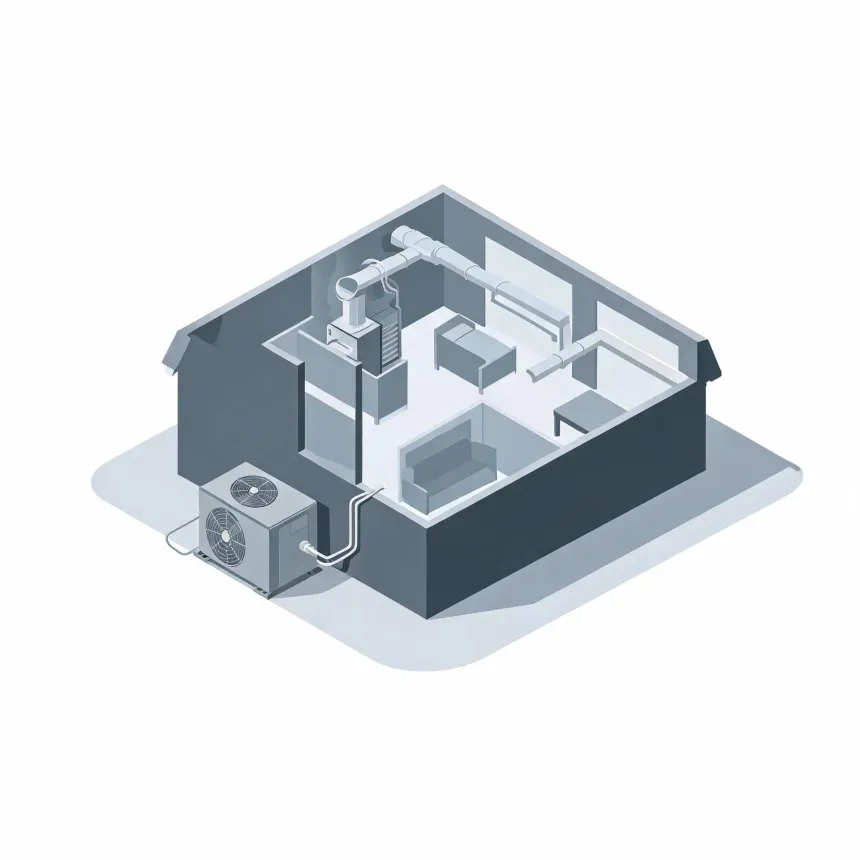
Isometric grayscale illustration of a cutaway house interior showing a furnace with ductwork, interior rooms with furniture, and an outdoor condenser unit connected by lines at the exterior wall.
Your air conditioner works hardest from June through August.

NOAA nClimDiv, 1991–2020 normals

AC runs May through September in Taylor County.

April is the month to put in a new system, before the first hot stretch puts it to work.

Most homes here run on electricity, and that's what central air pairs with

56.7% of homes heat with electricity
Cooling runs May through September
Summer afternoons average 86°F
Built for Campbellsville power ratesKentucky electricity ran 12.79 cents per kilowatt-hour in 2024, among the cheaper rates in the country

The efficiency rating on the label is a ratio, not a guarantee. It compares the cooling a unit puts out against the power it draws over a season of normal use, and a higher number means it can produce the same cooling while drawing less power to do it. But that number is measured under set conditions in a lab, with the system matched to the right ductwork and charged with the correct amount of refrigerant. An efficient condenser paired with a coil that's the wrong size, or ductwork that's too restrictive to move the air it's rated for, won't deliver the number on its sticker. The rating tells you what the equipment is capable of, not what it will actually do in your house. That part comes down to whether everything connected to it was sized and installed to let it work the way it was built to.

Any new system here has to clear a higher bar

Taylor County falls in climate zone 4A, and Kentucky is part of the Southeast region under federal efficiency rules. A new split-system central air conditioner installed here has to meet at least 14.3 SEER2 below 45,000 Btu/h, higher than the national minimum. That rules out the lower-efficiency units still sold in other parts of the country, and it's worth knowing going in so you're comparing systems that actually qualify.

Find a contractor
A man in a cap, gray work shirt and brown pants, seen from behind, steps up porch stairs toward a dark green front door while carrying a canvas tool bag, with a potted shrub beside the entry.
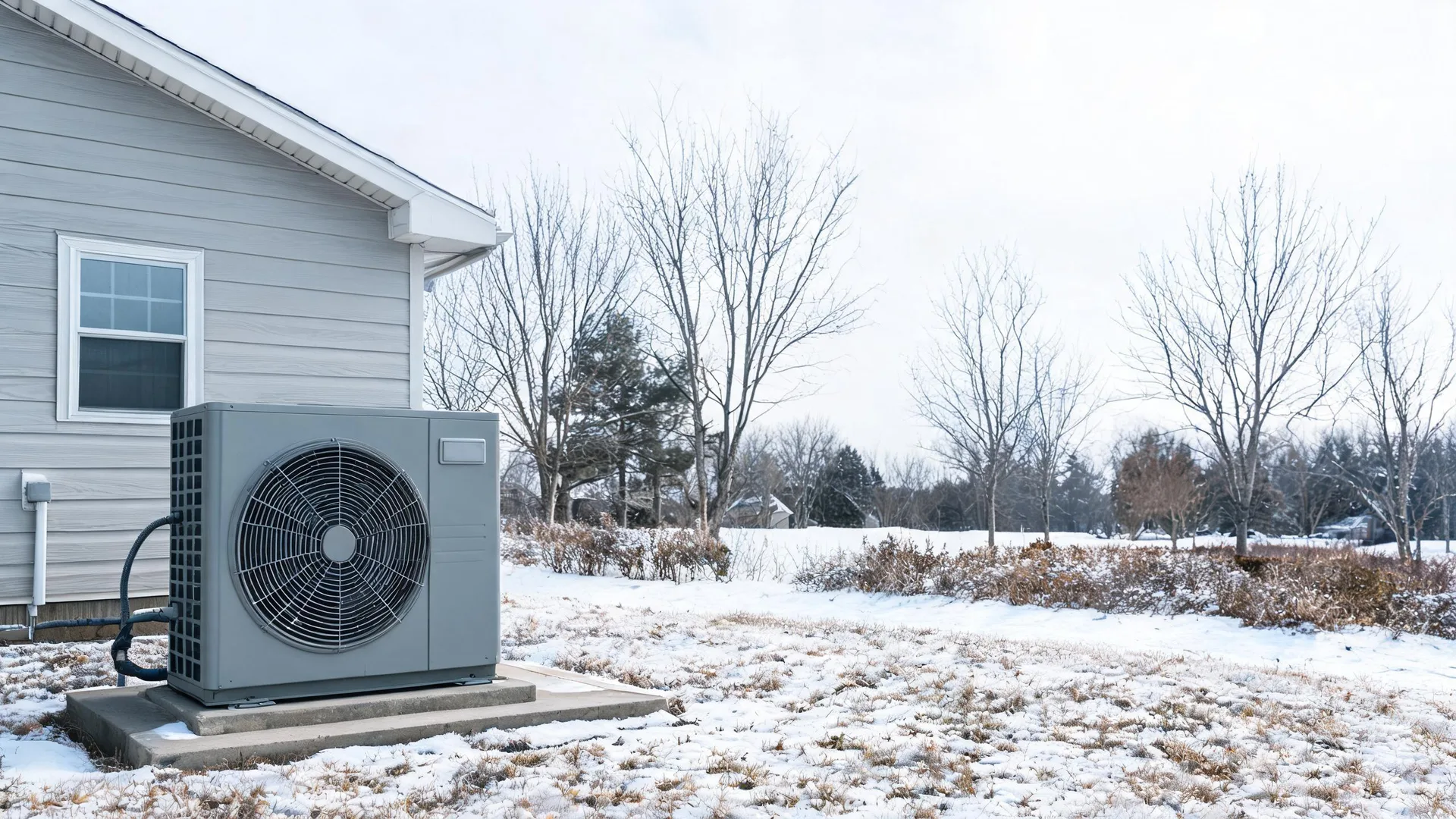
A gray residential air conditioner condenser unit mounted on a concrete pad in an open grass field.

Nothing here calls for bigger or fancier

Half the houses in Taylor County were built in 1978 or earlier, half in 1978 or later, and that split doesn't point toward one size or tier of equipment over another. A contractor sizing your system goes by your square footage, your windows, your ductwork, not the age of the house next door. Mobile homes make up 11.5% of the housing stock here, and those need their own sizing rules and sometimes different equipment, worth mentioning if that's your situation. Outside of that, a standard unit sized correctly and installed right will hold up the way it would anywhere else in this climate zone.

Ask what size they're quoting, and why

A contractor should be able to tell you the tonnage they landed on and walk you through how they got there. If the answer is a guess based on square footage alone, or it matches whatever was there before without a look at the ductwork, that's worth pushing on. The right number comes from a load calculation, not a tape measure.

Ask what happens to the ductwork

A new condenser and coil only perform as well as the ducts feeding them. Ask whether the existing ductwork was inspected, whether it can move the air the new system is rated for, and what happens if it can't. A quote that skips this question is a quote that might not hold up once the system is running.

Aerial view of a residential air conditioning condenser unit mounted on a concrete pad next to a house with vinyl siding and a sliding glass door.

Going above the federal minimum saves little here, about $20 a year.

  • A higher-efficiency unit$230 a year
  • A new unit at the federal minimum, 14.3 SEER2$250 a year

Estimates for a typical Taylor County home, from EIA household energy data, Kentucky fuel prices and NOAA climate normals. Your home will differ.

Installation starts with the old system coming out, the indoor coil, the outdoor condenser, and the line set running between them. If the line set isn't being reused, new copper gets run and sealed at both ends, then the whole system gets pressure tested to make sure there are no leaks before anything is charged. The indoor coil usually sits in the plenum above or beside the furnace, so that connection gets sealed up tight too, since any gap there pulls unconditioned air into the duct system instead of cooled air. Once the new condenser is set on its pad and wired in, the line set gets charged with refrigerant to the weight the manufacturer specifies, not just until the pressure looks right. The last part is airflow. A contractor checks the temperature split between the air going into the system and the air coming out of the vents, which tells them whether the coil is sized right and the ducts are moving enough air. That check is what separates a system that's installed from one that's actually set up to run the way it's supposed to.