





A row of dark-painted single-story houses with gray shingled roofs behind a tall trimmed hedge, with mown lawn, a walkway, and leafy trees under an overcast sky.

AC Installation in Bardstown, KY

Tell us about the job

Takes about a minute. No obligation.

New system or replacementCentral ACNelson County, KY
Step 1 of 2

What ZIP code is the job in?

A contractor sizes an air conditioner with a load calculation, not a tape measure on the old unit. That calculation looks at the square footage, how many windows you have and which way they face, how much insulation is in the attic, and what's above and below the space being cooled. Too big and the unit cools the air fast but shuts off before it pulls the moisture out, so the house feels clammy even at the right temperature. It also means more starts and stops, and the start is what wears on the compressor. Too small and it runs constantly on the hot afternoons and still can't keep up. The right size runs long steady cycles that hold the temperature even and take the humidity down with it.

5 months
May through September, your air conditioner is on duty
86°F
the average summer afternoon it cools against
31 hail events
in ten years, and hail bends the fins on outdoor coils
13.4 SEER2
the federal minimum any new unit must meet
Isometric line illustration of a cutaway house showing interior rooms with furniture, ductwork leading to an indoor air handler, and an outdoor condenser unit connected by a line set.
Your air conditioner works hardest from June through August.

NOAA nClimDiv, 1991–2020 normals

74.8% of homes in Nelson County heat with electricity.

A heat pump is worth pricing against a straight AC here, since the outdoor unit can heat and cool.

Nelson County cools May through September. Put the new system in before May and it's running on your schedule.

Cooling runs May through September
Summer afternoons average 86°F
31 hail events from 2015 to 2024
Sized for Nelson County, nothing moreAfternoon highs average 86°F through June, July and August here.

Electricity in Kentucky runs about 12.79 cents per kilowatt-hour, well below what most of the country pays. That changes the math on a new system. A high-efficiency AC costs more up front, and the monthly savings on a cheap kilowatt-hour take longer to earn that back. That doesn't make efficiency worthless, it just means it shouldn't be the only thing driving the decision. How long the unit lasts, how well it's matched to your house, and how it holds up when a storm knocks the power out for a few days matter more here than the SEER2 number on the sticker.

Meets the Southeast's efficiency minimum, and the federal credit

Any new system installed here has to meet 14.3 SEER2, the Southeast's minimum for units under 45,000 Btu/h, a notch above what's required elsewhere in the country. That sets a floor on what a contractor can put in, and it also qualifies you for the federal tax credit available on qualifying equipment. Worth asking your contractor which models clear both bars.

Find a contractor
An outdoor air conditioning condenser unit mounted on a concrete pad beside a house, with electrical conduit running to a wall-mounted disconnect box.

What the sticker measures, and what it doesn't

SEER2 is a seasonal average, not a reading from one hot afternoon. It weighs the cooling the system delivers against the electricity it draws over the mild days and the brutal ones together. That rating is measured on a matched system, the outdoor unit and the indoor coil paired the way the manufacturer tested them. Put in a mismatched coil, or hang onto an old one when the outdoor unit gets replaced, and the system won't perform to the number on the sticker. The rating also says nothing about humidity. A system can hit its rated efficiency and still leave a house feeling damp if it's cycling on and off instead of running long enough to pull moisture out of the air. The label tells you about the power bill. It doesn't tell you how the house will feel.

The old unit gets disconnected and hauled off

A contractor recovers the refrigerant from the old system before touching anything, since it's against the law to vent it into the air. After that the lines get disconnected, the outdoor unit and indoor coil come out, and the old equipment leaves with the crew. None of that refrigerant can be reused in the new system either, so it isn't saved or transferred.

The new coil needs a matched line set

The refrigerant lines running between the outdoor unit and the indoor coil are sized for a specific system. If the new equipment uses a different refrigerant or a different capacity than the old one, those lines may need to be replaced rather than reused. Leaving mismatched lines in place is one of the more common reasons a new system never quite hits the efficiency it's rated for.

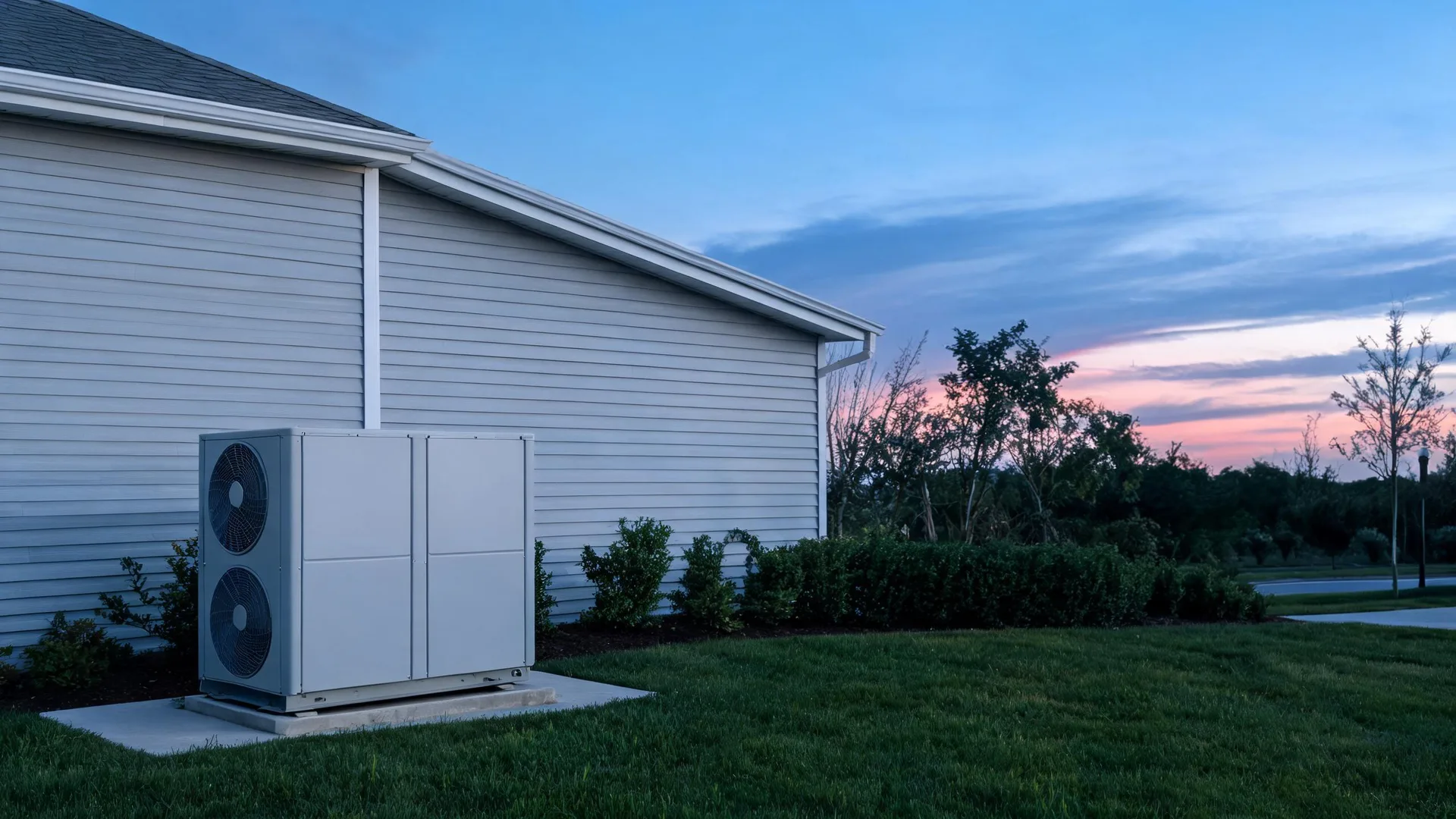
Aerial view of a gray central air conditioning condenser unit on a concrete pad next to a house with vinyl siding.

Going above the federal minimum saves little here, about $20 a year.

  • A higher-efficiency unit$240 a year
  • A new unit at the federal minimum, 14.3 SEER2$260 a year

Estimates for a typical Nelson County home, from EIA household energy data, Kentucky fuel prices and NOAA climate normals. Your home will differ.

Installation day starts with the refrigerant recovery and teardown, then the crew sets the new outdoor unit on its pad and gets the indoor coil in place, usually in the same cabinet as the furnace or air handler. Running new line sets or reusing the old ones comes next, followed by a vacuum on the lines to pull out any moisture and air before refrigerant goes in. A system charged with air or moisture still in the lines won't hit its rated efficiency and can damage the compressor over time. Once it's charged, the contractor runs the system, checks the refrigerant charge against the manufacturer's specs, and confirms airflow at the vents. Electrical and condensate drain connections get checked before anyone calls it done. A clean installation leaves no sign anyone was there except a quieter, cooler house.